







In this article, starting from the scenario outlined by the conflict in Ukraine in 2022-2024, we analyse the strategic use of energy as a geopolitical tool, focusing on Russia’s attempt to exploit Europe’s energy dependence to exert political pressure. Through a qualitative analysis of policy documents, market data and expert assessments, the article aims to analyse the EU’s political and economic response, characterised by the diversification of energy sources, sanctions and the acceleration of the green transition. It seeks to explore how this change has strengthened the EU’s strategic and defensive autonomy, placing energy policy at the centre as a fundamental component of security strategy. The EU’s experience with Russian energy coercion has redefined its energy paradigm, demonstrating the strategic value of sustainable and autonomous energy systems in preserving geopolitical stability and freedom of action.
The events of 2022–2024 have starkly illustrated how energy can be wielded as a geopolitical weapon and how reshaping energy dependencies is crucial for both national and regional security. Russia’s strategy in the Ukraine conflict explicitly treated Europe’s energy reliance as a pressure point: by curtailing gas supplies, Moscow hoped to sow division in the EU, weaken European economies, and coerce a reduction in support for Ukraine. This weaponisation of energy, however, met with a robust response that has, in many ways, turned the tables. In this article, we analyse the concept of energy as leverage in warfare and foreign policy, and how the EU’s new energy posture impacts its strategic and defensive autonomy.
How the EU defused Moscow’s energy weapon with resilience
For decades, Russia has cultivated dominance in Europe’s energy markets not just for profit, but for influence. As noted, pipelines like Yamal, Nord Stream, and TurkStream, were as much geopolitical projects as commercial ones. The Kremlin routinely linked gas deals with political aims – offering discounts to friendly governments or cutting off dissenters (e.g. Ukraine, the Baltics). Gazprom’s 2022 cut-offs to nations that refused to accept its currency scheme and the slowing of Nord Stream under spurious pretexts (such as a missing turbine) were blatant attempts to “punish” Europe and discourage it from supporting Ukraine. President Putin and other authorities publicly implied that Russia would not be able to ensure an adequate energy supply if Europe supported Kyiv.
In Putin’s playbook, gas was a trump card. Historically, Europe had backed down or sought quick compromises when faced with gas supply threats, as in earlier Ukraine transit disputes. However, the 2022 war showed the limits of energy blackmail when the target can unite and adapt. Europe refused to split or capitulate; instead, it paid a high economic cost to replace Russian gas and impose sanctions. By late 2022, it became evident that Russia’s “sharpest energy weapon” had misfired. Gazprom lost its largest customers and revenue plummeted – the weapon backfired by damaging Russia’s own economic engine (oil and gas revenues fund a large share of its budget). The IEA estimated Russia’s pipeline gas revenues from Europe fell by roughly 85% in 2022–2023. Moreover, Russia’s leverage diminished permanently: “Russia has lost Europe as its energy client forever” declared IEA’s Fatih Birol. Indeed, by 2023–24, Russia’s share in Europe’s gas had dwindled to under 15%, and could approach zero, as underlined by Ember’s analysis, by 2027 if the EU stays on course. This means Moscow can no longer easily use gas supply cuts as a bargaining chip – Europe has proven it can survive without Russian gas, at least after an initial adjustment. 
That said, Russia’s energy weapon is not entirely neutralised yet. In the winter of 2022/23, Europe benefited from mild weather; a harsher winter or a big rebound in Asian gas demand could have tested the system. Additionally, Russia continues to earn billions from selling oil (which is a separate but related energy weapon issue – Russia pivoted oil exports to Asia after the EU’s oil embargo, albeit at discounted prices due to the G7/EU price cap). Meanwhile, with gas, while pipeline exports to Europe are largely gone, Russia still exports LNG that finds its way into European markets unsanctioned. There is concern that Russia could try to flood the market or undercut prices via covert channels to render some European LNG infrastructure redundant or to hurt U.S. LNG competitiveness. Alternatively, Russia might hope Europe’s unity wanes and some countries resume bilateral energy deals (e.g. Hungary extended its gas contract with Gazprom in 2023). Therefore, the weaponisation threat recedes but isn’t dead until Europe fully weans off Russian fuels and/or Russia loses the ability to manipulate markets.
The flip side of reducing vulnerability is gaining freedom of action. The EU’s moves to sever energy ties with Russia have enhanced its strategic and defensive autonomy. No longer does the Kremlin hold a “gas gun” to Europe’s head – meaning Europe can make policy (sanctions, military aid to Ukraine, etc.) with far less fear of energy retaliation. This was demonstrated in 2022 when, despite Gazprom’s cuts, EU countries maintained and even increased their support for Ukraine. Europe’s willingness to endure economic pain undermined Putin’s assumption that cutting gas would force European governments to break ties with Kyiv. In essence, Europe absorbed the blow of the energy weapon and disarmed it by diversifying. This experience has cemented a doctrine within EU policy circles: energy security is integral to national security. Recently, speaking at the Munich Security Conference, European Commission President Ursula von der Leyen reaffirmed this concept with this statement:
“We have broken one taboo after another and smashed our reliance on Russian gas, making us more resilient—permanently.”
The EU’s 2022 Strategic Compass, a defence strategy paper, and subsequent documents explicitly mention dependence on hostile powers for energy or critical materials as strategic risks that must be minimised. The concept of “open strategic autonomy” has entered EU jargon – meaning Europe aims to control its destiny in critical sectors like energy, while still engaging globally on its own conditions. In practical terms, this has led to policies like securing supply chains for energy transition technologies (batteries, solar panels) so that Europe’s shift to renewables doesn’t create a new dependency (e.g. on China for solar equipment, which is a parallel concern).
Europe’s energy realignment also has a defence dimension in terms of resources. By eliminating payments to Russia for fossil fuels (which were about $1 billion per day at pre-war times for all fossil fuels), the EU has reduced funding flowing to the Russian war machine. Conversely, investing those funds in domestic infrastructure and alternative suppliers keeps money within allied or neutral spheres. Some of that reallocation has implicitly supported defence – for example, the U.S. providing more LNG and simultaneously more military aid to Europe and Ukrainians can be seen as a broad alliance effort. Moreover, the EU’s willingness to take economic hits for security, something arguably learned through this energy crisis, could translate into greater resolve in other areas, like higher defense spending or willingness to sustain sanctions long-term.
While Russia’s use of energy as a weapon largely failed to break Europe’s unity, it highlighted an important reality: interdependence can be wielded by either side under certain conditions. Europe also used energy against Russia by imposing an embargo on Russian coal, oil and implementing an oil price cap. These measures aimed to undercut Russia’s ability to fund the war without causing oil supply shocks globally. The outcome has been mixed but significant: Russian Urals oil trades at a major discount, cutting into Moscow’s revenue. This shows Europe wasn’t just a passive target of energy coercion; it also weaponised trade leverage in return. There is a debate about ethics and efficacy – using economic pain to achieve political ends can be a dangerous game, and when both sides do it, it can escalate costs for everyone (Europe’s own energy-driven inflation is an example). However, the EU felt morally and strategically justified given the stakes of the war.
From Energy Pressure to Strategic Autonomy
The 2022/23 winter is often cited by analysts as a demonstration of energy’s geopolitical role. Russia gambled that a cold winter and gas shortages would force Europe into crisis – potentially leading to blackouts, rationing, and public anger that could splinter political support for sanctions. Europe’s combination of preparedness (high storage, alternate supplies) and good fortune (mild temperatures, and even a last-minute drop in Chinese LNG demand due to China’s zero-Covid policy) prevented that scenario. Instead, Europe exited its winter with record gas inventories and rapidly falling prices. Come spring 2023, European leaders felt vindicated – they had weathered Putin’s “energy onslaught.” This success significantly boosted confidence in pursuing policies independent of Russian influence, reinforcing the belief that Europe could afford to stand up to autocratic energy bullies if it stayed united. The war’s lesson is likely to echo for decades in European strategy.
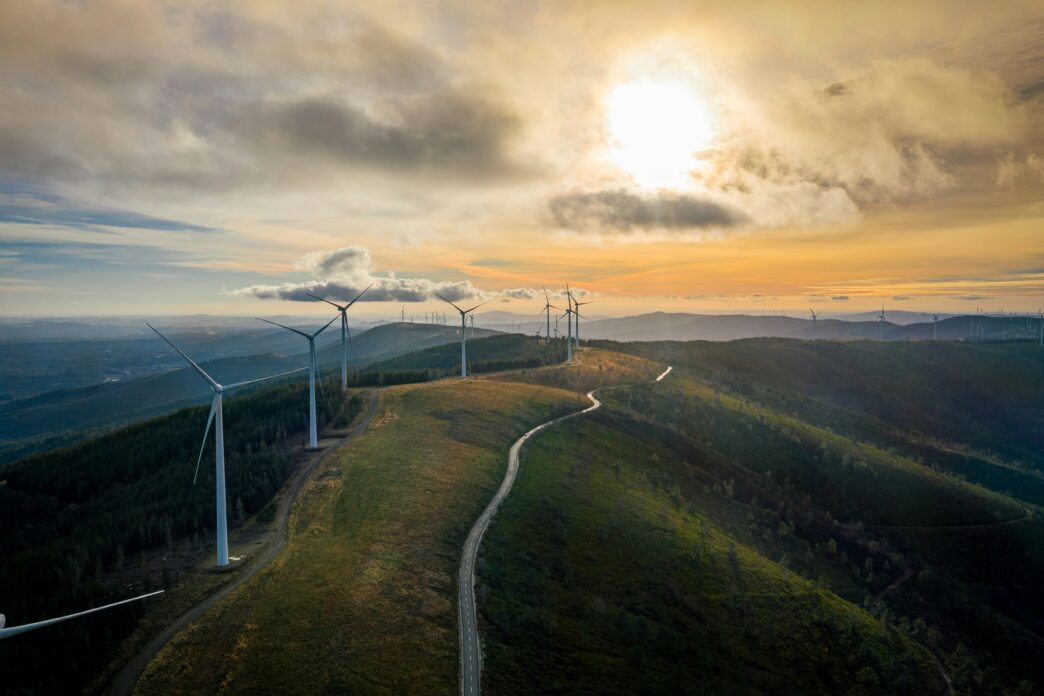
One major implication is the acceleration of the green transition for security reasons. Even beyond climate arguments, EU countries now see wind, solar, and other renewables as essentially geopolitical assets – they are local, cannot be cut off by a foreign actor once installed, and reduce reliance on imported commodities. The term “energy sovereignty” is used alongside “strategic autonomy” to describe the goal of meeting as much energy demand as possible from domestic renewable sources. The faster Europe can replace gas boilers with heat pumps, petrol cars with EVs, and fossil power with renewables, the less vulnerable it becomes. For example, a study in early 2023 showed that EU wind and solar expansion in 2022 (which hit record levels) saved significant amounts of gas – helping compensate for the shortfall and thus directly weakening Russia’s energy leverage. The war essentially provided a political catalyst to enact more aggressive clean energy policies, including permitting reforms to build turbines faster, and subsidy schemes like the EU’s Green Deal Industrial Plan to boost clean tech manufacturing in Europe.
Another implication is a reevaluation of relationships with other energy-rich autocratic regimes. Europe is mindful that it must avoid falling into new dependencies on states that might leverage energy. Russia’s actions prompted comparisons to other suppliers, such as how dependent should Europe be on China for critical minerals, or on the Middle East for oil? While those are outside the immediate scope of this, the principle of diversification plus domestic production as a shield applies broadly. In essence, Europe is operationalising what in international relations theory is called “complex interdependence” – recognising that while interdependence can foster cooperation, it also creates vulnerabilities if asymmetrical. The EU is striving to reduce asymmetry: ensuring that if interdependence exists, Europe can tolerate a cutoff better than the supplier can. Regarding gas, this has been achieved with Russia. Russia now has a very limited ability to reroute its gas – pipelines to China are small in capacity, so Russia is forced to cap output, flaring gas, etc., meaning Europe’s exit has hurt Russia more than vice versa. In oil, Europe’s embargo aimed to do similar – force Russia to take heavy discounts from other buyers. In future scenarios, the EU will likely apply this lesson to any dominant import reliance that could threaten security, whether it’s lithium for batteries or semiconductors or something else.
Europe’s Strategic Shift Beyond Russian Dependence
On the defence autonomy front, having secure energy means Europe is freer to pursue independent defence initiatives without external pressure. For instance, if the EU wanted to sanction a country for aggression, it could do so without fear of lights going out at home. This aligns with Europe’s recent moves toward greater defence collaboration (e.g. proposals for an EU defence investment program) — energy independence complements military resilience. This indicates a merging of thinking: pipelines and power grids might not traditionally be seen as defence assets, but now they are. The EU has conducted stress tests and scenario planning for a possible simultaneous energy cutoff or cyberattack on energy systems, improving preparedness.
It’s worth noting that not everyone agrees on the trajectory. Some analysts argue Europe’s rush to cut off Russian gas had economic downsides – contributing to a cost-of-living crisis and deindustrialisation risks (with high energy prices making European industry less competitive globally). They question if Europe could have phased out Russian energy more gradually to mitigate economic pain, especially for poorer households. Others counter that any continued payments to Russia would have funded further aggression, and that short-term pain was unavoidable but ultimately successful in staving off an even worse outcome (a politically subjugated Europe). There is also a debate on the role of nuclear energy– France and some others maintain that keeping nuclear plants (which provide steady power and reduce gas burn) is crucial for energy security. Germany, however, proceeded with its pre-war plan to shutter its last nuclear reactors by 2023, a decision criticised by some as undermining the energy weapon resistance. These debates feed into how Europe will shape its energy mix moving forward under the umbrella of security.
Russia has tried to frame Europe’s actions as self-harming and argued that Europe cannot fully replace Russian gas without great cost. Pro-Russian commentators suggest Europe will face years of high energy prices and that this will erode public support for pro-Ukraine policies. While it’s true that energy prices in Europe remain higher than in pre-war times (gas prices in 2024 are roughly double their 2010s average), the political will in Europe remains firm til now. Support packages have softened the impact on citizens, and EU-wide inflation started easing by mid-2023 as gas prices fell from their peak. So the narrative of Europe “losing the energy war” has not materialised – if anything, Russia’s leverage is permanently diminished in Europe, and Russia will have to seek alternative markets under less favourable terms. The Russia-Ukraine war has indelibly altered Europe’s energy security paradigm. Energy, once viewed largely as an economic or resource issue, is now seen through a strategic lens. Europe learned that dependency on an adversary can be as dangerous as a gap in one’s defense armour. Through rapid diversification and an accelerated clean energy transition, the EU has improved its resilience and freedom of action. The structural shift away from Russian energy has, in a short time, enhanced Europe’s geopolitical strength and defensive autonomy – the EU can take positions and actions, like robustly supporting Ukraine, that it might have hesitated to if Russia still held the energy sway it did pre-2022. This newfound autonomy, however, will require constant vigilance: Europe must manage new dependencies smartly and continue investing in truly sustainable, secure energy sources.