










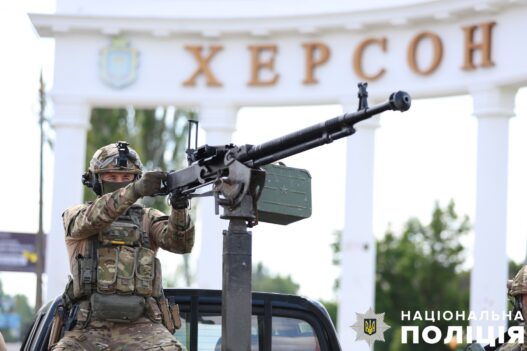
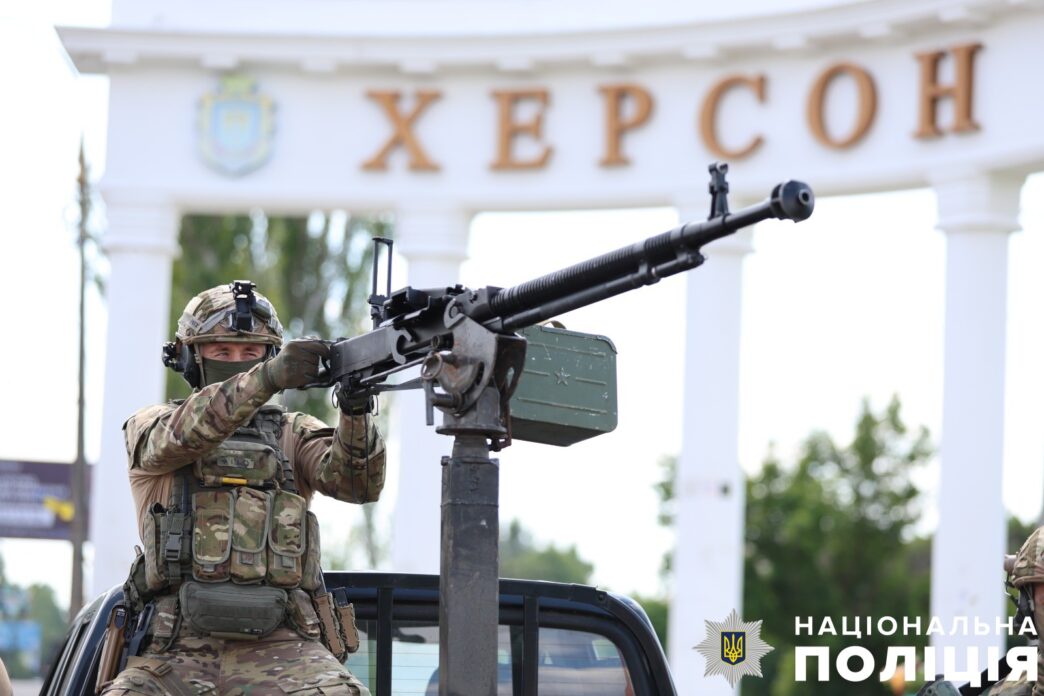
Kherson lies only a few kilometres from Russian positions on the other side of the Dnipro River. That proximity has turned the southern Ukrainian city into one of the clearest examples of how cheap, precise drones are changing both warfare and civilian life.
When Le Monde visited the city in June, explosions could be heard as often as every five minutes. Streets were being covered with anti-drone nets, while soldiers armed with shotguns provided a last line of defence. Around 60,000 of Kherson’s roughly 300,000 pre-war residents were estimated to remain in the city or travel regularly between Kherson and safer areas.
The threat has continued to grow. In July, the UN Human Rights Monitoring Mission in Ukraine recorded 34 civilians killed and 424 injured in Kherson. Across Ukraine, short-range drones killed 111 civilians and injured 710 that month, the highest monthly toll from such weapons since Russia launched its full-scale invasion in February 2022.
Sources: Le Monde | UN Human Rights Monitoring Mission in Ukraine
When the Front Reaches Daily Life
Short-range drones differ from many traditional battlefield weapons because their operators can observe potential targets through onboard cameras. First-person-view (FPV) drones can carry explosives, travel at high speeds and operate kilometres away from their controllers. Their relatively low cost has contributed to their rapid proliferation on both sides of the frontline.
Info boxes provided by Laksmitha Anindyanari:
FPV (First-Person-View) drones are remotely operated drones equipped with cameras that transmit live video to the operator, allowing them to see and control the drone from its perspective. In warfare, FPV drones are often modified to carry explosives and can be used to precisely strike targets while being operated from a distance. Their relatively low cost and manoeuvrability have made them widely used in the Russia-Ukraine war.
For civilians, this has changed the nature of danger. UN investigators have documented drones striking people travelling by bus, walking, cycling, driving civilian vehicles and providing humanitarian or medical assistance. Between February 2022 and April 2025, short-range drone attacks killed at least 395 civilians and injured 2,635. The vast majority, 89 per cent, resulted from Russian attacks in Ukrainian-controlled territory; 11 per cent of the casualties were documented in Russian-occupied Ukrainian territory.
The consequences extend beyond casualties. Fear of drones restricts movement and access to food and healthcare, while humanitarian organisations, medical personnel and municipal workers have had to limit some activities. Older people and people with disabilities are particularly vulnerable because many remain in frontline communities and have fewer options to relocate. Kherson illustrates this transformation particularly starkly. Yaroslav Shanko, head of the city’s military administration, told Le Monde that around 2,000 Russian drones were being directed against the city each week.
Ukrainian officials and residents have used the expression “human safari” to describe alleged deliberate attacks on civilians.
The phrase represents a Ukrainian description rather than an independently established Russian military policy. However, UN findings independently document extensive civilian harm caused by short-range Russian drone attacks and incidents in which civilians appeared to have been deliberately targeted.
Sources: UN Human Rights Monitoring Mission in Ukraine | Le Monde
Cameras Change the Legal Question
The ability of drone operators to see potential targets also raises important questions under international humanitarian law. Parties to a conflict must distinguish between civilians and combatants regardless of the weapons they use.
Info boxes provided by Laksmitha Anindyanari:
The principle of distinction is a fundamental rule of international humanitarian law requiring parties to an armed conflict to distinguish between civilians and combatants, as well as civilian objects and military objectives. Attacks may only be directed against legitimate military targets, and deliberately targeting civilians or civilian objects is prohibited. The principle applies regardless of the weapons or technologies used in warfare, including drones.
The UN notes that onboard cameras should, in principle, give operators greater ability to distinguish civilians from military targets. Yet investigators documented incidents in which operators appeared to have intentionally attacked civilians or civilian objects. Deliberately targeting civilians, if established, constitutes a war crime.
“Each of these attacks must be investigated,” Danielle Bell, head of the UN Human Rights Monitoring Mission in Ukraine, said when presenting its findings.
The mission called for those responsible for intentionally targeting civilians and humanitarian personnel to be held accountable. UN monitors have also verified civilian casualties from short-range drones in occupied Ukrainian territory. Independent verification remains more difficult because publicly available information from occupied territory is increasingly limited.
Source: UN Human Rights Monitoring Mission in Ukraine
Europe Turns Experience Into Policy
What is happening in Kherson increasingly matters beyond Ukraine. European policymakers are treating the conflict’s rapid technological development as a lesson for the continent’s own defence. In June, the European Council called for faster work on drones and counter-drone systems, early warning and air defence. EU leaders also stressed the need to draw on Ukraine’s experience with emerging technologies and strengthen cooperation between European and Ukrainian defence industries.
Info boxes provided by Laksmitha Anindyanari:
Counter-drone systems are technologies and equipment designed to detect, track, identify, disrupt, or destroy hostile drones. They can include radar and other sensors for detecting drones, electronic systems that interfere with their communications or navigation, and physical interceptors that disable or destroy them. These systems are increasingly important as inexpensive drones become more common in modern warfare and pose growing threats to military forces and civilian infrastructure.
That cooperation is becoming institutionalised. On 17 July, the European Commission launched the EU-Ukraine Drone Alliance. The alliance brings together companies, start-ups, researchers, armed forces and other users, with 18 EU-based and Ukrainian companies selected as its founding members.
The alliance is therefore more than another channel of military support for Kyiv. The Commission explicitly presents cooperation with Ukraine as a way to provide battlefield capabilities while strengthening Europe’s own defence readiness and industrial capacity. Its founding members are expected to meet in Brussels in September.
Sources: European Commission | European Council
Why This Matters for Europe
Kherson demonstrates how rapidly relatively inexpensive technology can change the relationship between military operations and civilian protection. Drones that once supplemented other weapons can now influence whether people near the frontline can safely use roads, public transport, hospitals, or humanitarian services.
For Europe, the lesson is both humanitarian and strategic. International humanitarian law requires civilians to remain protected regardless of technological change. At the same time, European governments increasingly face the question of how to protect their own populations, infrastructure, and armed forces against large numbers of comparatively cheap drones.
Ukraine is consequently becoming both a defence partner and an important source of operational knowledge for Europe. The EU-Ukraine Drone Alliance illustrates how lessons developed under wartime pressure are already entering European defence and industrial policy. Kherson’s experience therefore reaches beyond the Dnipro. The city provides a glimpse of a form of warfare that Europe is now preparing to defend itself against.
What to Watch Next
The first meeting of the EU-Ukraine Drone Alliance’s 18 founding members is expected in Brussels in September. Its progress will provide an early indication of how quickly political commitments can translate into joint European-Ukrainian production and effective counter-drone capabilities.
Further UN monitoring will also show whether the sharp rise in civilian casualties from short-range drones continues, and whether investigations and accountability mechanisms can keep pace with a technology that is evolving rapidly.
Sources
- UN Human Rights Monitoring Mission in Ukraine — Protection of Civilians in Armed Conflict, July 2026. Published 12 August 2026. Original source. Accessed 24 August 2026.
- UN Human Rights Monitoring Mission in Ukraine — Short-range drone attacks killed 395 civilians, injured 2,635 between February 2022 and April 2025. Original source. Accessed 24 August 2026.
- European Commission — Commission launches EU-Ukraine Drone Alliance to boost drone and counter-drone technology. Published 17 July 2026. Original source. Accessed 24 August 2026.
- European Council — European Council conclusions on Ukraine and European defence and security. Published 18 June 2026. Original source. Accessed 24 August 2026.
- Le Monde — “It’s pure terror against civilians”: In Ukraine, Kherson’s residents live under the constant threat of Russian drones. Published 24 June 2026. Article. Accessed 24 August 2026.
AI Transparency Note: Artificial intelligence was used to support research, source comparison and the structuring of this briefing. Editorial decisions, source selection and the final assessment remain subject to human review.