











The European Commission has proposed a common EU rating system for data centres to increase transparency about resource consumption and support their sustainable integration into Europe’s energy system.
The proposal builds on the 2023 Energy Efficiency Directive. It also comes as the rapid expansion of data centres in the United States highlights challenges that Europe may face as it seeks to triple its data centre capacity over the next five to seven years.
In the United States, growing cloud and artificial intelligence infrastructure has placed pressure on electricity grids. This has raised concerns about the reliability of electricity supply and whether households and businesses could bear some of the costs of new grid connections. Water consumption and noise have also become local concerns.
What is a data centre, and what does it do?
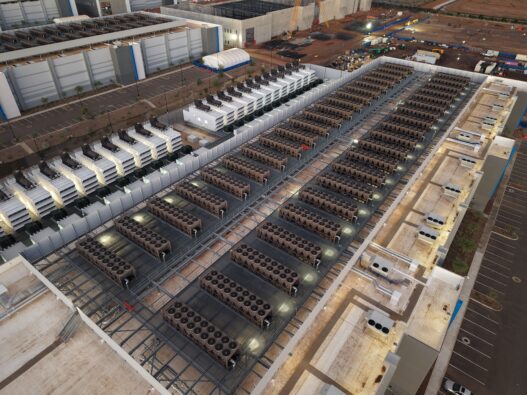
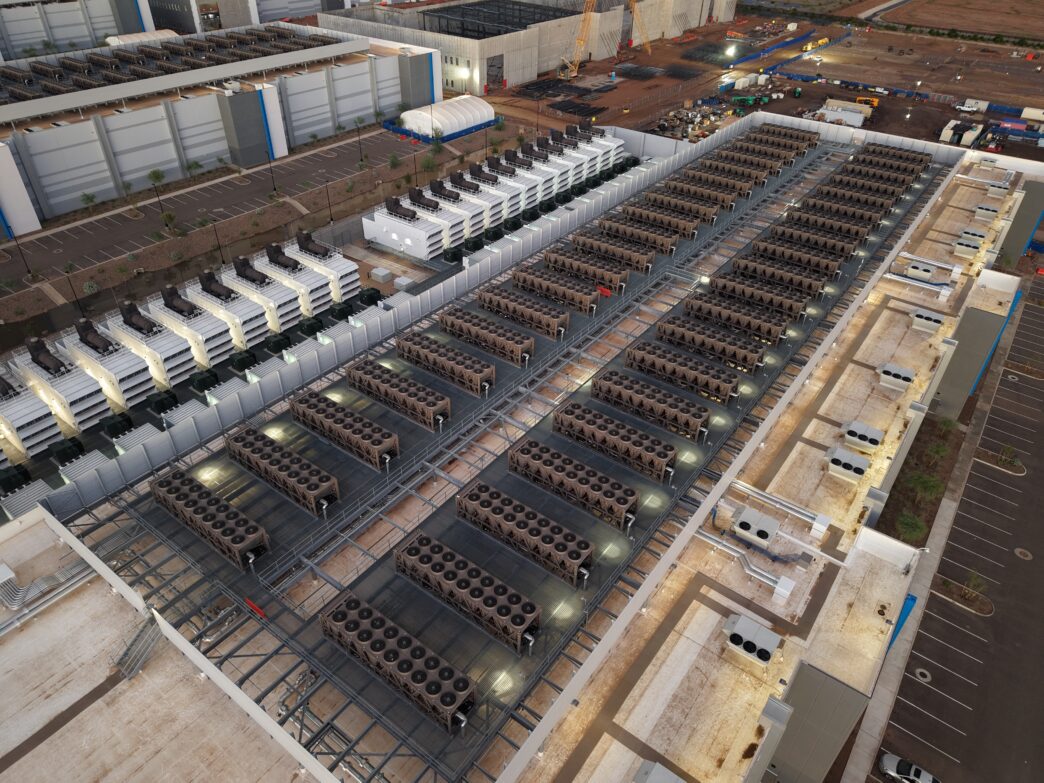
A data centre is a facility that houses computers and related equipment used to store data, process information and run digital services, including apps, streaming platforms, cloud services and artificial intelligence. Data centres are part of the physical infrastructure behind technologies we use every day, both at home and at work.
Their resource needs vary considerably with their size, technology and purpose. According to the International Energy Agency, a conventional data centre may require around 10–25 megawatts (MW) of power, while a large AI-focused facility can exceed 100 MW. At that scale, its annual electricity consumption can be comparable to that of around 100,000 households. Electricity powers the computing equipment and supporting systems, particularly cooling.
How artificial intelligence is changing data centres
Data centres have existed for decades, but the growth of artificial intelligence is changing their size and energy needs. Training and running generative AI models requires powerful processors that perform enormous numbers of calculations. These processors consume electricity and generate heat, increasing demand for cooling.
In 2025, data centres consumed approximately 485 terawatt-hours (TWh) of electricity worldwide, an increase of 17% from the previous year. According to the IEA’s updated projections, consumption could roughly double to 950 TWh by 2030, accounting for around 3% of global electricity demand. Electricity use by AI-focused data centres is projected to grow faster still, tripling over the same period.
That consumption is unevenly distributed. In 2024, the United States accounted for 45% of global data centre electricity use, followed by China at 25% and Europe at 15%. The largest cloud and AI platforms are concentrated mainly in the United States, while China is investing in domestic computing capacity.
The environmental cost of growth
Electricity is only one part of a data centre’s environmental footprint. Servers generate heat and require cooling. Different cooling systems use electricity and water in different amounts, and water demand can be especially consequential in areas affected by drought or water stress.
Large facilities also occupy substantial land and may require substations, power lines, generators and fibre connections. Fans and cooling equipment can generate persistent noise, while backup generators can add to it when operating. These effects can fuel local opposition to new projects.
Location therefore matters. Even an efficient data centre can place significant demands on an area with scarce water or a congested electricity grid. The new European rating scheme measures aspects of energy and water performance, but does not give noise or land use a specific score.
The future of European data centres
The expansion of European data centres could intensify grid congestion. A data centre can be built in one or two years, whereas upgrading electricity infrastructure generally takes much longer.
The new rating scheme is a step towards greater transparency. Its label will allow comparisons between facilities in the same region using indicators of power and water efficiency, low-emission energy use and contributions to grid flexibility. This information can help public authorities, businesses and citizens assess facilities more consistently and scrutinise environmental claims.
The label does not itself require less efficient facilities to close or modernise. The Commission is consulting on possible minimum performance standards, which could eventually turn some sustainability goals into binding requirements. The EU must balance rapid growth in digital capacity with the demands that growth places on grids, natural resources and communities. Transparent data will be essential to judging whether it succeeds.
RESOURCES
- https://energy.ec.europa.eu/news/minimum-performance-standards-data-centres-europe-public-consultation-launched-2026-09-21_en
- https://energy.ec.europa.eu/topics/energy-efficiency/energy-efficiency-targets-directive-and-rules/energy-efficiency-directive/energy-performance-data-centres_en
- https://ec.europa.eu/commission/presscorner/detail/it/ip_26_1667
- https://datacenters.microsoft.com/whatisadatacenter/
- https://www.politico.eu/article/eu-unveils-data-center-sustainability-label-in-effort-to-pressure-big-tech-into-going-green/
- https://www.pewresearch.org/short-reads/2026/09/22/americans-views-of-data-centers-have-turned-more-negative/
- https://iea.blob.core.windows.net/assets/de9dea13-b07d-42c5-a398-d1b3ae17d866/EnergyandAI.pdf
- https://commission.europa.eu/news-and-media/news/making-data-centres-energy-efficient-thanks-new-eu-rating-system-2026-09-21_en
- https://ourworldindata.org/how-much-energy-do-data-centers-and-artificial-intelligence-use
- https://www.iea.org/commentaries/overcoming-energy-constraints-is-key-to-delivering-on-europe-s-data-centre-goals
- https://www.iea.org/topics/artificial-intelligence?
- https://iea.blob.core.windows.net/assets/de9dea13-b07d-42c5-a398-d1b3ae17d866/EnergyandAI.pdf