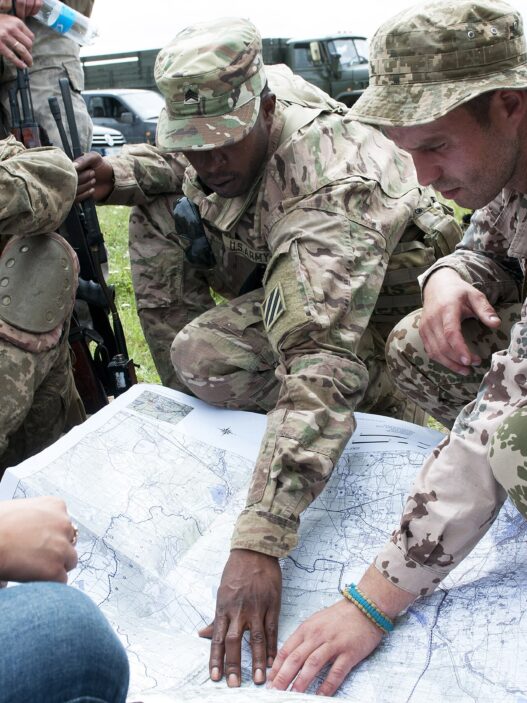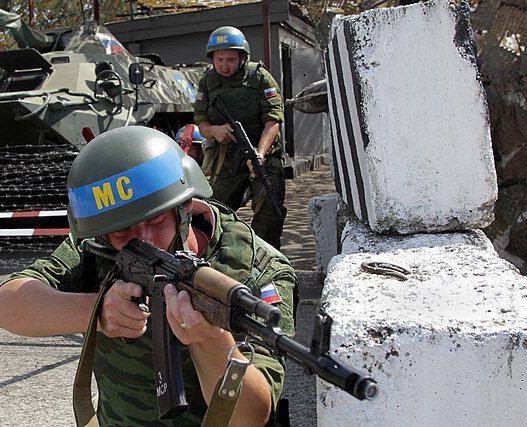







Russia and Ukraine agree to a major prisoners exchange at peace talks in Abu Dhabi
US mediators reported that major differences remain in the agreement, including territory
The two countries are set to determine the number of exchanged POWs on November 12
If completed successfully, this will be the biggest humanitarian exchange since the beginning of the war
Source: AP News
More Quick Briefs:
·Inside Europe·Justice Policy and European Law·Rule of Law·Constitutional Court·Court of Justice of the European Union·Donald Tusk·European Union·Karol Nawrocki·PIS·Poland·Tribunal
·Inside Europe·Justice Policy and European Law·Rule of Law·Constitutional Court·Court of Justice of the European Union·Donald Tusk·European Union·Karol Nawrocki·PIS·Poland·Tribunal
Poland’s Constitutional Court Crisis Escalates ↗︎
Poland’s long-running dispute over judicial independence has escalated into a confrontation between Donald Tusk’s government and President Karol Nawrocki at the Constitutional Tribunal.
Updates
→News: Polish President Karol Nawrocki sets a firm condition for meeting Prime Minister Donald Tusk amid tensions between the presidential palace and government (Wirtualna Polska)
→News: Poland’s government signals openness to EU mediation in its escalating Constitutional Tribunal crisis, according to the justice minister (EUObserver)
→News: Polish Deputy Prime Minister Władysław Kosiniak-Kamysz proposes constitutional amendments to replace all Constitutional Tribunal judges, while parliamentary speaker Włodzimierz Czarzasty doubts sufficient support can be secured (Polskie Radio)
→Commentary: Donald Tusk’s efforts to reclaim Poland’s Constitutional Tribunal are justified, but his methods raise concerns about the rule of law (EUObserver)
→News: Poland’s PiS files criminal complaint against eight Constitutional Tribunal judges as parliamentary leader Mariusz Błaszczak accuses them of acting as an organised criminal group (Polskie Radio)
→News: Polish Prime Minister Donald Tusk proposes talks with President Karol Nawrocki to ease Constitutional Tribunal crisis (Euronews)
→News: Eight Polish Constitutional Tribunal judges claim quorum and approve 2027 budget amid deepening leadership crisis (Notes from Poland)
→Analysis: Poland’s Constitutional Tribunal crisis deepens political divisions ahead of the 2027 election (POLITICO)
→News: Poland’s Constitutional Tribunal faces crucial test amid escalating political power struggle (Rapporteur)
→Explainer: Poland’s political right turns Constitutional Tribunal dispute into an electoral battleground, drawing the EU into the conflict (EUObserver)
→Analysis: Poland’s Constitutional Tribunal crisis raises questions about how to restore the court’s public legitimacy and trust in the rule of law (ECFR)
→Update (02.11.2026): Explainer: Reuters examines the causes of Poland’s constitutional crisis and the political struggle over its highest court (Reuters)
→Update (02.11.2026): News: European Commission backs Donald Tusk’s government amid Poland’s escalating Constitutional Tribunal crisis (Rapporteur)
→Update (01.11.2026): News: Polish president holds crisis talks following dramatic confrontation at the Constitutional Tribunal (Le Monde)
→Update (01.11.2026): Analysis: Poland’s Kaczyński stages constitutional court confrontation and raises prospect of Polexit as he launches his 2027 political comeback bid (EUObserver)
→Leadership disputed: Judge Anna Korwin-Piotrowska announced the suspension of Tribunal president Bogdan Święczkowski on 30 October and assumed its leadership. The move’s legality is contested
→Long-running conflict: The crisis began under PiS in 2015. Since replacing its government in December 2023, Tusk’s coalition has sought to reverse judicial changes criticised for politicising the courts
→Political confrontation: Nawrocki, backed by PiS, calls the latest intervention a forcible takeover. Tusk says it restores the rule of law, following blocked appointments of parliament-elected judges
→European stakes: In December 2025, the EU’s highest court found that appointment irregularities undermined the Tribunal’s independence and that its rulings breached fundamental EU-law principles
→Sources: Euronews, Reuters, Court of Justice of the EU
→Transparency Note: Prepared with AI assistance.
·European Governance·Indo-Pacific·Technology and Digital Policy·Council of the EU·Digital Fairness Act·European Commission·European Parliament·European Union·Online Manipulation
·European Governance·Indo-Pacific·Technology and Digital Policy·Council of the EU·Digital Fairness Act·European Commission·European Parliament·European Union·Online Manipulation
EU Proposes Digital Fairness Act to Curb Online Manipulation ↗︎
The European Commission presented the Digital Fairness Act on 11 November, proposing EU-wide rules against manipulative design, hidden advertising and subscription traps.
→App and website design: The proposal would ban fake low-stock warnings and let users switch off features that encourage compulsive spending.
→Ads and subscriptions: Influencers would have to disclose paid promotions. The proposal would also restrict unfair personalised ads targeting minors and make subscriptions easier to cancel.
→Cross-border enforcement: A separate proposal would let the Commission investigate major cross-border cases and impose fines of up to 6% of a company’s worldwide annual turnover.
→What comes next: The European Parliament and Council will examine both proposals. Consumer law professor Christoph Busch says the Act could fill gaps in existing EU rules for online shops and gaming services.
→Sources: European Commission, EUobserver
→Transparency Note: AI-assisted. Reviewed by the Briefing Team.
·Economic Policy·Monetary Policy·Security & Defence·Budget·Council of the EU·EU Borrowing·European Commission·General Affairs Council·Multiannual Financial Framework
·Economic Policy·Monetary Policy·Security & Defence·Budget·Council of the EU·EU Borrowing·European Commission·General Affairs Council·Multiannual Financial Framework
Frugals vs. Friends of Cohesion: EU Budget Battle Intensifies ↗︎
Six fiscally conservative EU countries are demanding major cuts to Brussels’ proposed €2 trillion budget for 2028–2034, setting up a difficult fight over Europe’s future spending priorities. The 27 member states want to have a decision by the end of the year.
Updates
→Official Announcement: Council of the EU and European Parliament reach an agreement on the EU’s 2027 annual budget (Council of the EU)
→News: European Council President António Costa plans to present a new compromise on the EU’s long-term budget within 10 days (Rapporteur)
→News: German Chancellor Friedrich Merz and Hungarian Prime Minister Péter Magyar clash over EU financial support for Ukraine and the bloc’s next long-term budget (Rapporteur)
→Interview: Estonia rejects Germany’s calls for cuts to the EU’s next long-term budget (Rapporteur)
→News: German Chancellor Friedrich Merz warns that failure to agree on EU aid for Ukraine could block negotiations on the bloc’s next long-term budget (Euronews)
→Interview: EU’s real deadline for reaching an agreement on its next long-term budget comes into focus (Rapporteur)
→News: EU budget disputes stall key Brussels priorities, including AI chips, Arctic policy and agriculture (POLITICO)
→News: Finland warns that EU financial support for Ukraine must not depend on negotiations over the bloc’s long-term budget (Rapporteur)
→News: Firefighters from 19 countries protest proposed EU disaster response budget cuts in Brussels (EUObserver)
→Update (02.11.2026): News: European cultural organisations warn of severe consequences as proposed EU budget cuts threaten to reduce cultural funding by 30% (EUObserver)
→Update (30.10.2026): News: EU tobacco tax revenue forecasts fall sharply amid negotiations over the bloc’s next long-term budget (Rapporteur)
→Update (27.10.2026): Analysis: Ukraine’s €70 billion funding shortfall threatens to complicate negotiations over the EU’s next long-term budget (Euronews)
→Update (26.10.2026): News: Austria threatens to veto the EU budget (Rapporteur)
→Update (26.10.2026): News: EU foreign aid chief says little is changing in Africa despite development efforts (Rapporteur)
→Update (26.10.2026): News: Rising debt costs and fraud allegations increase pressure on the EU budget (Rapporteur)
→Update (23.10.2026): Interview: António Costa targets November agreement on EU budget (Rapporteur)
→Update (22.10.2026): News: MEPs seek €7 billion more for Erasmus despite opposition from budget-conscious EU governments (EUobserver)
→Update (21.10.2026): Analysis: Who will stand up for Global Europe? (PubAffairs Bruxelles)
→Update (20.10.2026): News: EU budget negotiations raise questions over costs and funding (Rapporteur)
→Update (19.10.2026): Analysis: EU faces a perfect political storm amid mounting challenges (POLITICO)
→Update (16.10.2026): Interview: Irish minister says EU budget deal still possible by Christmas (YouTube)
→Update (16.10.2026): Interview: Cyprus president proposes shortening EU budget to three or four years (POLITICO)
→Update (16.10.2026): News: Costa targets November EU budget showdown (POLITICO)
→Update (16.10.2026): News: Costa proposes new EU taxes to break budget deadlock (Rapporteur)
→Update (15.10.2026): Podcast: Europe faces a new battle over the EU budget (ECFR)
→Update (15.10.2026): News: 17 European leaders issue joint statement on EU cohesion funding (Italian Government)
→Update (14.10.2026): News: EU leaders consider deep budget cuts as joint borrowing expands (EUobserver)
→Update (14.10.2026): News: EU capitals weaken budget deal deadline (POLITICO)
→Update (13.10.2026): News: France sets EU budget red lines on tech taxes and Buy European (Rapporteur)
→Update (13.10.2026): Interview: Austrian EU Affairs Minister Claudia Bauer rejects artificial budget deadline (Rapporteur)
→Update (13.10.2026): News: Spain hosts Friends of Cohesion meeting on next EU budget (Spanish Ministry of Foreign Affairs)
→Update (12.10.2026): Opinion: Will MEPs challenge €141bn in EU budget cuts? (EUobserver)
→Update (11.10.2026): News: MEPs warn Irish EU budget plan risks historic failure as €141 billion in cuts spare agriculture and cohesion funds (EUobserver)
→Update (11.10.2026): News: European Commission warns that EU budget cuts could undermine funding for crisis response (POLITICO)
→Update (10.10.2026): EU's Irish presidency wants 8% cut to proposed 2028-2034 budget plan (Reuters)
→Update (08.10.2026): Opinion: Cut the EU budget and we all lose (EUobserver)
→Update (08.10.2026): News: EU countries brace for €100B-€200B smaller budget (Politico)
→Update (08.10.2026): Analysis: EU’s 2028-2034 budget proposal creates new conflicts over spending priorities and financial burden-sharing (SWP)
→Update (08.10.2026): News: EU auditors warn of major budget shortfall unless the EU introduces new sources of revenue (Rapporteur)
→Update (07.10.2026): News: Iran war shock expected to shrink next EU budget (Rapporteur)
→Update (06.10.2026): News: Von der Leyen rebukes EU budget frugals over demands for deeper spending cuts (Rapporteur)
→Update (29.09.2026): News: EU governments brace for €100 billion cut to long-term budget proposal (POLITICO)
→Update (29.09.2026): News: EU cuts funding for women’s rights groups amid wider budget reductions (EUobserver)
→Update (29.09.2026): News: MEPs back €47 billion in new Erasmus funding as frugal states seek EU budget cuts (EUobserver)
→Update (29.09.2026): Commentary: EU budget cuts risk hurting member states’ own regions (EUobserver)
→Update (29.09.2026): News: EU leaders battle over budget as Parliament prepares resistance (Rapporteur)
→Update (25.09.2026): News: 12 countries oppose French push for EU defence preference (Euractiv)
→Update (23.09.2026): News: EU governments consider cutting development aid by up to 40 percent (EUobserver)
→Update (23.09.2026): News: Greece proposes EU-wide telecoms levy to fund budget and high-tech investment (Euractiv)
→Update (22.09.2026): News: France opposes cuts to foreign aid in next EU budget (POLITICO)
→Update (22.09.2026): News: Results of the General Affairs Council (Irish EU Presidency)
→Update (22.09.2026): News: France opposes cuts to foreign aid in next EU budget (POLITICO)
→Update (22.09.2026): News: Germany rejects Costa’s push for new EU budget taxes (POLITICO)
→Update (22.09.2026): News: EU ministers meet in Brussels for General Affairs Council (Council of the EU)
→Update (21.09.2026): Analysis: EU budget could strengthen rule of law safeguards but member states may blunt reforms (CER)
→Update (21.09.2026): News: Costa says EU budget needs new taxes governments are not already raising (POLITICO)
→Update (18.09.2026): News: Germany and Spain go head-to-head in EU budget fight (POLITICO)
→Update (17.09.2026): News: MEPs deadlocked over CAP’s place in next EU budget (Euractiv)
→Update (15.09.2026): News: Metsola urges Europe’s political centre to hold against extremes (Euractiv)
→Update (14.09.2026): News: EU plans cuts to staff and salaries in next long-term budget (POLITICO)
→Update (14.09.2026): News: EU countries split over scale of long-term budget cuts (Euractiv)
→Update (09.09.2026): News: Germany calls for hundreds of billions in EU budget cuts (Reuters)
→Update (09.09.2026): News: Costa says new EU taxes would reduce national contributions (POLITICO)
→Update (08.09.2026): News: France backs business tax to fund EU budget (Euractiv)
→Update (07.09.2026): News: Le Pen backs tobacco retailers against EU tax hikes (Euractiv)
→Update (07.09.2026): News: Ireland secures EU tax deal on carbon imports and e-waste (POLITICO)
→Update (04.09.2026): News: Spain urges EU climate adaptation fund and binding targets (Reuters)
→Update (04.09.2026): Commentary: EU budget could loosen China’s grip on critical raw materials (Euronews)
→Update (03.09.2026): News: EU budget negotiators criticise frugal states over cuts (EUobserver)
→Update (03.09.2026): Interview: Lithuania says eastern flank needs must shape EU budget (Euractiv)
→Update (02.09.2026): News: Spain worried by EU budget debate (Euractiv)
→Update (02.09.2026): News: EU budget camps remain deadlocked (EUobserver)
→Update (31.08.2026): News: Ireland seeks to break EU budget deadlock (POLITICO)
→Update (27.08.2026): Europe’s defence promise meets budget reality (ECFR)
→Quick Brief:
→Germany, Denmark, the Netherlands, Austria, Finland and Sweden want cuts of several hundred billion euros
→The European Commission has proposed a nearly €2 trillion seven-year budget for 2028–2034
→The six still want priority spending on defence, competitiveness, migration and European sovereignty
→They reject new joint EU borrowing and demand cuts across spending areas as national budgets face consolidation
→Sources: Euractiv, Reuters, Council of the EU
→Transparency Note: Use of AI
·Inside Europe·Budget·Michal Šimečka·Parliamentary Majority·Robert Fico·Slovakia
·Inside Europe·Budget·Michal Šimečka·Parliamentary Majority·Robert Fico·Slovakia
Fico Loses Reliable Majority in Slovakia ↗︎
Slovak Prime Minister Robert Fico’s coalition can now count on only 75 of 150 MPs after another defection, prompting the opposition to call for early elections.
Updates
→News: Slovak Prime Minister Robert Fico suffers parliamentary defeat over controversial criminal justice reform, prompting opposition calls for snap elections (AFP via 24 News HD)
→News: Slovak Prime Minister Robert Fico rules out early elections despite losing his parliamentary majority, blaming coalition partners SNS and Hlas (TASR)
→Latest defection: On 3 November, MP Roman Malatinec left the Rural Party and joined a group led by former environment minister Tomáš Taraba. The coalition postponed parliamentary votes for a week
→Coalition rift: Taraba returned to parliament after the Slovak National Party (SNS), a junior coalition partner, voted with the opposition to remove him in September. His group says it will assess bills individually
→What’s next: Opposition leader Michal Šimečka called for a snap election. The loss of reliable backing does not automatically bring down the government. The next regular election is due in September 2027
→European stakes: The split makes it harder for Fico’s government to pass its 2027 budget, a key test of whether the coalition can still govern without a dependable majority
→Sources: Rapporteur, iROZHLAS, Reuters
→Transparency Note: Prepared with AI assistance.
·Climate Policy·Energy Policy·Environmental Policy·United Nations·Australia·Clean Electricity·COP31·Council of the EU·European Union·Fossil Fuels·UNEP
·Climate Policy·Energy Policy·Environmental Policy·United Nations·Australia·Clean Electricity·COP31·Council of the EU·European Union·Fossil Fuels·UNEP
Fossil Fuels and Climate Finance Top COP31 Agenda ↗︎
Governments meet in Antalya from 9 to 20 November to discuss how to move away from fossil fuels and close the funding gap for countries adapting to climate change.
Updates
→News: UN Secretary-General António Guterres warns of accelerating climate change at COP31 and urges stronger global action on fossil fuels and climate justice (Reuters, United Nations)
→Official Announcement: EU signs Global Geothermal Pledge at COP31, reaffirming its commitment to expanding geothermal energy as part of the clean energy transition (European Commission)
→Official Announcement: EU and Organisation of African, Caribbean and Pacific States reaffirm climate commitments at COP31, focusing on translating shared priorities into concrete action (Council of the EU)
→Analysis: Six key issues to watch at COP31 climate talks, including emissions reductions, climate finance and international cooperation (Rapporteur)
→News: Turkish villagers urge COP31 leaders to witness the environmental devastation caused by coal mining and energy production (Reuters)
→The summit: Turkey hosts COP31, while Australia leads the negotiations. Heads of state and government meet on 11 and 12 November
→Fossil fuels: Brazil’s outgoing COP presidency published a voluntary roadmap on 3 November. It calls for fossil fuel production and demand to fall as clean energy expands
→Adaptation finance: Developing countries received $28.2–31.7 billion in international public adaptation finance in 2024. The UN Environment Programme estimates they will need around $305 billion annually by 2035
→EU position: The EU will press governments to implement their national climate plans, accelerate the shift away from fossil fuels and expand the use of clean electricity
→Sources: Council of the EU, COP30 Presidency, UNEP, UNFCCC
→Transparency Note: AI-assisted. Reviewed by the Briefing Team.
·European Governance·Middle East Relations·Britain·European Union·Ireland·Israel·Sanctions·Settlers·West Bank
·European Governance·Middle East Relations·Britain·European Union·Ireland·Israel·Sanctions·Settlers·West Bank
The EU and Sanctions on Violent Israeli Settlers ↗︎
Amid rising settler violence in the West Bank, the European Union has begun taking limited action against extremist Israeli settlers while internal divisions still constrain tougher measures.
Updates
→Commentary: Escalating Israeli settler violence threatens Palestinian communities and the olive harvest in the occupied West Bank (EUObserver)
→News: Israeli settler violence threatens Palestinian children’s access to education in the occupied West Bank (DIE ZEIT, The Guardian, UN OCHA)
→News: European Parliament trade committee chair Bernd Lange criticises the European Commission for invoking EU voting rules to avoid banning imports from Israeli settlements (EUObserver)
→Update (22.10.2026): News: Israeli settlers steal Palestinian olive harvests as attacks on farmers grow increasingly violent in the West Bank (Reuters)
→Update (18.10.2026): News: France urges Israel to arrest attackers of EU diplomats (POLITICO)
→Update (18.10.2026): News: European diplomats attacked by Israeli settlers in West Bank (BBC News)
→Update (15.10.2026): News: Israeli settlers injure Palestinians and US journalist during West Bank harvest attack (BBC News)
→Update (14.10.2026): News: EU funding raises concerns over Israeli firms developing surveillance technology (EUobserver)
→Update (11.10.2026): Commentary: EU leaders accused of remaining silent on Israel despite renewed attention to Gaza genocide allegations (EUobserver)
→Update 08.09.2026: Britain’s east Jerusalem consulate is downgraded (AP)
→Update (23.09.2026): News: Israeli bond sales halted across EU in de facto €2.2bn sanction (EUobserver)
→Update (14.09.2026): News: Israeli rights group B'Tselem accuses Israel of dismantling Palestinian existence in West Bank (RFI)
→Update (08.09.2026): Analysis: Britons back Israeli settlement trade ban by more than two to one (ECFR)
→Update (08.09.2026): News: Israel closes British consulate in East Jerusalem over settlement trade ban (Reuters)
→Update (08.09.2026): News: Eleven European countries and Canada sanction Israeli settlement products (Le Monde)
→Update (08.09.2026): News: France and Canada join UK sanctions on Israeli settlements (POLITICO)
→Update (08.09.2026): News: UK plans trade restrictions on West Bank settlements (BBC News)
→Update (30.08.2026): Interview: Irish MEP says trade is EU’s only leverage over Israel (EUobserver)
→Update (28.08.2026): Commentary: EU favours reforms over pressure on Israel (EUobserver)
→Update (July 09, 2026): EU pitches trade ban with Israeli settlements (Euractiv)
→Update (July 08, 2026): Ireland passes bill banning goods from Israeli settlements (Euractiv)
→Update (June 18, 2026): Israel cuts ‘all contact’ with Kaja Kallas over apartheid comments (Euractiv)
→Update (June 16, 2026): Kallas' plan to punish Israel rejected by the Commission (Euractiv)
→Update (June 15, 2026): Kallas said she will ask the European Commission to propose further restrictive measures on trade against illegal Israeli settlements (Euractiv)
→May 11, 2026:
→Sanctions reflect rising settlement violence and humanitarian crises in the Palestinian territories
→Hungary’s new government ended the veto blocking them
→Stronger trade sanctions were not agreed upon
→Critics say the measures remain limited despite rising West Bank violence
→Source: The Guardian
→Here is a commentary by ECFR on the topic
·European Governance·Inside Europe·Security & Defence·Aviation Security·Border Security·Cybersecurity·DIsinformation·Hybrid Threats·Poland·Supermarket Refrigeration Systems·Weekly Briefing
·European Governance·Inside Europe·Security & Defence·Aviation Security·Border Security·Cybersecurity·DIsinformation·Hybrid Threats·Poland·Supermarket Refrigeration Systems·Weekly Briefing
European Security Faces Multiple Hybrid Threats ↗︎
Aviation bomb threats, suspected cyberattacks and security concerns along NATO’s eastern border have exposed vulnerabilities across Europe, although no coordinated campaign has been established.
Updates
→News: Schools evacuated in the UK and across Europe following a wave of bomb threats, raising concerns over coordinated security disruptions (Metro)
→News: At least 300 schools across Italy evacuated following emailed bomb threats (Reuters)
→News: European Commission plans security talks after a wave of bomb hoaxes disrupted 20 airports and dozens of flights across Europe (EUObserver)
→News: France blames Iran for cyberattacks targeting supermarket refrigeration systems (POLITICO)
→News: Bomb threats accompanied by the warning “The clock is ticking” disrupt television broadcasters across Europe, raising concerns over coordinated intimidation (Reuters)
→News: More European flights face bomb threats, raising concerns over aviation security (POLITICO)
→Aviation Security: Bomb threats disrupted flights across Europe, prompting diversions and heightened security measures. The European Commission strengthened information-sharing, while investigations continue into possible coordination behind the incidents
→Border Security: Poland reported suspicious movements near its border with Russia’s Kaliningrad region. Prime Minister Donald Tusk warned of possible provocations, but the intentions behind the activity remain unclear
→Cybersecurity: Suspected cyberattacks disrupted supermarket refrigeration systems in several European countries, exposing vulnerabilities in civilian infrastructure. Russian involvement has been suggested but remains unconfirmed
→Disinformation and Preparedness: Reports of Russian disinformation affecting NATO support in Montenegro and Albania highlight security challenges in the Western Balkans. Separately, European military exercises in Poland underline efforts to strengthen defence cooperation
→Sources: Rapporteur, POLITICO Europe, Reuters, France 24, POLITICO Europe, POLITICO Europe, EUobserver
→AI Transparency Note
·Inside Europe·Housing·Strike·Tenant Groups·Trade Unions
·Inside Europe·Housing·Strike·Tenant Groups·Trade Unions
Spain’s Housing Strike Puts Pressure on Parties ↗︎
Spain’s first nationwide general strike since 2012 disrupted public transport on 11 November, putting housing affordability in the spotlight ahead of the 29 November snap election.
Updates
→News: Spain sees its first general strike in 14 years as unions report four million participants protesting the housing crisis, with clashes in major cities (Reuters)
→The strike: Trade unions CCOO and UGT called the walkout with tenants’ groups. Unions reported strong turnout in some sectors, while employers said participation was low across most of the economy.
→The demands: Organisers want rent controls, stronger eviction protections, more public housing and higher wages.
→The political divide: Prime Minister Pedro Sánchez called the election after parliament rejected two housing decrees. Opposition leader Alberto Núñez Feijóo criticised the strike, while unions said their demands targeted all levels of government.
→The election: The formal campaign begins on 13 November, two days after the strike. Voters elect both chambers of parliament on 29 November.
→Sources: UGT, AFP via The Local Spain, Spanish Official Gazette
→Transparency Note: AI-assisted. Reviewed by the Briefing Team.
·Cyber Security·Russia·War in Ukraine·Cyberattacks·Hacking·Rosstat·War Deaths
·Cyber Security·Russia·War in Ukraine·Cyberattacks·Hacking·Rosstat·War Deaths
Russian Statistics Hack Exposes the War’s Uneven Toll ↗︎
Belarusian Cyber Partisans and the pro-Ukrainian group Silent Crow say they obtained Russian death records that point to a disproportionate toll in poorer regions during Russia’s war against Ukraine.
→The attack: Rosstat confirmed cyberattacks, said it found no evidence of a database breach and extended some reporting deadlines to 13 November.
→The death toll: The groups estimate 394,000 to 450,000 war-related deaths using different criteria. The Moscow Times verified a sample, and the full dataset remains unverified.
→Regional losses: Through mid-2024, the war accounted for about one in three deaths among men aged 18 to 49 in Buryatia, Tuva and Zabaykalsky Krai, versus one in ten in Moscow and St. Petersburg.
→Recruitment: Military pay and signing bonuses helped draw recruits from poorer regions. How many of those killed were called up remains unclear.
→Sources: The Guardian, The Moscow Times, German Institute for International and Security Affairs
→Transparency Note: AI-assisted. Reviewed by the Briefing Team.
·Agricultural Policy·Inside Europe·CAP·Copa-Cogeca·EU Funding·European Commission·European Union·Farmers·Food Security
·Agricultural Policy·Inside Europe·CAP·Copa-Cogeca·EU Funding·European Commission·European Union·Farmers·Food Security
Farmers Plan Dublin Rally Over EU Funding ↗︎
The Irish Farmers’ Association plans a rally in Dublin on 13 November, as EU leaders meet in the city, to oppose proposed changes to farm funding after 2027.
→The protest: Organisers plan to plough “No CAP Cuts” into a field beside Dublin Airport so arriving leaders can see it
→European backing: EU farm lobby Copa-Cogeca will use the rally to launch a campaign linking farm support to Europe’s food security
→The proposal: The European Commission would set aside at least €300 billion for farm income and crisis support in 2028-2034. Member states could fund other agricultural and rural programmes through broader national plans
→The dispute: Farm groups want dedicated funding for the Common Agricultural Policy (CAP) protected. The Commission says its proposal gives member states more flexibility to meet local needs
→Sources: Irish Farmers’ Association, Rapporteur, European Commission
→Transparency Note: AI-assisted. Reviewed by the Briefing Team.
·Inside Europe·Far-Right Ideology·Kraków·Poland·Police·Shooting·Six People Killed·Terrorism
·Inside Europe·Far-Right Ideology·Kraków·Poland·Police·Shooting·Six People Killed·Terrorism
Poland Investigates Deadly Kraków Shooting ↗︎
Polish prosecutors are investigating the 7 November shooting that killed six people in Kraków’s Main Market Square as a terrorist offence. The motive remains under investigation.
Updates
→Analysis: The deadly Krakow shooting exposes Poland’s political divisions and risks creating opportunities for Russian interference (EUObserver)
→News: Poland faces mounting political tensions after a deadly shooting deepens divisions across the country (France 24)
→News: Suspect in Krakow mass shooting dies in hospital, Polish police confirm (Reuters)
→The attack: A gunman drove into the square and opened fire, wounding 15 people in addition to those killed. Police shot and wounded the 24-year-old suspect
→Possible motive: Interior Minister Marcin Kierwiński said evidence pointed to the suspect’s interest in far-right ideology. As of 9 November, investigators had yet to question him because of his medical condition
→Wider investigation: Police found the bodies of the suspect’s parents and sister at the family home in Ostrowiec Świętokrzyski. Prosecutors are also investigating their deaths
→National mourning: Poland declared two days of national mourning on 8 and 9 November. A British man and an Austrian woman were among the six people killed in Kraków
→Sources: Polish Government, AP, The Guardian
→Transparency Note: AI-assisted. Reviewed by the Briefing Team.
·Eastern Europe·Russia·Bulgaria·Drone Strike·European Defense·Russian Threat
·Eastern Europe·Russia·Bulgaria·Drone Strike·European Defense·Russian Threat
Bulgaria Summons Russia’s Envoy After Drone Attack; Attacks Continue in Black Sea ↗︎
Following the drone attacks off the coast of Bulgaria on October 13, Russia's Ambassador to Bulgaria was summoned as 11 of the sailors from the sunken ship remain missing.
Updates
→News: EU announces €50 million for a Black Sea maritime security hub in Romania and Bulgaria to strengthen regional security (Euronews)
→News: EU offers financial support to strengthen the Black Sea region’s response to attacks (POLITICO)
→News: European Commission President Ursula von der Leyen plans visit to the Black Sea region amid a wave of deadly drone attacks (POLITICO)
→Update (03.11.2026): Analysis: Expanding Black Sea conflict tests NATO’s red lines and regional security commitments (Reuters)
→Update (28.10.2026): News: Bulgaria strengthens Black Sea defences after drones strike another vessel (Rapporteur)
→Update (24.10.2026): Parliamentary Vote: European Parliament votes on escalating Russian strikes affecting the EU, particularly the Black Sea region (EP Votes)
→Update (23.10.2026): News: Drone strikes another ship in the Black Sea near Romania, killing at least one sailor (POLITICO)
→Update (20.10.2026): News: NATO to deploy aircraft and drones over Black Sea following attacks on shipping (Reuters)
→Update (17.10.2026): News: Romania scrambles F-16 jets after detecting aerial targets near Snake Island (Romanian Ministry of Defence)
→Update (15.10.2026): News: Seven missing after tanker fire off Romanian coast (POLITICO)
→Update (14.10.2026): News: Romania proposes joint NATO Black Sea command with Bulgaria (Rapporteur)
→Update (13.10.2026): Commentary from Bulgaria: Time to stop deceiving ourselves - Russia poses a security threat to Bulgaria (Webcafe Bulgaria)
→Quick Brief:
→Eleven sailors are still missing after a drone attack off the coast of Bulgaria
→Two cargo ships were hit by drones during the night of October 13th according to Bulgarian officials
→In response to the incident Bulgaria summoned Russia's Ambassador
→Bulgaria does not explicitly accuse Russia of the attacks but its Prime Minister said this "benefits" Russia
→Source: Reuters