






A week in review: Read about events and developments around Europe that made headlines – or didn’t – and what comes next.
U.S. and EU Unveil 19th Sanctions Package Targeting Russian Oil and LNG
The U.S. and EU have imposed new sanctions on Russia’s top oil firms to pressure Vladimir Putin over the war in Ukraine, targeting companies like Rosneft and Lukoil and freezing assets abroad. The EU’s 19th sanctions package brings forward a full ban on Russian liquefied natural gas (LNG) imports by January 1, 2027, and adds more banks, shadowy shipping vessels, and crypto platforms to its blacklist. Meanwhile, U.S. President Donald Trump cancelled a planned summit with Putin, citing poor timing for a “wasted meeting.” Ukrainian President Volodymyr Zelensky welcomed the joint sanctions as a sign of Western resolve, while Dmitry Medvedev called them ‘like an act of war’ and the Kremlin labeled them ‘unfriendly’.
Read more on the Time Magazine.
Russian Jets Violate Lithuanian Airspace, NATO Responds
Two Russian military aircraft briefly entered Lithuanian airspace from Kaliningrad, prompting a NATO interception. Lithuania condemned the incident as a “serious violation of international law,” while Russia denied any breach. The event heightened tensions along NATO’s eastern border.
Read more on AP News.
Europe Turns to Japan to Cut China Dependence
The European Union is deepening its strategic partnership with Japan to reduce reliance on China’s rare-earth exports and strengthen economic resilience. The move comes amid U.S.-China trade tensions, as Beijing’s export restrictions highlight Europe’s vulnerability in critical supply chains. Drawing on Japan’s past experience from the 2010 rare-earth crisis, Brussels sees Tokyo as a trusted partner for diversification. Unlike the United States, which promotes decoupling, the EU and Japan advocate de-risking through cooperation, free trade, and climate action. This growing alliance, spanning digital, semiconductor, and green technologies, represents a major step in Europe’s quest for strategic autonomy in an era of great-power competition.
Read more on Euroactive.
Imprisoned Journalists from Belarus and Georgia win the EU’s Sakharov Prize
The European Parliament has awarded the Sakharov Prize for Freedom of Thought to two imprisoned journalists, Andrzej Poczobut from Belarus and Mzia Amaglobeli from Georgia, for their defence of free expression. Poczobut was jailed for criticising the Lukashenko regime in Belarus, while Amaglobeli was convicted after a protest her supporters call politically motivated. Parliament President Roberta Metsola said both are imprisoned on “trumped-up charges” for speaking out against injustice. The award, worth €50,000, will be presented in December in Strasbourg and signals the EU’s solidarity with journalists facing repression.
Read more on AP News.
EU Ministers Delay Decision on 2040 Climate Targets Ahead of COP30
At a meeting of the EU Environment Council, ministers once again postponed agreement on new emissions-reduction goals for 2035 and 2040, less than three weeks before the COP30 climate summit in Belém, Brazil. The European Commission’s proposal to cut greenhouse gas emissions by 90 per cent by 2040, compared to 1990 levels, faced resistance from several member states, notably Germany, France, and Italy, which cited competitiveness, industrial, and economic concerns. Disagreements also persisted over the role of international carbon credits and the treatment of CO₂ removals and storage within the framework. While EU leaders endorsed the overall ambition at their October European Council, they left the details to ministers, who will reconvene at an extraordinary Environment Council on 4 November to seek a compromise before COP30.
Read more on Euro News and for in-depth information on current EU climate policy on Clean Energy Wire.
Belgium Blocks EU Plan to Use Frozen Russian Assets for Ukraine
The EU has postponed a decision on using frozen Russian assets as collateral for new aid for at least another two months. Belgian Prime Minister Bart de Wever opposed the move, demanding strong legal and financial guarantees before releasing funds held by the Brussels-based Euroclear. The European Commission will now present alternative funding options by December, as legal and political divisions persist within the bloc.
Read more on AP News.
European Commission
- 2026 Work Programme
The Commission’s 2026 work programme focuses on strengthening EU sovereignty, competitiveness, and resilience. Key actions include an Industrial Accelerator Act, a Critical Raw Materials Centre, single market reforms, new defence and migration policies, and quality jobs initiatives. Further priorities are food and climate resilience, democracy protection, and continued support for Ukraine and Moldova. Simplification to save €8.6 billion annually is a central goal, while the Commission plans at the same time the allocation of ambitious funding for policies under a nearly €2 trillion as outlined in the Multiannual Financial Framework (MFF) for 2028 to 2034 to “support competitiveness, decarbonisation, security, cohesion and Europe’s global mission”. The Commission still needs the Parliament and Council to agree on this extensive framework. - 2025 Report on Simplification, Implementation and Enforcement
The report, presented by the Commission on October 21, details actions to simplify, implement, and enforce EU rules, targeting €8.6 billion in annual savings for businesses. Key initiatives include sustainability and investment simplifications, reduced reporting for large companies, and easier InvestEU procedures. Agricultural and SME measures cut administrative costs, while defense and chemical sector policies save over €743 million. New Implementation Dialogues and enforcement efforts closed 345 cases, resolving 95% before court, with 45 referrals, and greater transparency in compliance processes. - Día de los muertos in Strasbourg
The European Union and Mexico have concluded negotiations on a new Modernised Global Agreement (MGA), replacing the 2000 Global Agreement that primarily covered trade in goods. The announcement was marked by a Día de los Muertos celebration at the European Parliament in Strasbourg, underscoring cultural and political ties. President Ursula von der Leyen will travel to Mexico in late October 2025 to formally sign the deal. The MGA expands cooperation in trade, investment, sustainability, and governance, including updated provisions on intellectual property, public procurement, SMEs, climate and labour rights, and anti-corruption. It opens markets for European agricultural and industrial exports, facilitates services, and simplifies standards. Economically, the EU is Mexico’s second-largest export destination, with bilateral trade reaching €82 billion in goods in 2023. Critics, however, warn that the agreement may lack human rights safeguards and sufficient transparency, raising concerns over its prioritisation of EU commercial interests.
Read more on European Relations.
European Parliament
- Parliament discussing COP30 Climate Talks
The European Parliament urges COP30 to reinforce the 1.5°C warming limit, calling for ambitious EU climate targets, ending fossil fuel dependence with phased-out subsidies, and faster energy transition. MEPs highlight fair climate finance contributions from all countries and easier access for developing nations. Addressing climate impacts of conflicts and tackling debt in vulnerable states are prioritized. The Parliament delegation will attend COP30 in Belém, Brazil, from 17-21 November 2025 to push these priorities. - Russian Shadow Fleet Exposé Wins EU Journalism Prize
The 2025 Daphne Caruana Galizia Prize for Journalism was awarded to “Follow the Money” and 13 newsrooms for exposing Western shipowners’ sale of 230 aging tankers, worth over $6 billion, to Russia’s shadow fleet. The investigation revealed sanction-evasion routes, opaque ownership, environmental risks, and European links in crew management. The work involved data analysis, satellite tracking, and interviews, highlighting Europe’s entanglement in Russia’s war economy and the human impact of illicit shipping. - Belarusian Opposition Urges Support in European Parliament
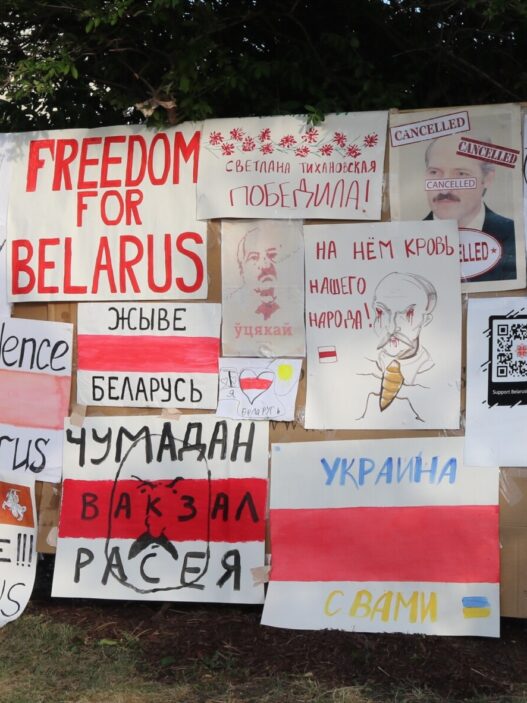
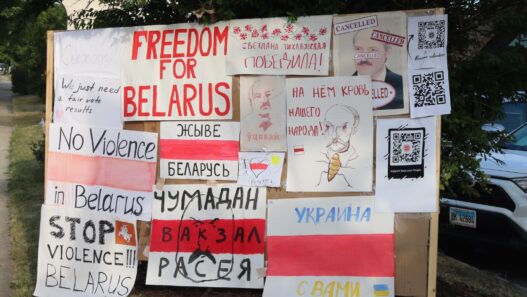
Sergey Tihanovski and Sviatlana Tsikhanouskaya called on the EU to intensify backing for Belarusian democracy. Tsikhanouskaya stressed the need for sanctions and solidarity with political prisoners, highlighting her husband’s story. She urged full EU support for Ukraine to counter Russia and weaken Lukashenka. Tihanovski described five years in solitary confinement and prioritized freeing current prisoners. Both leaders emphasized that strong EU action is vital for Belarus’s future as a bridge between the EU and Russia.
European Council
- Deadline for Russian gas ban?
The EU Council has agreed to phase out all Russian gas imports, including LNG, by 1 January 2028. A transition period begins in 2026, allowing short-term contracts signed before 17 June 2025 to run until June 2026, and long-term contracts until 2028. A new prior-authorisation system will tighten documentation for Russian and mixed LNG cargos while easing rules for trusted suppliers. Member states must submit diversification plans to replace Russian gas and oil, unless they are already independent. The European Commission will review the regulation within two years of its entry into force.
Read more on IEU Monitoring and Euractiv. - EU-ASEAN: Building Stronger Regional Partnership
In his speech at the opening session of the 47th ASEAN Summit in Kuala Lumpur, President of the Council António Costa emphasised the EU’s commitment to a strategic partnership with ASEAN, praising ASEAN’s role in peace efforts and welcoming Timor-Leste as its 11th member. He highlighted the conclusion of a Free Trade Agreement with Indonesia and ongoing negotiations with other ASEAN states. Costa underscored shared values: multilateralism, maritime security, regional integration, digital and green transition. He called for comprehensive cooperation ahead of the 50th anniversary of EU-ASEAN ties, pledging the EU’s reliability as a partner. - EU-India Strategic Agenda and EU Strategy for Cooperation in the Indo-Pacific
The Council has approved conclusions supporting the Commission’s new EU-India agenda focused on strengthening cooperation in prosperity, sustainability, technology, innovation, security, and global issues. Key priorities include finalising an ambitious free trade agreement by year-end, advancing security and defence collaboration towards a formal partnership, and upholding multilateralism and democratic values. The agenda emphasises joint commitment to global rules, WTO principles, and ongoing engagement regarding Russia’s war against Ukraine. Additionally, the Council reaffirmed the EU’s strategic intensification in the Indo-Pacific, focusing on security, sustainable development, and the green and digital transitions. Key priorities address regional security concerns, trade, and economic resilience. The fourth EU-Indo Pacific Ministerial Forum will convene in Brussels, deepening region-to-region cooperation. - EU-Uzbekistan Enhanced Partnership Launched
The EU and Uzbekistan signed the Enhanced Partnership and Cooperation Agreement (EPCA) to boost strategic ties. The EPCA supports trade, investment, and cooperation on security, connectivity, and climate. It fosters bilateral exchanges, WTO market access, rule of law, reforms, and joint action on climate, labour rights, and digital transformation.