







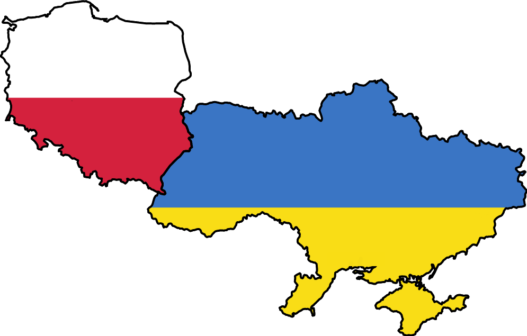
On May 26, Ukrainian President Volodymyr Zelenskyy bestowed the honorary title “Heroes of UPA” on a special forces unit of the Ukrainian Army. However, what Zelenskyy remarked as an act to “restore the historical traditions of the national army” proved to create serious tensions with Poland, one of Ukraine’s most important allies.
The Polish-Ukrainian Memory Dispute Over UPA
During WWII, the UPA, short for the Ukrainian Insurgent Army, was formed to fight for an independent Ukraine when Nazi Germany attacked the USSR. During the war, the UPA fought against multiple actors, including Soviet forces, and at times cooperated with Nazi Germany. It also strived to remove the Polish population from territories claimed by Ukrainian nationalists. During such operations, soldiers of the UPA committed war crimes against Polish civilians, including massacres of Poles in Volhynia and eastern Galicia (currently divided between Poland and Ukraine). As per the estimates of the Polish Institute of National Remembrance, around 100,000 Poles were killed due to UPA’s and Ukrainian nationalists’ actions.
In the Ukrainian collective memory, however, UPA symbolizes the struggle for an independent Ukrainian state during and after World War II. Formed in 1942 as the military wing of the nationalist movement led by the Organization of Ukrainian Nationalists (OUN), the UPA fought against Soviet forces and, at various times, against Nazi Germany and other armed groups operating in the region. Following Russia’s aggression since 2014, the UPA has been increasingly commemorated by parts of Ukrainian society as a symbol of national resistance and the fight for independence.
Ukraine returns Polish state honors after Nawrocki revoked Zelensky’s title
On June 19, Polish President Karol Nawrocki announced the revocation of the Order of the White Eagle, the highest state award, from the Ukrainian president, bestowed by his predecessor, Andrzej Duda, in 2023. Nawrocki found Zelensky’s decision to name the unit after the Ukrainian Insurgent Army “outrageous”, “incomprehensible,” and “deeply disappointing.“
“For the overwhelming majority of Polish society, the UPA remains, above all, a formation responsible for the brutal crimes committed against citizens of the Republic of Poland during World War II,” said Nawrocki in a video released on the president’s official website.
In response to this, Zelenskyy announced on a social media post that he returned the Order of the White Eagle, which he received in 2023 as a symbol of friendship between Ukraine and Poland. Ukrainian political establishment reacted to this unanimously; three of the four living former Ukrainian presidents also returned their Polish medals to Poland alongside Zelensky – Leonid Kuchma, Viktor Yushchenko, and Petro Poroshenko.
“Ukraine will remain open to all meaningful formats of interaction with Poland, in order to strive to avoid misinterpretations of the complex and painful pages of the past of our peoples and to ensure due respect for all innocent victims of the 20th century,” he wrote.
The dispute comes as Poland remains one of Ukraine’s strongest military and political supporters. Since Russia’s full-scale invasion in 2022, Warsaw has provided military aid, hosted millions of Ukrainian refugees, and advocated for continued Western support for Kyiv.
While Ukrainian high officials find that this development only benefits Russia, Nawrocki has stressed, that it will not affect Poland’s support for Ukraine against Russia.
In its essence, the dispute highlights how unresolved historical grievances continue to shape relations between Poland and Ukraine despite their close cooperation following Russia’s full-scale invasion.