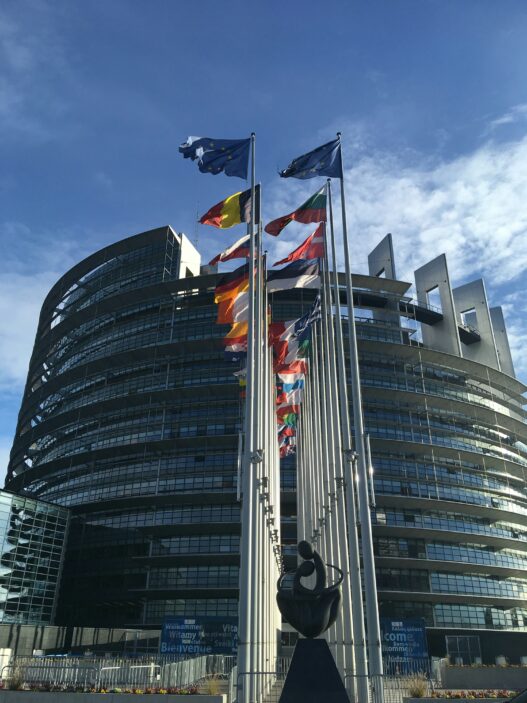









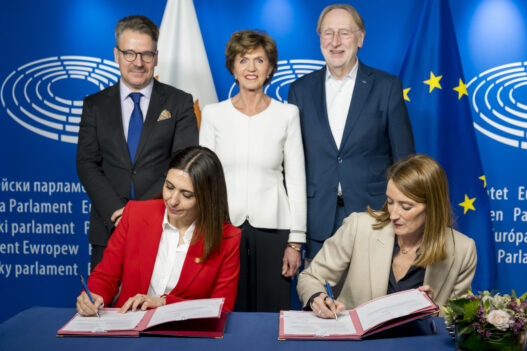
On Monday, the European Parliament and the Council published the REPowerEU Gas Regulation, which sets out the legal framework to phase out Russian natural gas imports and end the EU’s dependence on them by 2027. The regulation includes several deadlines for existing contracts concluded before 17 June 2025 with transition periods: from April 2026, short-term liquefied natural gas (LNG) contracts will be banned; from June 2026, short-term pipeline gas contracts will be prohibited; from January 2027, all long-term LNG contracts will be banned; and from September 2027, pipeline gas imports under long-term contracts will also be prohibited.
This represents a major step forward for European strategic autonomy. The EU’s dependence on Russian natural gas has been weaponized repeatedly over the past decades, as Russia has sought to influence European political decision-making. This concern was explicitly highlighted in a European Commission statement following the publication of the regulation, in which the Commission noted that: “In order to avoid essential security risks and energy dependencies resulting from continued energy trade with the Russian Federation, the European Commission remains committed to ensuring the phase-out of all remaining oil imports from the Russian Federation by the end of 2027, in line with the Versailles Declaration.”
Russia’s invasion of Ukraine brought Europe’s reliance on Russian natural gas into sharp focus, as many EU Member States were forced to balance the imposition of economic sanctions on Russia with the energy needs of economies heavily reliant on Russian imports. Recognizing the urgency of reducing this dependency, EU Heads of State agreed in the March 2022 Versailles Declaration to gradually decrease, and ultimately eliminate, dependence on Russian energy. In May 2022, the Commission followed up with proposals to diversify energy supplies in a safe, affordable, and sustainable manner. Significant progress since then has laid the groundwork for the current regulation, which aims to fully phase out Russian natural gas imports by 2027.
In the regulation’s text, the European Parliament and Council explicitly cited Russia’s abuse of Europe’s energy dependence as justification for this move, including incidents predating the war in Ukraine. These include Russia’s suspension of gas supplies to several Southeast and Central European countries during a cold spell in 2006 and the complete cutoff of gas transiting through Ukraine in January 2009. The latter affected 18 Member States, some of which experienced zero gas flows for nearly two weeks. The regulation also highlights the role of the Russian state-controlled monopoly exporter Gazprom, which has been the subject of multiple Commission investigations for potential breaches of EU competition rules, including evidence of unfair pricing practices and the conditioning of energy supplies on political concessions, such as participation in Russian pipeline projects or the acquisition of control over EU energy assets.
Overall, the regulation marks a significant advance in European strategic autonomy, particularly in the context of ongoing Russian aggression. Greater energy diversification will allow the EU to make critical geopolitical decisions without the risk of sudden supply disruptions. This, in turn, will enable a faster and more coherent response to future crises, an issue underscored during the early stages of the war in Ukraine, when several Member States, including Germany, were forced to scramble to compensate for the abrupt loss of Russian natural gas supplies.
Sources