










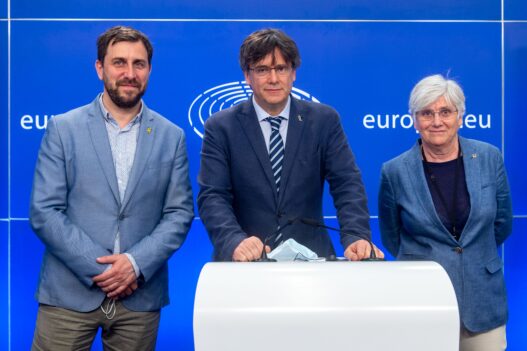
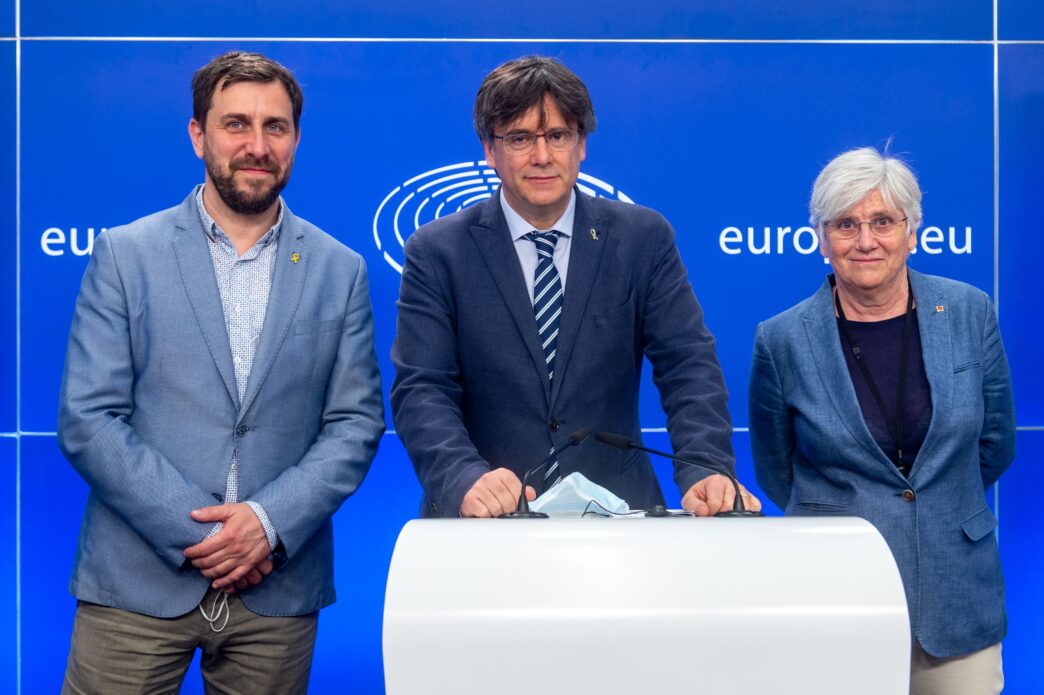
On 5 February 2026, the Court of Justice annulled the European Parliament’s 9 March 2021 decisions waiving the parliamentary immunity of Carles Puigdemont, Antoni Comín and Clara Ponsatí in C-572/23 P. The Court did not rule on the merits of Spain’s underlying criminal case. Instead, it treated the waiver as an individual administrative decision that must meet minimum standards of impartiality under the right to good administration.
The trigger is Parliament’s own guardrail for immunity files. To avoid “club politics”, the rapporteur handling a waiver request should not sit in the same political group as the MEP concerned. The Court says the logic runs wider. Where a political party is directly involved in initiating the national proceedings that generated the waiver request, appointing a rapporteur from a group that includes that party can create objective doubts about neutrality. If the rapporteur is tainted, the reports underpinning the waiver are treated as invalid, and the waiver falls with them.
The result is a reminder that Parliament’s discretion in handling immunities is not unlimited. Even in a deeply political file, the Court is policing whether the institutional machinery is designed and seen to be even-handed.
What this means
For current affairs, this is a governance judgment with two clean implications. First, it raises the procedural bar for future immunity waivers. Parliament will likely need tighter conflict-of-interest screening for rapporteurs and clearer internal records showing why a given appointment does not compromise impartiality. The “rotation” logic in Parliament’s immunity practice remains, but it now carries more litigation risk if the political ecosystem behind a national case is too closely mirrored in the Parliament process.
Second, it offers a litigation playbook for high-salience waiver targets. Instead of arguing only about political motivation or the national file, applicants can attack the procedural architecture using Article 41 of the Charter as a lever, affecting the rapporteur selection, committee handling and the appearance of bias.
The broader EU point is institutional credibility. In a Union that relies on mutual trust—between courts, capitals, and Brussels bodies—process failures become a strategic weakness: they turn politically charged cases into procedural own goals.
Sources
- https://curia.europa.eu/site/upload/docs/application/pdf/2026-02/cp260010en.pdf
- https://eur-lex.europa.eu/legal-content/EN/TXT/PDF/?uri=CELEX:62021TA0272
- https://www.europarl.europa.eu/cmsdata/288291/Principles%20for%20immunity%20cases_EN.pdf
- https://www.europarl.europa.eu/doceo/document/TA-9-2021-03-09-TOC_EN.html
- https://eur-lex.europa.eu/LexUriServ/LexUriServ.do?uri=OJ:C:2004:310:0261:0266:en:PDF
- https://www.europarl.europa.eu/charter/pdf/text_en.pdf