






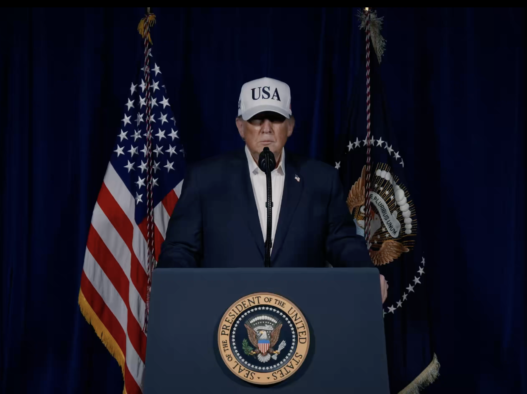
Israel and the United States have attacked Iran. Both governments argue that the strikes are necessary to protect their security interests and that long-term stability requires regime change and the end of the mullah regime. How is the European Union responding?
A commentary briefing:
Since Donald Trump returned to office in the United States, the geopolitical environment for the EU has changed dramatically. The transatlantic partnership, as it previously functioned, is eroding. The United States no longer appears willing to guarantee Europe’s security, has even floated the possibility of annexing Greenland, and is shifting its strategic focus toward China as its primary adversary. At the same time, the current US administration has threatened economic warfare through tariffs.
In the context of the war between Russia and Ukraine, Washington is openly discussing a potential settlement with Moscow without involving the EU. A just peace for Ukraine and a sustainable European security architecture, therefore, appear increasingly uncertain, while Trump seems indifferent to these concerns. This dynamic arguably encourages Putin to continue his military campaign, with devastating human costs on both sides. China, for its part, supports Russia because it cannot afford a Russian defeat and prefers to keep the United States strategically occupied in Europe.
This broader shift in the world order helps explain why the EU is struggling to act as a coherent foreign policy actor. Current developments are fragmenting the Union, reducing it from a supranational actor to a collection of nation-states pursuing divergent interests.
For decades, the EU benefited from a geopolitical model based on US-provided security, cheap energy from Russia, and export markets in China. That model, and the world order underpinning it, is now collapsing. It also sustained the EU’s self-image as a defender of a rules-based, liberal international order. The Union’s role as a normative power is eroding. The military strikes by Israel and the United States against Iran illustrate this erosion.
Officially, the EU calls for “maximum restraint” and respect for international law in the Iran conflict, seeking to uphold its identity as a normative actor. Yet a closer look at the positions of individual member states reveals deep divisions. While all reject the Iranian regime, they differ sharply over how to confront it and which means they consider legitimate. Four broad positions can be identified.
1. Hungary and Slovakia
Hungary and Slovakia stand firmly behind Donald Trump in his confrontation with Iran, aligning themselves closely with Washington. They are widely seen as Trump’s closest partners within the EU.
2. Spain
Spain fundamentally rejects the unilateral strikes by the United States and Israel. In doing so, it represents the clearest internal dissenting voice within the EU.
3. Greece, Ireland, Italy and Slovenia
These countries advocate diplomacy and de-escalation in the Gulf region. They refrain from taking sides and avoid explicitly condemning either party, emphasising dialogue and stability.
4. The remaining member states, led by France and Germany
This group has condemned Iran’s actions and the regime’s human rights record while refraining from directly criticising the United States or Israel. In effect, this stance lends political legitimacy to the strikes. Germany has explicitly signalled that it does not intend to lecture Washington or Jerusalem.
Each of these positions reflects a different vision of the EU’s foreign policy identity. Hungary and Slovakia align with the Trump administration, implicitly accepting a more Hobbesian and power-based international order, an orientation underscored by high-level US diplomatic engagement following the Munich Security Conference. This approach implies an EU subordinated to US leadership. Spain, by contrast, presents itself as a defender of international law and the liberal order, insisting that no state may violate another’s sovereignty. The third, more diplomatic faction envisions the EU as a mediator: reluctant to take sides, committed to de-escalation, and supportive of rules and norms without forceful enforcement. The fourth group aligns with the United States less out of subordination than out of strategic calculation. Weakening Iran could, in the long term, reduce Russia’s strategic options and thereby improve Ukraine’s prospects and Europe’s security position. At the same time, these states continue to rearm and strengthen their defence capabilities. Human rights concerns are often cited to justify this position. Yet when tens of thousands reportedly lost their lives during a recent uprising in Iran, the EU appeared largely inactive and unable, or unwilling, to act decisively.
Before elevating Spain as the defender of the liberal order, however, it is worth noting that Spain faces different strategic pressures. Geographically distant from Russia, it has invested comparatively less in military rearmament and has provided lower levels of financial support to Ukraine than some other EU states. It has also continued to import significant volumes of Russian LNG. Moreover, Spain’s economic exposure to the United States differs from that of more export-dependent member states, potentially shaping its political calculus.
The EU can no longer rely on US protection, nor can it continue to benefit simultaneously from Russia and China. It must redefine its role in a transformed international system. Whether it can continue to uphold international law as a credible normative actor is increasingly uncertain. The strikes on Iran underscore this dilemma. The Union may need to adopt a form of “value-driven realism”: an approach that acknowledges geopolitical constraints, avoids moral grandstanding and double standards, and accepts Europe’s own limitations while still defending core principles. Today’s world is transactional, interest-driven, and marked by rivalry. The EU could position itself as a force for cooperation rather than fragmentation. A more unified foreign policy might emerge from this recalibration, one combining elements of the diplomatic and strategically aligned camps in the Iran case: neither endorsing violations of international law nor retreating into passivity, mediating where possible, supporting Iranian civil society, and condemning the regime’s repressive and destabilising actions.
Sources: SCMP, Politico, Reuters, Table Media, Euractiv, Reuters, Statista, Olive Press and Foreign Affairs.