






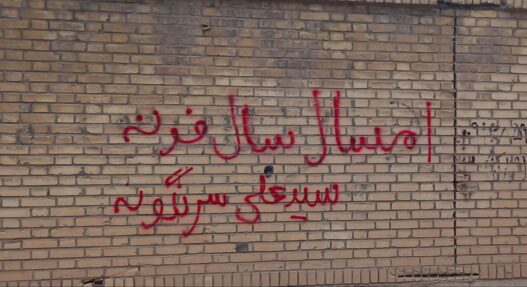
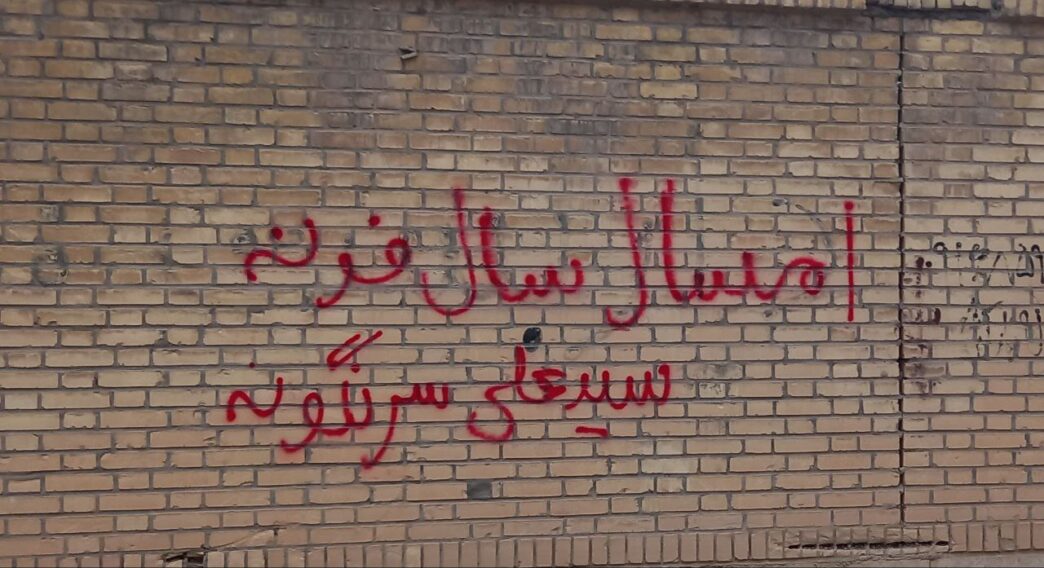
The renewed wave of nationwide protests in Iran since late December 2025, met with violent repression and extensive restrictions on communications, has triggered a rapid EU and G7 response. EU and partner reactions have focused on condemning what has been described as “brutal repression” and on readiness to adopt further targeted sanctions. In a statement on 3 January 2026, the EEAS spokesperson framed the demonstrations as reflecting “the demands of many Iranians” and called for restraint, respect for freedoms of expression, association and peaceful assembly, as well as the release of those detained for exercising their rights.
On 15 January, the G7 Foreign Ministers and the EU High Representative jointly condemned the deliberate use of violence and signalled that additional restrictive measures could follow if the crackdown continues. Commission President von der Leyen and HR/VP Kallas have both indicated that new EU sanctions could be proposed “swiftly”, building on an already extensive framework covering human rights, non-proliferation and regional security. Politically, the episode reinforces the EU’s profile as a normative actor, while also highlighting persistent differences among Member States over the appropriate level of escalation and the preservation of residual diplomatic channels on nuclear and regional issues.
Institutional and policy background
A long-standing EU concern
The current debate follows several years of sustained EU concern over Iran’s human rights record and nuclear activities, including the “Woman, Life, Freedom” protests and executions linked to dissent. Under the Common Foreign and Security Policy (CFSP), the HR/VP and the EEAS can react rapidly through political statements, while any new sanctions require unanimity in the Council.
An increasingly layered sanctions framework
Over time, the EU has progressively layered Iran-related restrictive measures, including human rights listings, non-proliferation sanctions, and measures linked to Iran’s support for Russia’s war against Ukraine and for regional armed groups.
Diverging institutional emphases
The European Parliament continues to take a particularly hard-line position. On 23 January 2026, MEPs will debate the “widespread demonstrations and harsh crackdown” and vote on a resolution calling for broader sanctions, while Parliament President Metsola has banned Iranian diplomatic staff from Parliament premises.
Within the Council, differences persist. While several Member States support renewed consideration of Islamic Revolutionary Guard Corps (IRGC) listing, others raise legal and political concerns and stress the need to preserve limited diplomatic channels.
Strategic signals
Recent EU and G7 statements illustrate a shift from largely exhortative language towards a more conditional approach that explicitly links continued repression to further restrictive measures. This strengthens the EU’s credibility on human rights, but also reduces diplomatic flexibility by narrowing the scope for engagement should de-escalation become a priority.
EU communication reflects a layered posture: strong unity on principles and public signalling, combined with an ongoing internal discussion on how to balance additional sanctions with the preservation of limited diplomatic leverage. This has resulted in a pragmatic model of conditional engagement, in which the scope of EU–Iran relations increasingly reflects developments on the ground, without a full suspension of dialogue at this stage.
Sources
EEAS – Statement of 3 January 2026; EEAS: G7 Foreign Ministers’ Statement on Iran, 14 January 2026.; European Parliament resolution of 23 January 2025 on the systematic repression of human rights in Iran; Euractive; Euronews