












Ceasefire Brings Fragile Calm to Israel–Hamas War
Last Friday, Israel and Hamas reached a ceasefire, bringing a temporary halt to a devastating two-year war in Gaza. The conflict began with Hamas’s attack on October 7, 2023, when militants killed 1,200 people and took 251 hostages. Israel’s subsequent military campaign has left more than 67,000 people dead in Gaza, a toll that underscores both the scale of Israel’s retaliation and the staggering humanitarian cost of the war.
The truce includes the release of the remaining 20 surviving Israeli hostages, while negotiations continue over the return of the bodies of those who died in captivity. In exchange, Israel has freed roughly 1,900 Palestinian prisoners.
Humanitarian aid is now entering the Gaza Strip under international supervision, offering limited relief to a population devastated by bombardment and mass displacement. Hamas, however, remains in control of Gaza for the time being, while Israeli forces have repositioned along a newly established demarcation line inside the territory, a military presence that signals Israel’s intention to retain leverage even during the ceasefire.
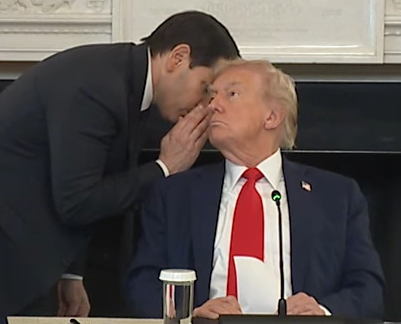
U.S. President Donald Trump, who has sought to position himself as a broker of regional stability, celebrated the truce during visits to Israel and Egypt’s Sharm el-Sheikh.
“Now it is time to translate these victories against terrorists on the battlefield into the ultimate prize of peace and prosperity for the entire Middle East,” Trump declared.
Yet beneath the rhetoric, deep structural questions remain unresolved: who will govern Gaza in the long term, how reconstruction will be managed, what role the European Union will play, and whether the fragile ceasefire can evolve into a sustainable political framework. The prospect of a two-state solution, long viewed as the cornerstone of lasting peace, remains distant, clouded by mistrust, exhaustion, and competing political agendas on both sides.
Further details on the Israel-Hamas ceasefire agreement in AP News.