






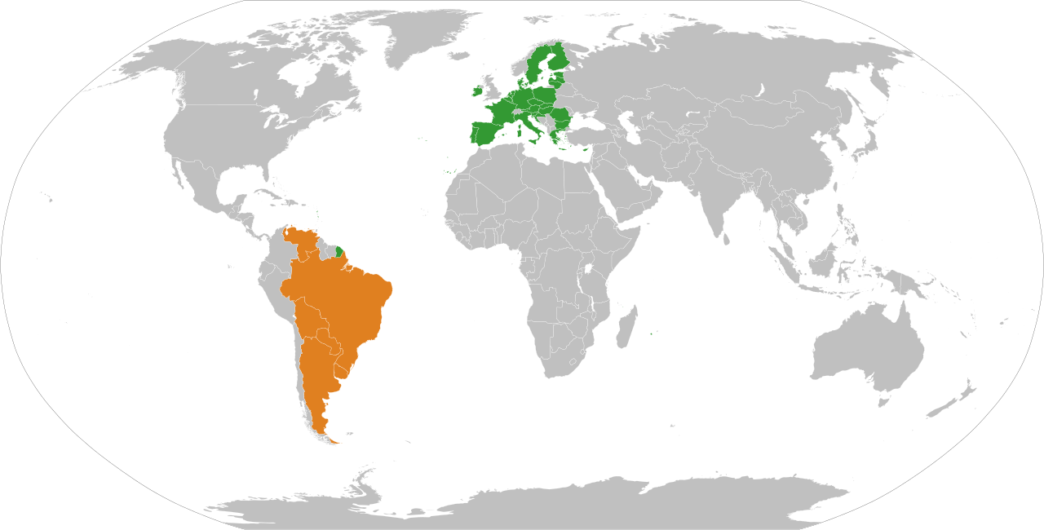
Farmers across the EU are mobilising to protest the potential signing of the EU–Mercosur trade agreement. In several Member States, including Poland, Ireland, and France—where opposition to the deal is particularly strong—demonstrations have been widespread throughout the week. Even in countries more favourable to the EU–Mercosur initiative, discontent has emerged: Germany, despite supporting the agreement, experienced road blockades on Thursday.
The protests reflect concerns about unfair competition that could arise if the agreement comes into force. To address these concerns and secure the support of hesitant Member States, Commission President Ursula von der Leyen announced on Tuesday an additional €45 billion for the Common Agricultural Policy (CAP) to support farmers across Europe. Further proposals followed the next day, including lower tariffs on imported fertilisers and stricter limits on pesticide residues in imports.
The Road to Signing the EU–Mercosur Trade Deal
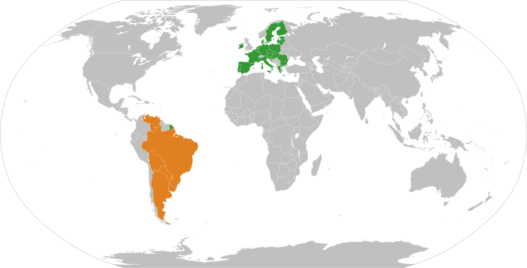
The EU–Mercosur free trade deal involves the 27 EU Member States and four Mercosur countries—Argentina, Brazil, Paraguay, and Uruguay. Negotiations have been ongoing for 25 years, with the text only finalised in December 2024; its signature is still pending. On Wednesday, EU agriculture ministers convened to discuss the agreement, during which the Commission presented the newly proposed measures to encourage Member States’ support.
The European Council voted on the agreement on Friday, authorising its signature after securing the backing of at least 15 Member States representing at least 65% of the EU population. Several countries, including Hungary, Ireland, Austria, and Poland, opposed the deal. France also withheld support, with President Emmanuel Macron describing it as “outdated.” Italy’s vote was decisive in reaching the required threshold, ultimately favouring approval.
President Ursula von der Leyen is expected to travel to Paraguay next week to sign the EU–Mercosur agreement. The deal still requires ratification by the European Parliament. According to EU trade negotiator Maroš Šefčovič, the agreement could boost EU agricultural exports by up to 50% and is expected to strengthen ties with key trading partners, reducing dependence on other markets such as the US and China.
Sources:
Euractiv, Euractiv, Le Monde, European Council, Deutsche Welle, The Associated Press,Reuters, The Guardian.