






Executive Summary
After being approved on July 23, the EU’s 21st sanctions package against Russia for its war of aggression against Ukraine entered into force on July 24. The package includes 218 designations, 170 entities and 48 individuals, making it the largest sanctions round in four years and bringing the total number of designations to nearly 3,000. This new package adds to the existing sanctions regime against Russia with a focus on combatting Russia’s methods of circumventing sanctions.
In regards to the EUs latest sanction package, EU foreign policy chief Kaja Kallas stated, “More than 50 military-industrial entities are included, (as well as) key actors involved in the production of Russia’s long-range drones,” arguing that Russia will negotiate an end to its illegal war and stop killing civilians only if it is pressured to do so. The package targets 56 military-industrial entities and individuals, with a particular focus on those involved in the production of long-range drones and communications networks. Experts argue that these measures could improve Ukraine’s battlefield efforts while strengthening Europe’s future security. The latest sanctions also continue the EU’s efforts to target suppliers of dual-use goods and technologies in third countries, including China and India, as these technologies are frequently found in Russian weapons such as missiles, drones, and tanks.
Info box provided by Laksmitha Anindyanari:
Sanctions are utilized by the EU to increase the economic and military costs of Russia’s war against Ukraine and limit its ability to sustain the conflict. By restricting access to international finance, energy revenues, advanced technologies and military-related goods, while targeting actors that help Russia circumvent these restrictions, the EU aims to weaken Russia’s capacity to wage war. The ultimate goal is to create incentives for Russia to negotiate by making continued warfare increasingly costly and strengthening Ukraine’s position in negotiations for a ceasefire and lasting peace.
The attention of EU officials and experts has focused in particular on two relatively new measures targeting Russia’s military capabilities. The first is that more than 30 designations target the manufacturing and supply network of Russia’s long-range Garpiya drones. Ukrainian civilians and civilian infrastructure have suffered immensely from Russian bombardment, particularly long-range drone attacks. As a senior EU official explained, “What we’ve done is we’ve focused on one category of long-range drones, Garpiyas, and we’ve mapped out effectively the entire manufacturing and supply network … In a single blow, we are targeting it today with over 30 designations.”
The second is that the package also targets Rassvet, a low-Earth-orbit satellite system produced by the Russian aerospace company Bureau 1440 and hailed by Russian media as a potential future counterpart to Starlink. The company launched 16 satellites in March 2026 and aims to have 250 in orbit by 2027. When Russia previously lost access to Starlink in February of this year, it had “very significant implications on their battlefield performance,” according to Bruegel Senior Fellow Jacob Funk Kirkegaard, making the denial of Russia’s ability to develop its own comparable capability an important EU priority as it seeks to pressure Moscow toward negotiations. Denying such capabilities is also in the EU’s own interests. As Kirkegaard put it, “As the EU or Europe more broadly prepares for a world in which we have to deter Russia on our own for the long run, denying Russia their military capabilities in the next three, four, 10 years from now is very important for our own security.”
Since one of the EU’s stated aims of the sanctions is to pressure Russia into negotiating an end to the conflict, the EU must continue updating its sanctions regime to keep pace with Russian efforts to circumvent existing restrictions. As Kallas stated, “With each round of sanctions, we squeeze Russia’s economy and its capacity to prolong its illegal war. Our 21st package includes the highest number of listings in four years. We’re hitting over a hundred banks and crypto operators, 40+ vessels in Russia’s shadow fleet, and several oil refineries in Russia and Belarus. More than 50 military-industrial entities are included, key actors involved in the production of Russia’s long-range drones. Russia will only negotiate to end its illegal war and stop killing civilians if it is pressured to do so. Sanctions add to this pressure.”
Info box provided by Laksmitha Anindyanari:
The shadow fleet refers to a network of vessels and related companies used to help Russia transport and sell oil while evading international sanctions and the G7 oil price cap. These vessels often operate through opaque ownership structures, use alternative shipping routes or change their registration and flags to make their links to Russia less visible. The EU targets the shadow fleet because it allows Russia to continue generating energy revenues that can help finance its war against Ukraine.
For the first time, the EU is introducing the possibility of a full third-country ban on crypto-asset services as a deterrent to countries hosting platforms that assist Russia in evading sanctions. This new instrument allows the EU to prohibit transactions between EU operators and crypto-asset providers used by Russia.
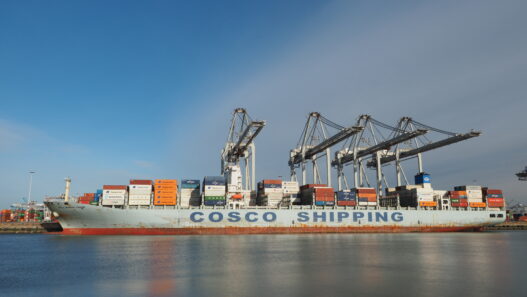
Energy also remains a major focus of the package. The new sanctions pause the automatic adjustment of the oil price cap mechanism until July 15, 2027, helping ensure that Russian profits from oil sales remain constrained. The Russian shadow fleet was targeted again by extending existing rules to cover vessels supporting the fleet, including those providing bunkering and other services. Another 41 vessels were sanctioned, on top of the previously sanctioned 632 vessels. Non-EU tankers that form part of the shadow fleet and circumvent the oil price cap mechanism, support Russia’s energy sector in other ways, transport military equipment for Russia, or transport stolen Ukrainian grain have also been targeted. Among the eight entities designated in relation to the shadow fleet ecosystem, a crewing agency has been included for the first time.
Info box provided by Laksmitha Anindyanari:
The oil price cap mechanism is a policy designed as a sanction instrument to limit Russia’s earnings from oil exports without completely removing Russian oil from global markets. Under the mechanism, companies in participating countries can provide services such as shipping, insurance and financing for Russian seaborne oil only when it is sold at or below a set price. This allows Russian oil to continue reaching global buyers while reducing the revenue Russia can earn from its exports, limiting funds available to support its war against Ukraine.
Why this matters for Europe
Overall, through this package the Council is continuing to seek ways to strengthen the sanctions regime against Russia by targeting the various methods Moscow has developed to circumvent existing restrictions. This is important because a common criticism of sanctions as a tool for changing state behaviour is that targeted states can adapt to restrictions over time. Recent evidence suggests that the Russian economy is struggling under the combined strain of the war and sanctions, as casualties continue to mount and Ukraine has regained some initiative on the battlefield. Continuing to compound Russia’s economic difficulties could therefore contribute to creating greater incentives for Moscow to negotiate. At a minimum, constraining Russia’s ability to produce and acquire important military capabilities will benefit Ukraine on the battlefield while strengthening European security by limiting Russia’s future military capacity.
What to Watch Next
- The response of countries affected by the new sanctions targeting domestic companies helping Russia circumvent restrictions, particularly China.
- The impact on Russian supply chains important for the production of various military assets, particularly the Garpiya drones.
- Information on the economic situation of Russia going forward.
- Whether Russia is pressured to come to the negotiating table.
Disclaimer: AI-powered language models were used selectively as tools to structure the research and formulate the text. The Research, selection and evaluation of sources, as well as the content analysis, assessments and conclusions, were conducted independently.
Sources Euronews, European Council, Reuters