










The growing cooperation between Russia, North Korea and China has often been described as an “axis of autocracy”. But this interpretation is an oversimplification of a web of pragmatic and shifting relationships.
Vladimir Putin, Kim Jong-un and Xi Jinping are bound less by ideology than by shared grievances and converging interests in challenging a US-led international order that has maintained Europe’s peace and security since 1945. China’s posture is the most complex among them and perhaps the most consequential.
Xi’s response to the signing of the Russia-North Korea mutual defence pact reflects China’s carefully calculated policy of strategic ambivalence rather than outright condemnation. While the Kremlin’s embrace of Pyongyang has diluted Beijing’s traditional dominance over North Korea, China is not seeking to halt this cooperation. Rather, it is quietly shaping it to serve its broader systemic rivalry with the United States – particularly in the area of nuclear proliferation.
Russia’s opportunistic engagement with North Korea
Throughout much of the post-Cold War era, there has been concern in Russia about the build-up of North Korea’s nuclear capabilities. Primorsky Krai – the Russian region that lies in close proximity to the Korean Peninsula – is the direct link between mainland Russia and Asian countries. The Kremlin believed that, if a conflict were to erupt there, it would disrupt a key source of revenue for the Russian economy. However, since the start of the war in Ukraine in 2022, Russia’s strategic calculations towards its far eastern borders have changed substantially. 
Moscow has reversed its opposition to North Korea’s nuclear armament and has instead chosen to use it as leverage to renegotiate the postwar security order according to its interests. When he returned to the White House this year, Donald Trump cited denuclearisation as a stated goal of his administration. But, in response, the Kremlin made no rush to reciprocate the US president’s ambition. In February, Russia called into question the extension of the New Strategic Arms Reduction Treaty (New START) – the last remaining US-Russia agreement on nuclear arms control – that is due to take place next year.
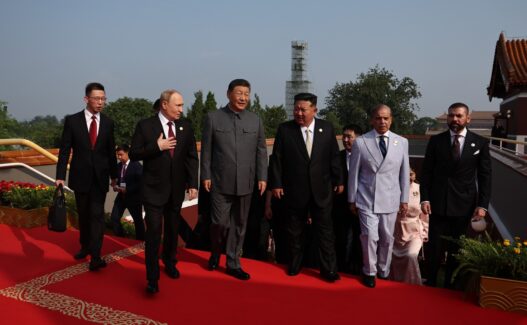
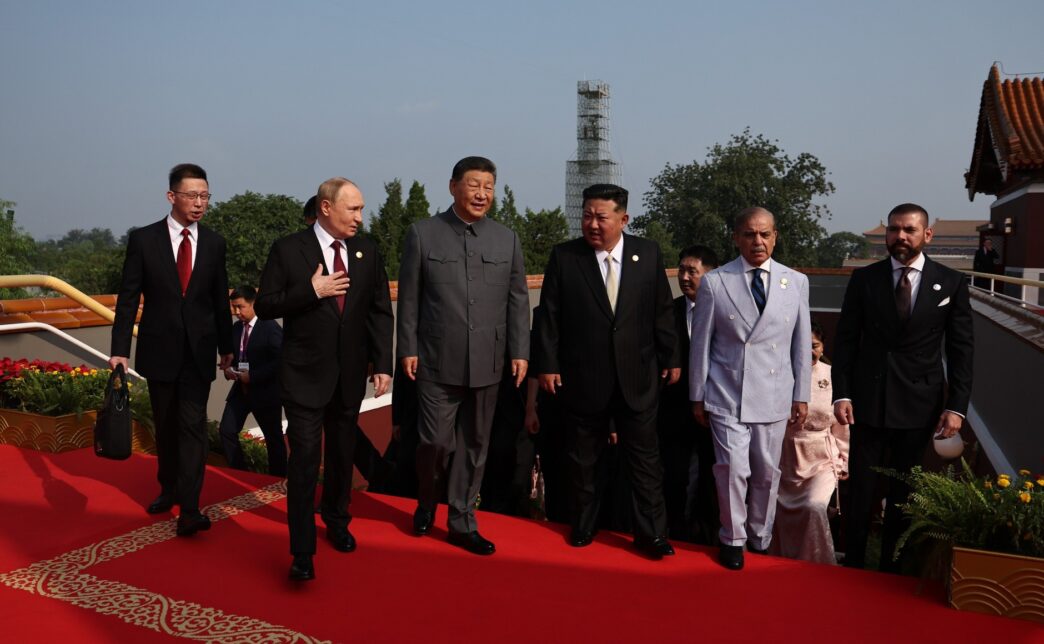
While China is watching the deepening defence ties between Russia and North Korea closely, it is not turning its back. Chinese Premier Li Qiang made an emblematic visit to Pyongyang last week – China’s highest-level trip since 2019. This summit followed Kim Jong Un’s high-profile meetings with Vladimir Putin and Xi Jinping at the World War II parade in Beijing last month. It was a signal of China’s intent to reassert its influence after years of isolation due to the Covid-19 pandemic and the emerging clout Moscow enjoys in Pyongyang. No major economic or military deals were announced, but symbolism was key: China’s renewed outreach is signalling a re-establishment of its leadership over North Korea as an indispensable partner.
Despite the North Korean pivot toward Russia, Beijing remains the backbone of Pyongyang’s survival. China still accounts for over 90% of North Korea’s trade, with cross-border commerce now four times higher than pre-pandemic levels. By contrast, Russia provides security and diplomatic cover, but little in the way of pragmatic economic stability. Russia’s direct compensation to North Korea reaches a maximum of $1.2 billion which consists primarily of food and oil. Kim Jong Un’s “security from Russia, economy from China” strategy underlines this dual dependence.
For Beijing, this arrangement is functional. Allowing Pyongyang to deepen ties with Moscow serves as a pressure valve, easing China’s own burden of managing the volatile regime while keeping North Korea firmly in the anti-US camp. Yet China seems to remain uneasy about Russia’s willingness to transfer advanced weapons technologies and tolerate instability on the Korean Peninsula — red lines Beijing has traditionally sought to avoid. This anxiety partly explains the renewed Chinese diplomatic overtures: influence must be maintained, even within a messy alignment. For instance, China has allowed North Korea to use its infrastructure to conduct illicit cyber and trade activities.
Russia-North Korea partnership: a geopolitical opening for China?
At the same time, China’s most recent engagement with Pyongyang reflects strategic foresight. With Donald Trump back in the White House and openly seeking another summit with Kim, Beijing might be aiming to ensure it retains leverage over any US-DPRK dialogue. Just as in 2018, China seeks a position that amplifies its voice in regional security debates and complicates Washington’s efforts to isolate North Korea.
Perhaps most telling is Beijing’s quiet rhetorical shift. For the first time in years, Chinese official statements have dropped references to the “denuclearisation of the Korean Peninsula,” a subtle but significant signal to Pyongyang. This linguistic omission captures China’s evolving worldview: reconciliation with Washington could no longer be the goal. Instead, Beijing is cultivating a “grey-zone” network of deniable, flexible, and strategically useful cooperation to erode US dominance from within the cracks of the global order.
In this sense, China’s ambiguity towards the emerging ties between Russia and North Korea is by design. By tolerating, and even perhaps benefiting, from the partnership, Beijing ensures that America’s most unpredictable adversary remains both protected and beholden. This will have profound implications for Europe as the continent tries to ensure its long-term security in a post-US world order.