









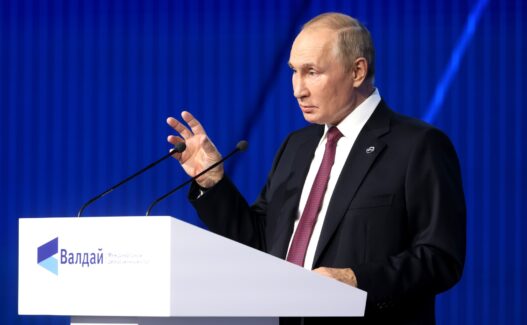
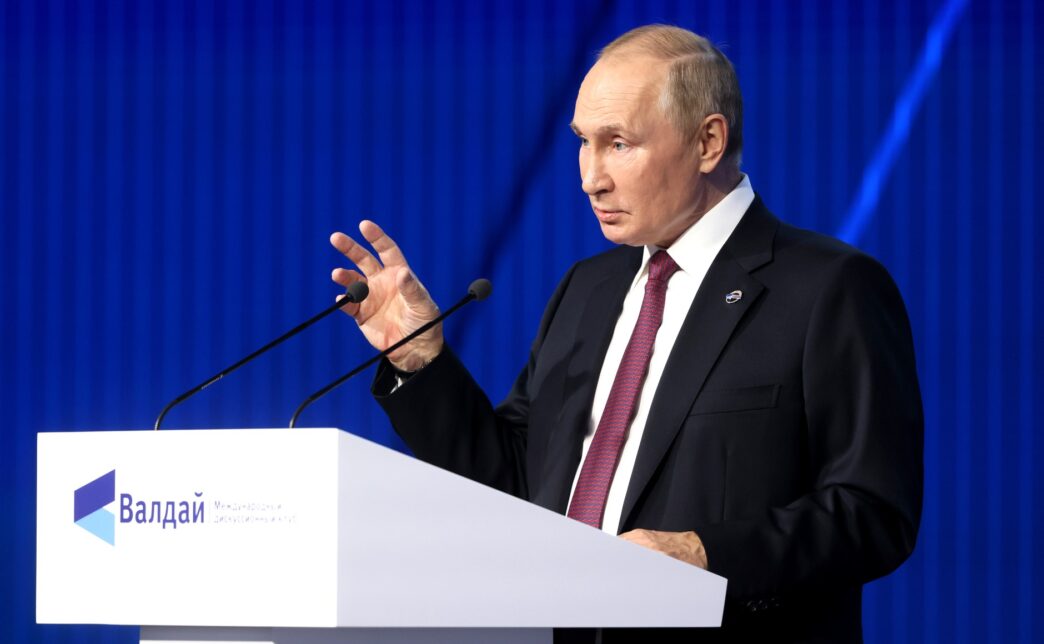
Tizian Stocker: What is the Valdai Club speech, and why is it important for Russia?
Anton Barbashin: Valdai Club events are Russia’s premier foreign policy forums, outlining the key positions of the Russian state on core foreign policy issues and proposing various policy solutions that define the overall “spirit” of the Kremlin’s foreign policy thinking. Putin’s annual speech at these events sums up the core ideas that the Russian president wants to signal to the outside world and his own policy managers.
Tizian Stocker: Why is this year’s speech so significant for the EU and Europe?
Anton Barbashin: This year, Putin spent a significant amount of time sharing his thoughts on who is to blame for the continued war in Ukraine, pointing the finger at the “globalists” of the European Union, who, as the last “remnants of the liberal world order,” refuse to accept the realities of the multipolar world. That is the core of Putin’s message, which highlights Russia’s intention to continue shaping European policies away from the days of transatlantic unity towards the recognition of Russia’s sphere of influence.
Tizian Stocker: What were the main crucial points and aims that Putin mentioned?
Anton Barbashin: Putin clearly outlined that he sees the rise of new elites in Europe who would be much more inclined to be friendly to the Russian cause. He vaguely implied that Russia is happy to support those forces in some way, echoing positions previously addressed by the Trump US administration.
Tizian Stocker: How should the EU react?
Anton Barbashin: The European Union has to anticipate an increase in Russia’s attempts to influence the domestic politics of its nations, coupled with substantially boosted propaganda and misinformation efforts. The prolonged support of Ukraine is bound to go hand in hand with Russia’s subversive attacks and disruptions.
We want to thank Anton Barbashin for his expert commentary on this year’s Putin’s Valdai speech and its connected implications for the EU.
Anton Barbashin is a Russian political analyst and commentator affiliated with the European Council on Foreign Relations (ECFR). He specialises in Russian foreign and domestic policy, focusing on Kremlin strategy, information politics, and Russia–Europe relations. Barbashin is also known as the editorial director of Riddle Russia, an analytical platform on Russian affairs.