






The Arctic is becoming one of the world’s most strategically contested regions. Melting sea ice is opening new shipping routes, exposing untapped mineral reserves, and drawing the attention of global powers from Washington to Beijing. Military posturing, resource competition, and climate diplomacy are unfolding in parallel, reshaping the political map of the High North. For the European Union, the question is no longer whether the Arctic matters; it is whether Europe can shape the region’s future or be forced to adapt to rules set by others.
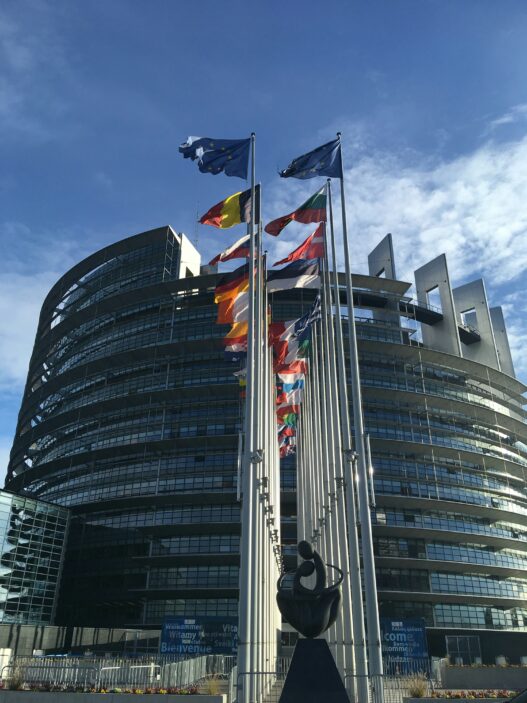
In 2021, the EU set out a dedicated Arctic Strategy built on three pillars: tackling climate change and protecting the environment, fostering sustainable development for Arctic communities, and strengthening international cooperation. The strategy frames Arctic engagement as both a contribution to the European Green Deal and a way to secure the Union’s geopolitical interests. Yet the EU’s formal role in Arctic governance remains limited: it participates in the Arctic Council, an intergovernmental forum of the eight Arctic states, only as an observer, with influence shaped more by regulation, funding, and science than by direct decision-making power.
From Trump’s bid to buy Greenland to Putin’s push to further militarise the High North, the Arctic has re-emerged on the international stage. Against this backdrop, the EU positions itself as more than a bystander, advancing its Arctic policy as a vehicle to connect climate action, economic resilience, and foreign policy. This article addresses the reason why the EU wants to influence the Arctic, and how does its 2021 Arctic Policy reflect those ambitions.
Why the Arctic Matters to the EU
The Arctic has moved from Europe’s periphery to its strategic horizon. Climate change, resource competition, and shifting geopolitical alignments are converging in the High North, making the region a focal point for the European Union’s environmental, economic, and political agendas. Its relevance for Brussels lies not in abstract notions of distant policy but in concrete impacts on the Union’s security, prosperity, and global influence. 
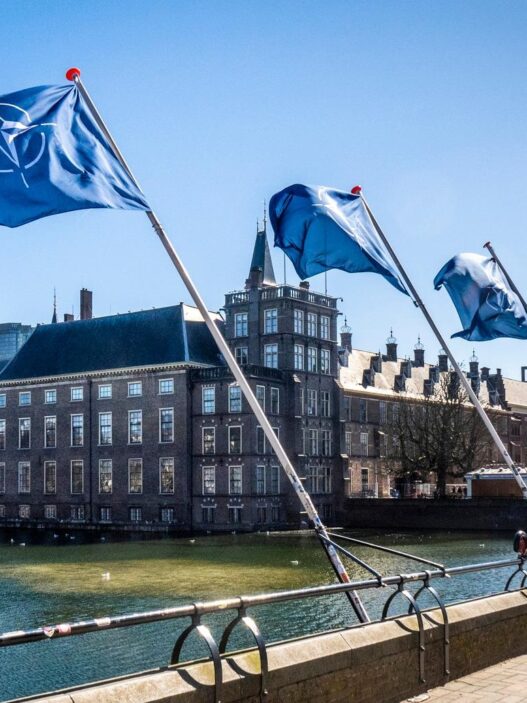
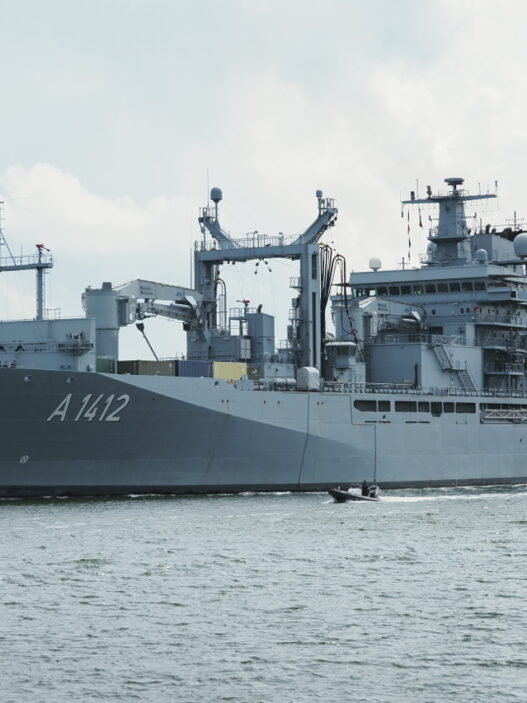
Strategic considerations are a central driver. Russia has intensified its military footprint along its Arctic coastline, refurbishing bases, expanding icebreaker fleets, and asserting control over the Northern Sea Route. China has declared itself a “near-Arctic state” and is investing in polar research, shipping corridors, and resource extraction as part of its broader Belt and Road strategy. The accession of Finland and Sweden to NATO has redrawn the alliance’s northern flank, positioning more NATO territory within the Arctic security environment. For the Union, ensuring stability in this theatre is not just a matter of alliance politics; it is tied to the safety of its own borders, the integrity of supply chains, and the resilience of critical infrastructure.
Economic interests are equally pronounced. The Arctic holds vast deposits of critical raw materials, including rare earth elements, nickel, and cobalt, indispensable for Europe’s green and digital transitions. Diversifying supply away from dominant global producers such as China is a priority for the EU’s strategic autonomy agenda, and partnerships in the Arctic, particularly with Greenland, are part of that calculus. While their commercial viability remains seasonal and uncertain, early involvement gives the EU a role in shaping environmental safeguards and navigational standards. The region’s fisheries are another strategic asset: a renewable resource if managed sustainably, but one vulnerable to overexploitation and climate stress.
The environmental dimension is impossible to separate from these strategic and economic drivers. The Arctic is warming almost four times faster than the global average, accelerating sea-level rise, altering weather patterns, and contributing to biodiversity loss. These changes have tangible consequences for Europe, from increased flooding along its coasts to disrupted agricultural cycles and more frequent extreme weather events. Protecting Arctic ecosystems is therefore not simply an act of global stewardship, it is a defensive measure for the EU’s own environmental security and a prerequisite for meeting its European Green Deal targets.
Overlaying these factors is the Union’s ambition to project normative leadership. The EU can be a standard-setter in international governance, advocating for rules anchored in the UN Convention on the Law of the Sea and robust environmental protections. Science diplomacy is a major tool in this effort. Through programmes such as Copernicus, the EU delivers satellite monitoring and climate data that underpin safe navigation, fisheries management, and environmental assessment. By financing climate and regional studies, the EU ensures its findings and expertise are embedded in the Arctic Council’s technical work, a quiet but effective way to shape outcomes despite not having decision-making rights.
Viewed as a whole, these political, economic, and environmental forces have pushed the Arctic from the margins of EU thinking to a central concern in its external relations. The region is both a mirror and a test of the Union’s capacity to align climate action, economic strategy, and geopolitical positioning. This convergence of interests underpins the 2021 Arctic Policy, which seeks to ensure that Europe is not merely reacting to developments in the High North but actively shaping them in line with its own values and priorities.
The 2021 Arctic Strategy as Policy Vehicle
The 2021 Arctic Policy is the EU’s blueprint for translating its interests into practical action. Issued jointly by the European Commission and the High Representative, it lays out a vision for a peaceful, sustainable, and prosperous Arctic and explicitly ties this to the European Green Deal. Its architecture rests on three interconnected priorities: tackling climate change and protecting the environment, promoting sustainable development in and around the Arctic, and strengthening international cooperation. Through these, Brussels aims to align its environmental leadership with its geopolitical influence.
The first priority, climate change and environmental protection, calls for decisive EU action to limit warming and preserve Arctic ecosystems. It pledges to work toward a ban on oil, coal, and gas exploitation in the Arctic and contiguous regions, cut black carbon and methane emissions, and designate more marine protected areas. EU instruments like the Copernicus satellite system and the European Polar Science Programme are central to monitoring changes and informing both policy and enforcement. This pillar advances the EU’s environmental goals by linking Arctic protection directly to its net-zero targets and broader climate diplomacy.
The second priority, sustainable development, frames the Arctic as both a partner and a beneficiary in the EU’s green and digital transitions. It supports renewable energy deployment, sustainable mining of critical raw materials, and improved connectivity for remote Arctic communities. Funding streams such as Horizon Europe, the European Regional Development Fund, and the EU-Greenland Partnership are used to foster economic resilience while safeguarding environmental and social standards. The policy emphasises working with Indigenous peoples, ensuring they benefit directly from EU-backed projects and that traditional knowledge is integrated into decision-making.
The third priority, international cooperation, recognises that EU influence in the Arctic hinges on partnerships and adherence to international law. The policy commits to active participation as an observer in the Arctic Council, contributions to multilateral agreements like the Central Arctic Ocean Fisheries Agreement and expanded science diplomacy with Arctic and non-Arctic states. It also stresses cooperation with NATO and like-minded partners on non-military security concerns, including search and rescue, maritime safety, and environmental risk management.
By bringing these priorities together, the 2021 Arctic Policy turns the EU’s ambitions into a concrete agenda for action in a region where its formal powers are limited but its stakes are high. It seeks to ensure that Europe is not merely an external stakeholder but an agenda-setter in the governance and sustainable development of the Arctic.
Channels of Influence
The EU’s ability to shape the Arctic is not anchored in territorial control or military power, but in a set of civilian tools that together create leverage. These tools: regulatory standards, targeted funding and partnerships, and scientific capacity form the practical channels through which the priorities of the 2021 Arctic Policy are pursued. While they lack the blunt force of hard power, they have the potential to change behaviours, norms, and long-term development patterns across the region.
Regulatory standards are perhaps the EU’s most recognisable form of influence, sometimes referred to as the “Brussels effect”. By setting strict environmental, safety, and consumer protection rules for goods and services entering its single market, the EU effectively exports its standards far beyond its borders. In the Arctic context, this can mean higher sustainability requirements for fish products, stricter emissions limits for vessels entering EU ports, or compliance with hazardous chemical regulations for mining projects seeking European investment. The EU has also been a leading voice in negotiations at the International Maritime Organization, pushing for tighter controls on heavy fuel oil use in Arctic waters and for mandatory polar shipping safety measures. In each case, the regulatory reach is indirect but powerful, shaping incentives for states and companies operating in the High North.
Funding and partnerships provide another route to influence, one rooted in the EU’s ability to link financial support with policy priorities. The Union channels significant resources into Arctic-related projects through Horizon Europe, the European Regional Development Fund, and the EU–Greenland Partnership, among others. These funds support everything from renewable energy installations in northern communities to feasibility studies for sustainable transport links. Importantly, funding is often tied to conditions: adherence to environmental safeguards, local capacity-building, and engagement with Indigenous peoples. Partnerships extend beyond EU members to include Arctic states like Norway and Iceland, as well as Indigenous organisations represented in the Arctic Council. By financing initiatives that align with its policy goals, the EU both strengthens local economies and embeds its norms in the region’s development.
Scientific capacity is the third major channel, and serves a dual role: generating knowledge that informs global Arctic governance and projecting the EU as a contributor to understanding and addressing climate change. The Copernicus Earth observation system delivers detailed, near-real-time data on sea ice extent, weather patterns, and environmental hazards, which supports both research and operational decision-making. The EU also funds polar research infrastructure and coordinates multilateral scientific expeditions, enabling collaboration between European institutions and partners from across the Arctic. Scientific engagement is not purely technical; it functions as a form of diplomacy, opening channels for cooperation even with partners where political relations may be strained.
Individually, these tools have limits. Regulatory power depends on the EU’s economic attractiveness, funding relies on sustained budget commitments, and scientific cooperation can be vulnerable to geopolitical tensions. But if used together, they allow the EU to exercise influence that is often subtler and more sustainable than traditional hard power. They give Brussels a role in shaping the Arctic’s future, consistent with its policy ambition.
Constraints and Limitations
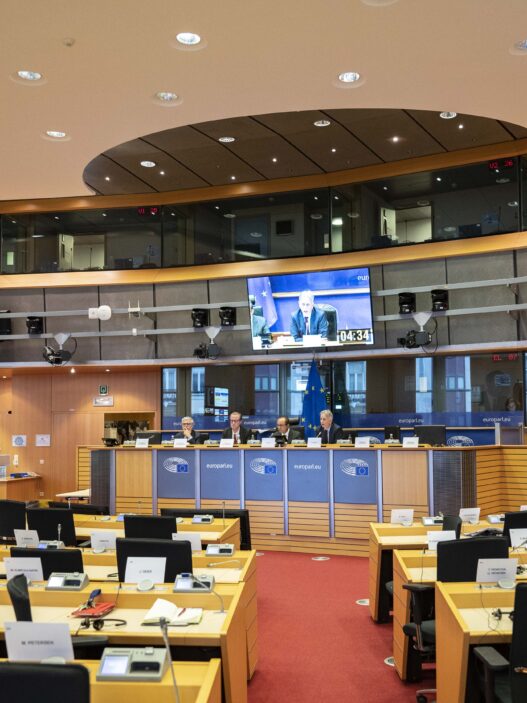
The EU’s ambitions in the Arctic are moulded as much by its limitations as by its goals. While the 2021 Arctic Policy outlines a broad and confident vision, the reality is that Brussels operates in a crowded and politically sensitive arena where its formal powers are narrow and its influence is often indirect. The most obvious limitation is its observer status at the Arctic Council. This gives the EU a seat in the room but no vote, meaning its contributions rely on persuasion, expertise, and coalition-building rather than direct decision-making. Although EU-backed science and funding can carry weight in working groups, the final say always rests with the eight Arctic states.
Security is another gap in the EU’s toolkit. The Arctic’s hard-power balance is defined by military assets, deterrence strategies, and defence alliances, areas where the EU plays little direct role. NATO, not the EU, is the primary security actor in the region, and even though many Arctic Council members are also EU states, Brussels has no mandate to act militarily. This leaves a blind spot in addressing certain risks, particularly those tied to strategic competition. Member state divergences add a further layer of complexity. Not all EU countries share the same priorities for the Arctic. For Finland and Sweden, the region is part of their immediate security environment however, for Southern member states, it can feel like a distant concern. Diverging positions can dilute the EU’s ability to speak with a single, strong voice, especially when negotiating sensitive issues such as resource exploitation or environmental protection..
Finally, the Russian factor looms large. Russia holds the longest Arctic coastline and is central to both shipping and resource development in the region. Since the invasion of Ukraine, cooperation with Moscow has been sharply reduced, closing off certain diplomatic and scientific channels. This not only limits the EU’s influence over half the Arctic but also complicates multilateral efforts where Russian participation is essential.
These constraints do not erase the EU’s role in the Arctic, but they do define its boundaries. Understanding them is essential to see how far the Union’s policy ambitions can be achieved and where it will need to rely on partnership, persuasion, and patience rather than authority.
The Road Ahead for EU Arctic Policy
The Arctic has shifted from a distant backdrop in EU thinking to a stage where climate urgency, economic opportunity, and geopolitical competition all intersect. The 2021 Arctic Policy is the Union’s attempt to act before that stage is set entirely by others. It combines environmental ambition with strategic calculation, using tools that play to the EU’s strengths: high regulatory standards, targeted investment, and scientific leadership. The aim is not only to protect fragile ecosystems and Indigenous livelihoods, but also to secure access to critical raw materials, shape the governance of emerging shipping lanes, and assert a European voice in polar diplomacy.
Yet influence in the Arctic is a careful balancing act. With only observer status in the Arctic Council, the EU relies on partnerships and persuasion rather than formal authority. Its lack of a defence role leaves the security dimension largely in NATO’s hands. Divergent member state priorities make a unified Arctic stance harder to sustain, while the freeze in EU-Russia relations has closed off a vital channel in regional governance. These realities mean that ambition and reach are not always aligned.
How much influence Brussels can exert in Arctic affairs ultimately depends on its ability to make the most of the limited instruments it controls. Even with solid environmental credentials and well-placed partnerships, its voice is likely to be one among many and often quieter than those of Arctic coastal states and other major powers.