









“Europe seems to be at a crossroads, divided between small states and states that have not yet realized they too are small in the new global setting.”
— Sergio Mattarella, President of Italy, Marseille, 5 February 2025
Mattarella’s observation underscores a truth that Europeans can no longer ignore: in today’s world, even the largest European states are small when measured against the demographic, technological, and economic weight of global powers such as the United States, China, and India. Alone, no European state can hope to shape the international order. Together, they have a chance.
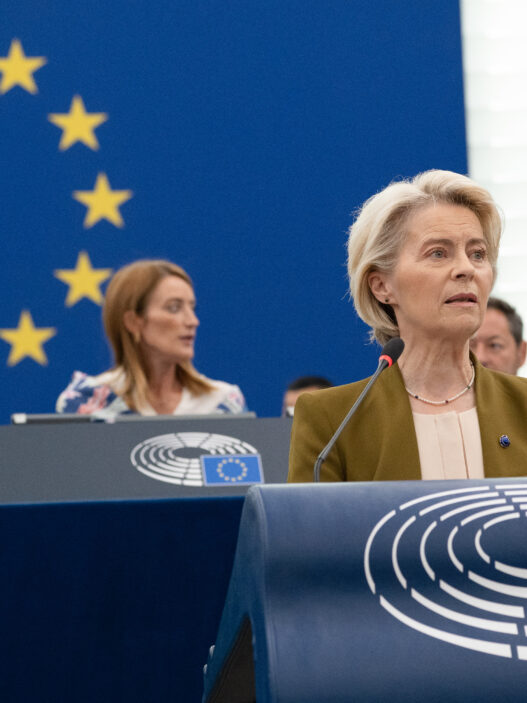
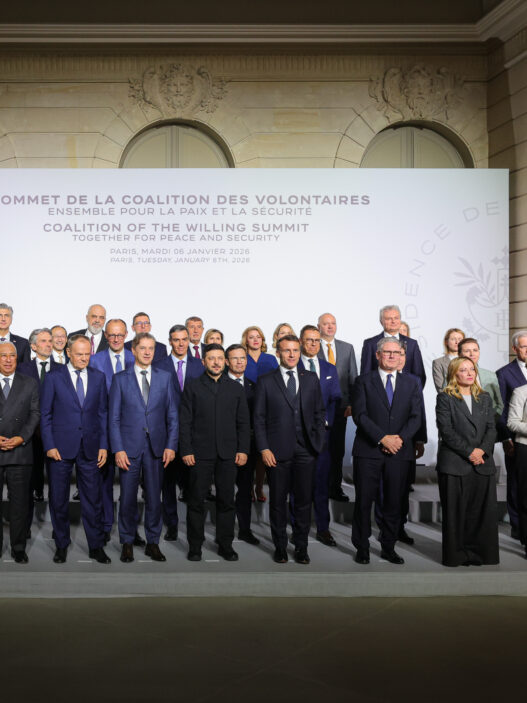
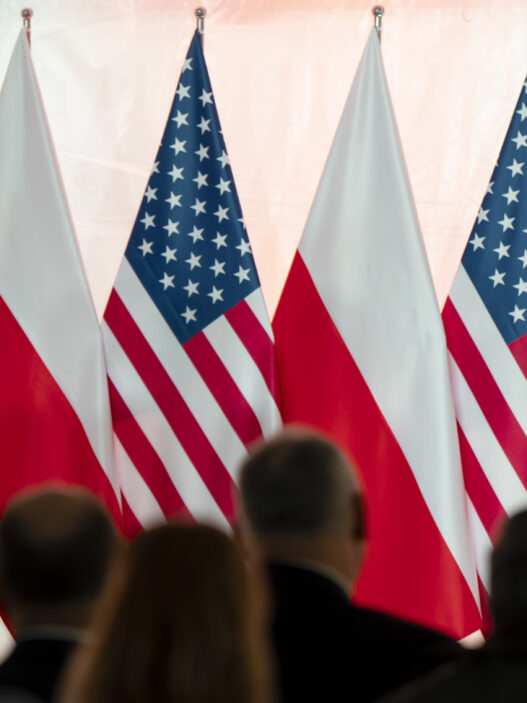
On July 27, 2025, European Commission President Ursula von der Leyen and U.S. President Donald Trump announced the conclusion of a new transatlantic trade agreement. Negotiated amid escalating protectionism and renewed tariff wars, the deal was intended as a display of European strength—a demonstration that only a united Europe can negotiate on equal footing with global giants. Yet the announcement triggered mixed reactions.
In France, Prime Minister François Bayrou denounced the treaty as “an act of submission.” In Germany, it was hailed as a “necessary compromise.” Elsewhere, opinions oscillated between cautious optimism and open skepticism. This divergence is telling: if the EU exists to amplify Europe’s collective power, what does it mean when its members cannot agree on whether a diplomatic achievement constitutes success or capitulation? 
The discourse on division, although accurate, risks obscuring an essential fact: disagreements arise within a common institutional framework. Even when France criticises an agreement negotiated in Brussels, it does not question the EU’s authority to negotiate on its behalf. Furthermore, even euroskeptic parties tend to abandon the idea of leaving the EU, rather talking about changing it from the inside. The question is not whether to act together, but how and for what purpose.
What kind of unity does Europe need, and on what foundations can it be built?
Persistent Divisions, Shared Framework
The European Union has never been a monolithic bloc. Its architecture presupposes diversity: a union of sovereign states bound by treaties rather than fused into a single state. Disagreement is not an anomaly; it is the system’s defining principle.
Consider trade. When Brussels negotiates the international agreement with the US, it must reconcile divergent interests: France seeks to protect its wine sector, Germany defends its automotive exports, and smaller states push for safeguards for niche industries. But the fact that these two countries have divergent interests is not something we discover.
The question is therefore not that of the existence of disagreements, but rather to know why act together despite chronic discord? Historically, the answer has been formulated in functional terms: cooperation as necessity.
Cooperation as a Necessity
The rationale for European integration was originally pragmatic rather than ideological. The European Coal and Steel Community (1951) embodied a simple insight: by pooling resources essential to warfare, former adversaries could render conflict materially impossible. This logic, rooted in the functionalist tradition, posits that interdependence creates incentives for cooperation—and that such cooperation, once institutionalized, becomes self-sustaining.
This incremental strategy produced remarkable results. The Single Market, monetary union, and Schengen were not born of grand constitutional moments. They evolved through gradual adjustments: harmonizing standards, removing customs duties, and facilitating mobility. Each step deepened integration and increased the cost of exit.
Yet, despite its explanatory power, this approach falters on one critical point: technical advantages do not create political legitimacy. Efficiency gains may justify cooperation, but they do not ensure that citizens perceive these gains as collective rather than national. When integration is reduced to a calculation of costs and benefits, loyalty becomes conditional—and vulnerable to political reframing.
Unity in Political Principles
Explaining why states cooperate does not explain why they should conceive themselves as part of a political community. This shift is decisive. It transforms the EU from an economic arrangement into a polity anchored in shared principles.
Among these principles—freedom, democracy, respect for human rights—none is reducible to economics. Together, they form the normative foundation of European legitimacy. Belonging to the Union would mean accepting not only a set of rules but a vision of political life in which pluralism is preserved, law is sovereign, and power is limited by rights. In this sense, the EU aspires to more than just regulatory governance.
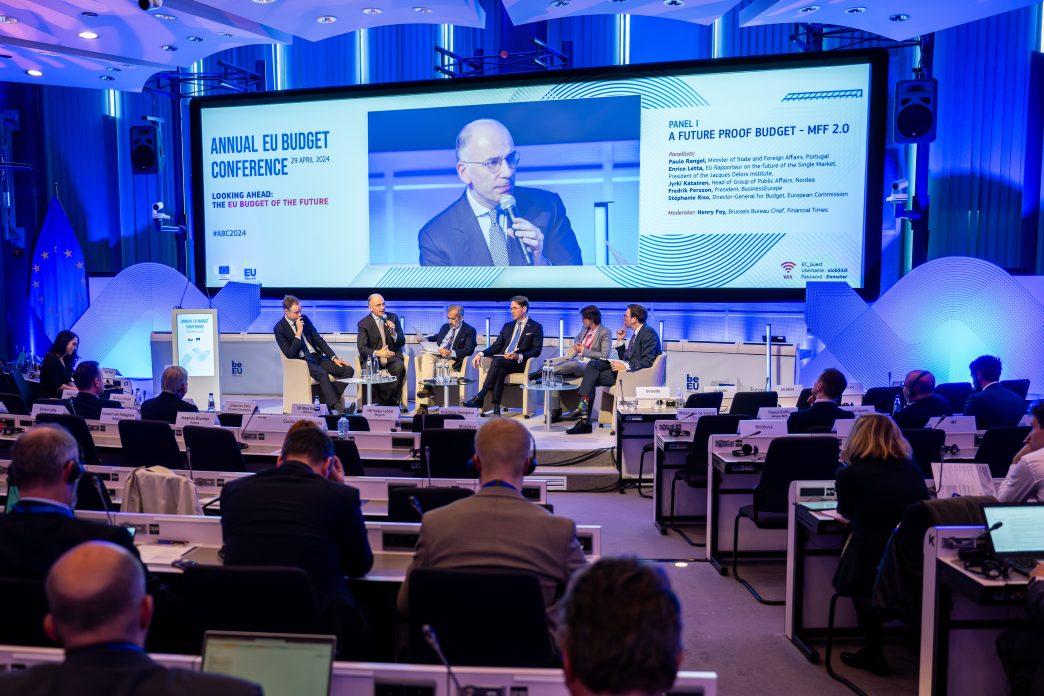
The Single Market illustrates this point. Often seen as a technical achievement, it is, as Enrico Letta observed in 2024:
“The Single Market has always been intrinsically linked to the EU’s strategic objectives. Often perceived as a project of a technical nature, on the contrary it is inherently political. Its future is tied to the EU’s strategic objectives and thus to the context in which the EU acts.”
These freedoms—of goods, services, capital, and people—presuppose values: openness, reciprocity, and non-discrimination. To dismantle them is not merely to adjust policy; it is to unravel the normative fabric of the Union.
United in principles, Disunited in act
The acceptance of the principles does not guarantee their respect. Illiberal drift in Hungary dramatizes the problem. Judicial capture, media restrictions, and attacks on minority rights contradict the spirit of the treaties. Article 7 TEU, designed to sanction such breaches, remains toothless. The unanimity requirement paralyzes enforcement; the political costs deter action. The EU speaks the language of constitutionalism but lacks the capacity to enforce constitutional discipline.
This does not mean that the EU should impose a constitution on all Europeans without taking into account the public’s opinion. It is rather an incentive for conceiving new political means to assert its legitimacy.
This would require the existence of a robust European public sphere that would make debates visible and thus ensure the coherence of decisions taken with European political principles. Problem is: this space does not really exist. The Parliament—nominally the Union’s democratic voice—remains structurally constrained: it lacks legislative initiative, wields limited influence on the Council, and attracts scant media attention. The inability to stage a full debate on the EU–US trade deal is emblematic: decisions of strategic importance unfold behind closed doors, far from public scrutiny.
Fragility of the Consensus
When enforcement falters and visibility fades, norms become vulnerable—not only to neglect but to attack. Populist leaders, supported by transatlantic allies, have sought to delegitimize the Union by portraying it as alien to Europe’s “true” traditions. Their strategy often involves historical revisionism: discrediting the Enlightenment’s universalism, reaffirming civilizational hierarchies, and recasting human rights as ideological impositions rather than cultural inheritances.
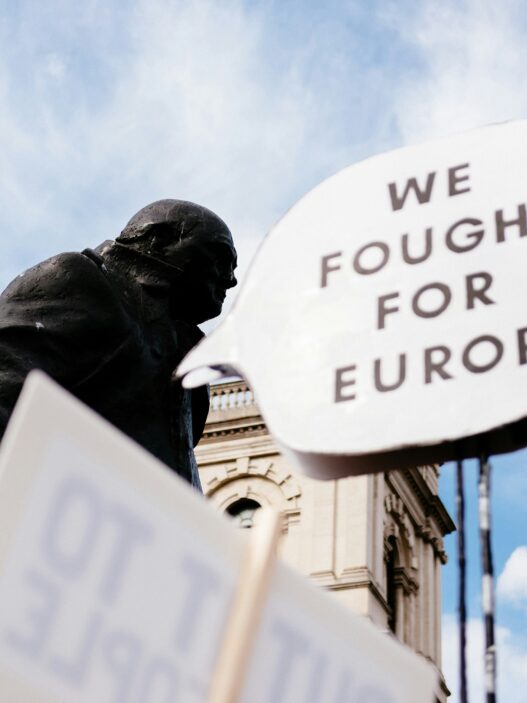
The danger lies in severing norms from memory. For decades, integration derived moral authority from a narrative of redemption: Europe as the antidote to its own catastrophes. That narrative is fading. For younger generations, the EU is less a peace project than a technocratic structure—remote, transactional, uninspiring.
This cultural vacuum is perilous. In a world where authoritarian regimes weaponize history to justify aggression, Europe cannot treat its heritage as neutral. Its normative claims—liberty, equality, human dignity—are not procedural conveniences; they are its raison d’être. To forget this is to invite irrelevance.
Unity Through Diversity: Institutionalizing Conflict
European pluralism is real—and indispensable. To mistake it for pathology is to misread democracy itself. As Raymond Aron argued, democratic systems do not abolish conflict; they domesticate it through rules.
Viewed in this light, the EU is an unprecedented experiment in institutionalized pluralism. Its treaties codify procedures, not harmony: qualified majority voting, co-decision, and judicial review. These mechanisms transform asymmetries into structured negotiations, ensuring that even the smallest state retains a voice and that the largest cannot impose its will unchecked.
Yet this model faces two vulnerabilities. First, perception: what political theorists celebrate as pluralism often appears to citizens as paralysis. Second, asymmetry: economic disputes lend themselves to compromise; normative conflicts—on migration or the rule of law—resist procedural resolution. When foundational principles are contested, bargaining risks degenerating into moral abdication.
The paradox is stark: Europe does not require uniformity of preferences, but it does require consensus on the rules of contestation. Once this implicit compromise erodes, institutionalized conflict becomes a systemic crisis.
Cultural and Historical Foundations
Institutions cannot endure on legality alone. They require cultural oxygen: perception of sharing cultural links confer meaning on norms.
Attempts to forge a monolithic European identity have failed, and rightly so. The European Value Surveys highlight this point, showing that national pride still ranks higher than European sentiment. Moreover, noting the extent to which opinions differ on what constitutes European unity, we note that even among those who would feel most European, there is no single vision of what this unity is.
What Europe needs is not uniformity but what might be called conscious interconnection: awareness that its cultures, while distinct, have been braided together through centuries of exchange—in science, art, law, and philosophy. From the republic of letters to the avant-garde, Europe’s story is one of the circulation of ideas, not isolation.
Enrico Letta’s call for a “fifth freedom”—intellectual freedom—captures this insight. Beyond goods, services, capital, and people, Europe should secure the free movement of ideas by lifting the barriers (regulatory, national, etc.) that may be placed.
This idea of a “fifth freedom” captures the project of developing new political means to reinforce European unity, as it is rooted in its fundamental principles and respects the diversity of Europeans by providing them with means to express themselves through exchanges of ideas. Such a program requires cohesion among policymakers. But some initiatives, such as exchanges between European professionals in various sectors, have already been undertaken. The idea here would be the institutionalization of these practices, the institutional recognition that the choice of the union is part of shared values.
European unity cannot be reduced to a mere functional necessity. It is not simply the outcome of economic interdependence or geopolitical constraint. Rather, it is the expression of a collective awareness: that preserving Europe’s plurality requires a shared commitment to common principles. Unity endures not because states are forced to cooperate, but because they chose to uphold a framework where diversity is protected through mutual engagement and the rule of law. This voluntary convergence—rooted in principles rather than expediency—is what gives the European project its meaning and its resilience, even when facing vivid divisions.