




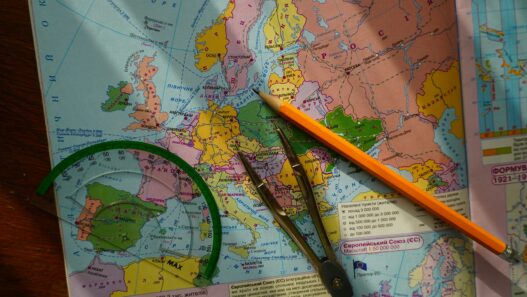



Emerging as a symbol of integration, the European Union has never concealed its ambitions of expanding and adopting new countries into its orbit. Starting with only six countries in 1951, the EU has grown into 27 member States, despite the huge and controversial departure of the United Kingdom in 2020. The evolution of the EU has been marked by a process of enlargement, done in three different phases, but which has shaped the outline of the current European Union.
The enlargement is the principal reflection of the integration and assimilation that the EU has been willing to do since its formation. Even though the last big incorporation dates back to 2013, the EU has never stopped its eagerness to incorporate new states into the organization. In 2025, nine countries have been granted the candidate status. Nonetheless, the situation of them varies enormously, as the wishes, reasons, and intentions of these countries are based on completely diverse causes and elements.
From the candidate countries, there are three whose situation has severely changed in the past years, which led them to approach the EU: Ukraine, Georgia, and Moldova. The beginning of the Russian offensive in Ukraine in 2022 has completely changed the geopolitical chessboard. Many international actors have been involved and dragged in one way or another, in spite of the lack of direct military involvement of other states. In the case of the EU, it has repeatedly stated its support for Ukraine, trying to position itself as a strong, relevant, and influential actor in the region.
Thus, the Russian offensive of 2022 has brought back to the table the EU enlargement. Since then, Brussels has added Ukraine, Moldova, and Georgia to its candidate list, trying to expand its influence, being aware of the importance of facing Russia in a political way. The addition of these three countries is largely bonded to the EU’s security. Leaving aside the evidential purpose of including Ukraine in the equation, the cases of Moldova and Georgia are based on their physical proximity to Russia, but also due to their political and historical ties with the Eurasian giant. It must not be forgotten that Russia continues to implement a military presence in Abkhazia and South Ossetia (Georgia) and in Transnistria (Moldova), supporting the independence dreams of these regions. 
However, contemplating the accession criteria to enter the EU, and considering the amount of time that states like Albania or Serbia have been in the candidate section without any relevant moves, the question that arises is whether these countries really stand a chance of joining the EU in the short term, or whether it is a utopian and unrealistic scenario.
The strong efforts made by Ukraine
Although Ukraine gained its candidate status only in 2022, the country had already improved its relations with the EU after signing the association agreement in 2014. Since that moment, the EU has closely monitored the compliance of the agreement and closely followed the steps taken by the country.
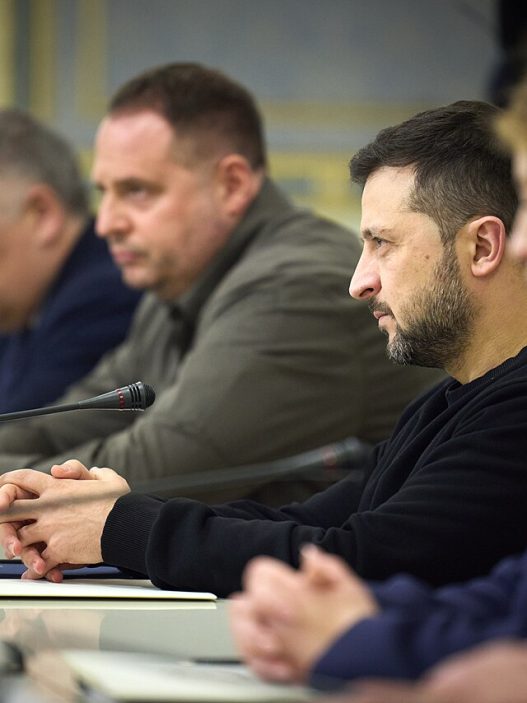
In 2022, just four days after the full-scale Russian invasion of Ukraine, its president, Volodymyr Zelenskyy, formally requested membership in the EU. The government tried to accelerate the process, on account of the benefits of belonging to the Union could bring them, and given the urgency of the situation. The request must also be seen as a symbolic statement from Kyiv, implying a distance and a resistance towards Russian aspirations in their territory. Indeed, the Ukrainian administration dreamed of an immediate candidate status that could have accelerated the monetary and political support.
Nonetheless, in spite of the powerful support given by the EU towards Ukraine since the beginning, Brussels has always been less enthusiastic about the speedy adherence of the Eastern country. In reality, the options regarding its entry to the bloc have been more discussed than what may be seen. On the one hand, less than a month after the request of the Ukrainian government to start the negotiations, Ursula von der Leyen stated that Ukraine is “one of us and we want them in the European Union”. In addition, presidents of different Eastern European countries endorsed the perspective of the Ukrainian entry. However, not only has the EU been less enthusiastic about the possibilities of Ukraine entering the EU, but also turned down the accelerated requests of Kyiv.
In fact, European officials reminded the Ukrainian government of the habitual long-lasting process of accession to the EU. The former EU foreign policy chief, Josep Borrell, remarked that it could take many years for Ukraine to enter the EU.
In any case, on 17 June 2022, the European Commission recommended giving Ukraine the candidate status. A few days later, the European Council unanimously approved the status of candidate members of Ukraine and Moldova.
The negotiations between the EU and Ukraine have been focused on judicial independence and fighting against corruption in the country. Ukraine is one of the countries with the highest perceived levels of corruption, and as institutions like the Group of States Against Corruption (GRECO) have proved, it can endanger the development of democracy. The Eastern European country has been implementing efforts to reduce corruption for more than a decade, passing different laws to promote transparency and creating the NABU (National Anti-Corruption Bureau of Ukraine) and the NAPC (National Agency for the Prevention of Corruption). However, Brussels insists that Kyiv must implement further reforms to stay on the accession track.
The opportunity that Moldova wants to take
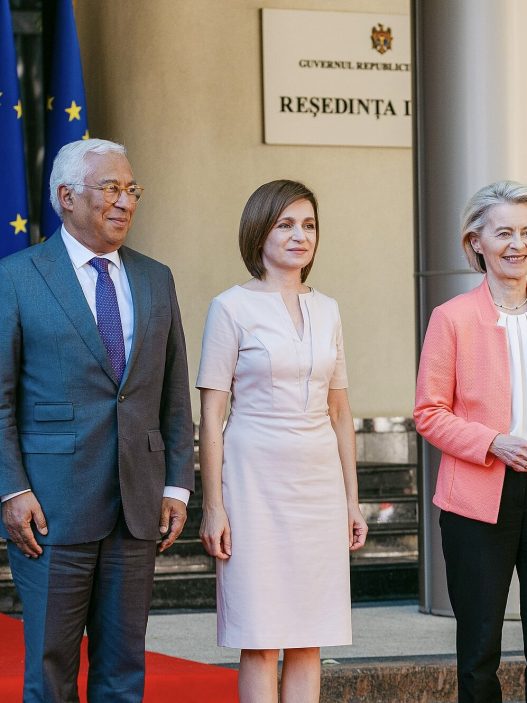
If there is a country that is eager to enter the EU, that is Moldova. Its administration is one of those that has got closer towards the Union, and that has shown more signs of their aspirations of joining it. As President Maia Sandu has stated this 2025, “the majority of Moldovans want Moldova to become part of the EU”.
Moldova received the status of candidate at the same time as Ukraine. Given its proximity to Russia and knowing the connections that the Russian government has with the independent movements in Transnistria, the necessity of expanding its bonds with the EU has been urged. Furthermore, without the war in Ukraine, Moldova would probably not have been granted candidate status so fast. This does not mean that Moldova wouldn’t have been considered by the EU, but unarguably, it wouldn’t have been placed on the epicentre of the debate regarding EU enlargement.
Moldova’s negotiations with the EU started in 2024, and since then, the country has been working on integrating different policies of the European architecture, mostly dedicated to its integration into the single market and the defense and security partnerships. However, Moldova faces different challenges in meeting the accession requirements. Like Ukraine, Moldova has to upgrade its attempts to reduce corruption and disinformation. Moreover, Moldova has to face the existence of different Russian influences in the country.
With parliamentary elections approaching this September, several pro-Russian groups are intensifying disinformation and disillusionment, attempting to lower the spirit of the Moldovan population towards democracy and pro-European groups. These threats have encouraged Chișinău to introduce fines for disinformation and to advance in hybrid mechanisms for defense and security in partnership with the EU.
Joining the EU in the short term?
Despite the alacrity with which Ukraine, Moldova, and the EU have tried to accelerate the adhesion, both States need to improve and adapt their systems to the European community. The war in Ukraine has put the enlargement as a fundamental point of debate, but it is hugely complicated for both countries to enter the EU at present.
However, what is the current situation? Ukraine and Moldova were given the candidate status in 2022; meanwhile, the negotiations did not start until 2024. The initial enthusiasm of the EU — mostly symbolic — towards the entrance of Ukraine has decreased in the past few years, due to the difficulty of the process and US involvement in the peace negotiations. This has shaded the importance of the EU in the geopolitical actions that might take place surrounding Ukraine.
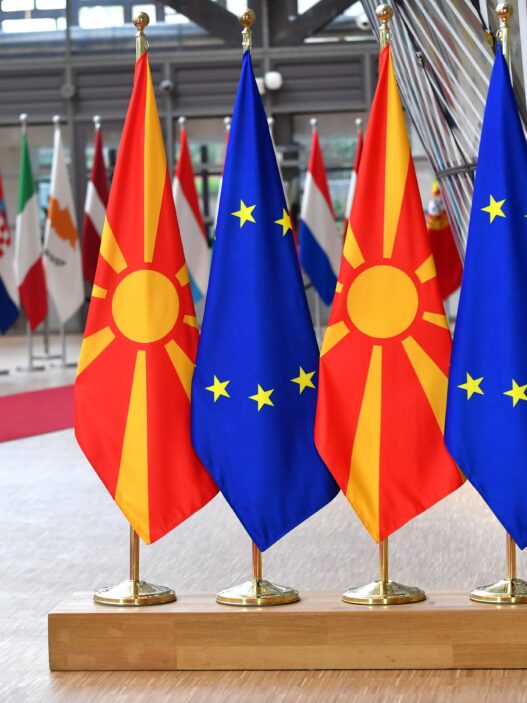
In addition, it has to be considered that usually, countries stay as “candidates” for a long time before finally becoming part of the EU. Turkey was given this status in 1999, North Macedonia in 2005, Montenegro in 2010, Serbia in 2012, and Albania in 2014. Some of these countries have stopped their conversations with the EU, while others have increased their attempts to approach it, but on the whole, these five countries have been negotiating their entrance for more than ten years. In addition, Croatia (current Member State) took ten years to enter the EU, while Romania and Bulgaria spent eight years each. This demonstrates that it is not usual for countries to integrate into the EU rapidly, and evidences the unrealistic options of Moldova and Ukraine, despite their “special” situation due to the war in Ukraine. In fact, once a country enters the EU, it may take some time to completely adapt to the Union, as shown by the fact that Bulgaria and Romania entered partially into Schengen in March 2024, 17 years after their entrance into the European Union.
Moreover, belonging to the EU needs a whole adaptation towards the EU policies, and a democratic commitment that Ukraine and Moldova need to work on. The current situation regarding corruption, besides the measures adopted, is a huge obstacle to the development of full democracies in these two countries.
In this way, Ukraine and Moldova need to continue working and implementing their commitments if they want to turn their European wishes into a reality, which surely will be achieved in the long term.