






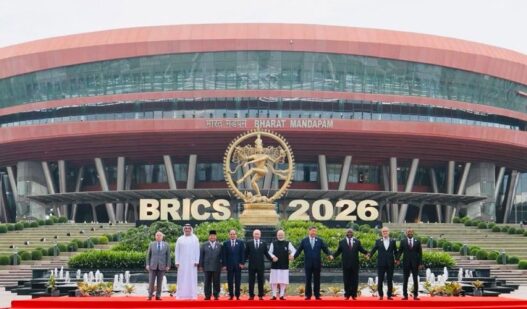
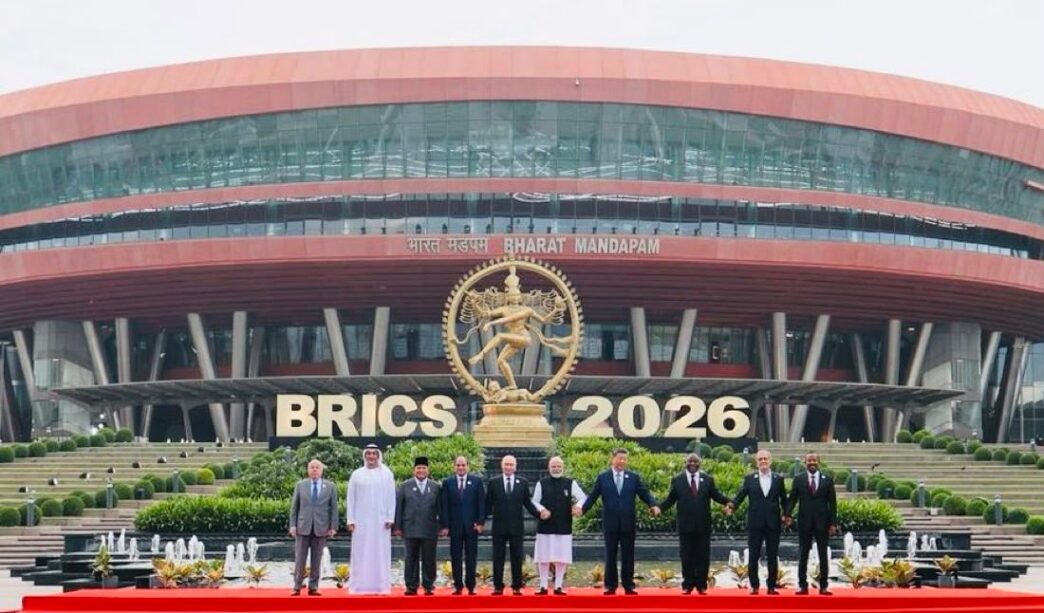
BRICS arrives in New Delhi twenty years after the cooperation format first emerged in 2006, as a group very different from the original BRIC. Initially comprising Brazil, Russia, India and China, the format expanded to include South Africa in 2010 and has since grown to 11 member countries and 10 partner countries, bringing together economies and strategic actors from the Middle East, Africa and Asia.
This rapid expansion has increased the group’s international weight: it now accounts for around half of the world’s population, 40% of global GDP and 26% of global trade. At the same time, the group’s growing size has brought together countries with significant differences in their political, economic and strategic interests.
The 18th BRICS Summit, hosted by India on 12–13 September 2026, took place against a geopolitical backdrop marked by conflicts, economic tensions, and growing concerns over energy security and supply-chain resilience.
The theme chosen for this edition, “Building for Resilience, Innovation, Cooperation and Sustainability”, effectively summarises the priorities of the Indian chairship: strengthening emerging countries’ ability to withstand economic and geopolitical shocks while promoting innovation, cooperation and sustainable development. At the same time, the summit highlighted the challenge of presenting a common agenda despite significant differences among members.
The New Delhi Declaration likely represents the summit’s most significant outcome. Structured into 140 paragraphs, the document outlines a particularly broad agenda, ranging from core issues such as global governance reform and economic and financial cooperation to energy, sustainable development and artificial intelligence, as well as concerns over conflicts and terrorism. The result is a document that does not set a common political direction for the group, but identifies several areas of convergence in which cooperation can be strengthened
Global governance: a stronger voice for the Global South
The first pillar concerns a programmatic objective: reforming international institutions. BRICS calls for more representative global governance that better reflects the growing weight of emerging economies. This applies in particular to the UN, the Security Council, the IMF, the World Bank and the WTO.
The logic is not necessarily to replace the existing multilateral order, but rather to alter its internal balance, to promote inclusive and sustainable development across the Global South. In this regard, the Declaration stresses the need to increase the representation of Emerging Markets and Developing Economies (EMDEs) and address their underrepresentation in international institutions.
Trade and sanctions: criticism of Western instruments
A second issue, directly relevant to Brussels and the West, concerns trade and economic measures. While making no direct reference to the United States or the European Union, BRICS criticises unilateral tariff and non-tariff measures, including what it describes as protectionism pursued under environmental objectives. Separately, the Declaration criticises unilateral economic and secondary sanctions considered contrary to international law.
While recognising itself as part of the multilateral trading system, the group therefore contests unilateral trade restrictions and sanctions that it considers inconsistent with WTO rules or international law, highlighting their potential implications for development and the enjoyment of human rights.
Energy and critical raw materials: convergence and competition
On energy security, the text stresses the need to ensure market stability, continuity of energy flows and infrastructure resilience.
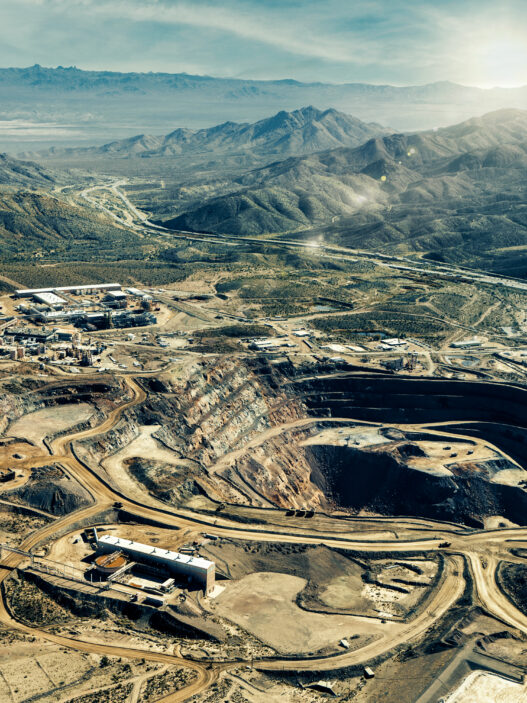
While recognising the continued importance of fossil fuels, the reference to critical minerals is particularly noteworthy. In addition to the need to ensure more diversified and sustainable supply chains, BRICS stresses the right of producing countries to retain control over their own resources and capture a greater share of the added value.
Finance and payments: greater autonomy, not an alternative currency
The fourth dossier concerns financial cooperation and was among the most anticipated, particularly because of the debate surrounding the possibility of creating a BRICS currency and developing common solutions for member countries. Unsurprisingly, there is no reference to a common currency, but other important details emerge.
The Declaration confirms ongoing work on the Strategy for BRICS Economic Partnership 2030 and cross-border payment systems, with particular attention to infrastructure interoperability and the use of local currencies in trade and investment.
The relevant point is not the sudden creation of a de-dollarised financial system, but rather the gradual development of instruments that could reduce dependence on Western financial infrastructure, including in relation to sanctions.
The political limit
In terms of international politics, however, the Declaration clearly shows the limits of internal consensus. The text addresses issues ranging from Cuba and the Israeli-Palestinian conflict to Sudan and terrorism, while repeatedly referring to sovereignty, international law, civilian protection and diplomatic solutions. Equally evident is the absence of any mention of the war in Ukraine.
These omissions do not represent the core of the summit, but they clarify the nature of the group: BRICS members are more easily able to converge on issues of governance and trade than on international crises in which their strategic interests diverge.
What does it mean for the European Union?
For the European Union, the central issue is not the political nature of BRICS, but rather its growing cooperation in areas that Brussels considers strategically vital. The pursuit of more resilient supply chains and greater coordination on critical raw materials could affect European access to the resources needed for the energy transition.
At the same time, the development of cross-border payment systems and the greater use of local currencies could, in the long term, reduce members’ exposure to sanctions and Western instruments of economic pressure.
This is compounded by demands for greater representation of the Global South in the main international institutions, which would imply a redistribution of influence within institutions where Western countries have traditionally exercised considerable weight. In this context, India represents a particularly important interlocutor. While supporting greater autonomy and representation for BRICS and the Global South, New Delhi maintains relations with Russia and Iran while also strengthening political, economic and security cooperation with the EU. For Brussels, deepening its relationship with India could therefore help keep dialogue open with a BRICS member that maintains extensive political and economic ties with the West.
REFERENCES
- https://www.brics2026.gov.in/about-us/#about_members
- https://d2jiw2zrmmyqt8.cloudfront.net/wp-content/uploads/2026/09/12185124/New-Delhi-Declaration-2026-1.pdf
- https://d2jiw2zrmmyqt8.cloudfront.net/wp-content/uploads/2026/09/12212256/11th-Sept_BRICS-2026-Factsheet.pdf
- https://taxation-customs.ec.europa.eu/carbon-border-adjustment-mechanism_en
- https://single-market-economy.ec.europa.eu/sectors/raw-materials/areas-specific-interest/critical-raw-materials/critical-raw-materials-act_en
- https://www.consilium.europa.eu/it/press/press-releases/2026/01/27/press-statement-by-president-antonio-costa-following-the-eu-india-summit/