







The future will be green; it is not a question of “if”, but “when”. And that is a good thing for the world, for our health and for our societies. But – and this might perhaps be a little paradoxical – it could also benefit European security. What’s more, in a world fuelled by electricity, being at the forefront of the energy transition could give Europe an strategic advantage over rivals such as Russia and China. This article highlights three areas where investment in the energy transition will help create a more secure Europe: decentralising power generation and the resilience it brings into the electricity grid, reducing dependence on foreign powers for energy supplies, and boosting the economy and the generation of scientific knowledge.
Decentralised and resilient energy generation
The war in Ukraine is a mirror of what war will look like in the future, and the picture is not pretty. Of particular concern to Europe is the use of drones by both parties to attack vital civilian infrastructure, hampering military operations and harming the population. The Russian attacks on the Ukrainian power grid have made headlines due to the damage they have caused disrupting the power supply to industry and households. Ukrainian drones have also been able to cause damage, recently destroying several Russian strategic aircrafts in the operation “Spider’s Web”.
Europe’s vulnerability to this type of attack in a potential fight with Russia should be a concern for policy makers on the continent. Attacks using cheaply manufactured drones could plunge the continent into chaos, paralyse entire industries, disconnect citizens and slow down military mobilisation and the conduct of operations on the battlefield, as most modern warfare activities depend on a reliable power supply.
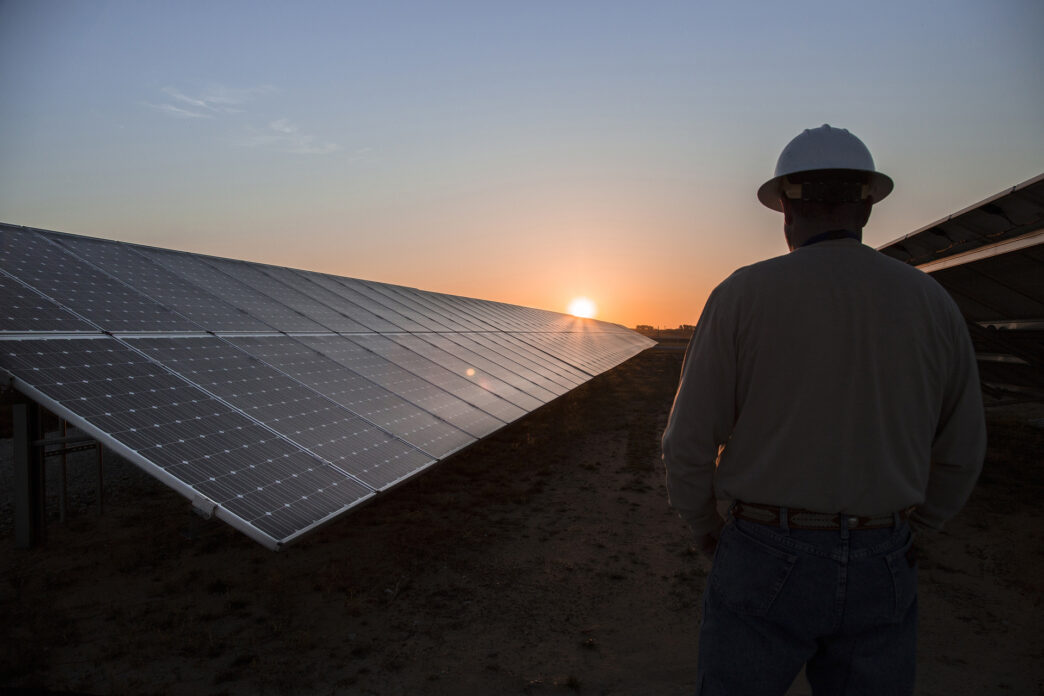
This is where the energy transition can play a crucial role in improving Europe’s resilience. Unlike traditional fossil fuel-based methods of power generation, which operate in large buildings exposed to drone and missile attacks, solar cells and wind turbines are much more decentralised in nature. Even if Russia overcomes the continent’s drone and missile defences, the disruption it can cause by attacking a wind turbine or photovoltaic power plant will be limited, disrupting only a small part of the continent’s total power generation capacity. The damage would be even more limited when complete integration of the European electricity grid is finally achieved. 
However, it could be possible that an enemy attacks the transmission grid rather than the power generation facilities. In this case, a successful attack on an electrical substation could disrupt power transmission in a region for several hours. But even in this case, the technologies of the energy transition offer security, as the use of batteries and solar panels could provide resilience to vital civilian and military infrastructure. Unlike a petrol generator, which is dependent on the availability of fuel, solar panels and batteries only need the sun and can be installed on roofs and balconies with little maintenance.
In the midst of a crisis, hospitals, government buildings, streetlights and military commands could continue to operate even if a drone, missile or cyber-attack disrupts power transmission. This resilience can be further enhanced by building PV power plants and electricity storage facilities near vital industries and military installations to provide them with reliable power. This would allow vital military and manufacturing operations to continue even in the event of a total power outage, as experienced by Spain and Portugal in April. In this respect, the energy transition would therefore increase military autonomy and reduce the threat of attacks on power generation infrastructure.
Reduced geopolitical dependencies
For decades, the European Union has been dependent on imported fossil fuels for its electricity supply. This dependence has given third countries leverage to extract political concessions from Europe or to disrupt its economy. The most obvious case of this dependence was the significant reliance on Russian gas prior to the outbreak of war in Ukraine, which accounted for around 45% of the continent’s gas supply. The consequence was a shock in energy prices and a decline in the competitiveness of European industry due to the end of cheap energy from Russian gas.
As we approach the age of artificial intelligence and quantum computing with high power consumption, and in the midst of the transition to Net Zero, it is clear that a reliable supply of cheap energy is crucial for Europe’s future economic and military security. The good news in this context is that the cheapest electricity generation methods in the world are all renewable, so investment in photovoltaic panels, wind turbines and batteries is not only the morally right decision to save the planet, but also the most economically sensible one.
This process is not without obstacles. On the one hand, renewable energies bring known and unknown challenges that Europe must face in order to guarantee a reliable supply. The power outage in Spain and Portugal has demonstrated possible consequences of a system without sufficient inertia to maintain the flow of electricity in the grid, even if the cause of the outage is still under investigation. For a type of energy generation that is highly dependent on the weather, this means that investment in electricity storage is crucial to make the whole system resilient. This also applies to the development of new technologies that have the potential to act as stabilisers in the future, such as geothermal energy and nuclear fusion.
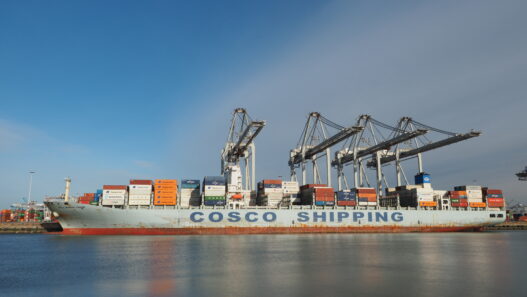
On the other hand, Europe runs the risk of trading one dependency for another, as most of the production of technologies for the energy transition is concentrated in China, including the manufacture of electric vehicles, solar panels and lithium-ion batteries. More importantly, China also controls the supply chain for critical raw materials needed to produce these technologies, such as lithium, rare earths, cobalt and copper. However, unlike oil and gas production, Europe is able to diversify its raw material supply chain through strategic partnerships with resource-rich countries, and develop a self-sufficient processing and manufacturing industry for many of the technologies of the energy transition, such as electric vehicles and batteries. Furthermore, unlike gas, the installed capacity of electricity generation based on wind turbines or solar panels is not dependent on a constant influx of these installations, but is a cumulative process that is less susceptible to disruptions on the international market.
Development of cutting-edge technologies
The process of building resilience in the supply of technologies for the energy transition has the potential to create synergies that also improve Europe’s economic and military security. In this sense, investing in the development of more efficient methods of electricity generation and storage, as well as in the infrastructure of the energy transition, would result in the promotion of European scientific research and provide the necessary stimulus to the continent’s economy.
Investment in green technology research does not only bring advances in clean energy, but also strengthens the scientific and technological ecosystem in Europe. Financing researchers, scientific equipment and projects for specific technologies creates expertise and infrastructure that can be used or adapted to other strategic sectors, including defence and digitalisation. In other words, to gain leadership in green innovation would contribute directly to the European capacity for autonomous technological development and scientific research.
In addition, the completion of the energy transition and the electrification of European infrastructure will require investments totalling billions of euros. This money is not an expense, but an instrument for revitalising and relaunching the European economy. It would be used to train and pay thousands of new workers who would build the green infrastructure needed for the energy transition (energy storage, power lines, charging stations) and manufacture new technologies (microprocessors, batteries, electric cars). It will also increase the demand for these technologies and incentivise the creation of new companies that offer the products and services that will make this process a reality.
But more importantly, this money would revitalise local economies as new investments in infrastructure and green technology create jobs, boost demand, and stimulate local businesses. The economic depression of some regions affected by the slowdown in European economic growth is one of the biggest challenges facing the EU. A smart European investment strategy could therefore set up hubs for the production of green technologies in economically depressed areas, creating positive synergies that would allow the local population to flourish. In this way, one of the continent’s main problems could be solved, namely the creation of a sustainable economy that does not rely on fossil fuels to function.
Conclusions: Towards a secure and green Europe
Although it is not always the first thought when talking about climate policy, it is clear that there are synergies between Europe’s economic and military security and the energy transition. Firstly, new energy generation technologies bring a level of resilience that is impossible to reach for fossil fuels. They decentralise power generation and provide autonomy to vital sectors in the face of a possible enemy attack with drones, missiles or even cyber operations.
Secondly, the energy transition will enable Europe to achieve true energy independence from fossil fuel rich countries such as Russia. Using renewable energy to generate electricity is not only cheaper than coal or gas-based generation, but also gives the EU the ability to control the supply chain of the equipment needed to do so. Although the production of electric cars, solar panels, batteries and wind turbines is currently mainly located in China, it is not out of reach for Europe, especially considering the significant financial and technological resources the continent has at its disposal. Even if initially production costs in Europe are higher than in China, strategic autonomy and supply chain control outweigh price advantages in sectors critical to security.
Finally, any investment in the energy transition has the potential to create positive synergies that will benefit Europe’s economic and technological development. The research infrastructure and progress made in improving green technologies would create a pool of knowledge and human capital available for other objectives and provide Europe with a basis for autonomous technological research. At the same time, investment in green infrastructure and production has the potential to boost the European economy, particularly in areas that have been struggling economically, and create a more prosperous, secure and environmentally friendly society.