


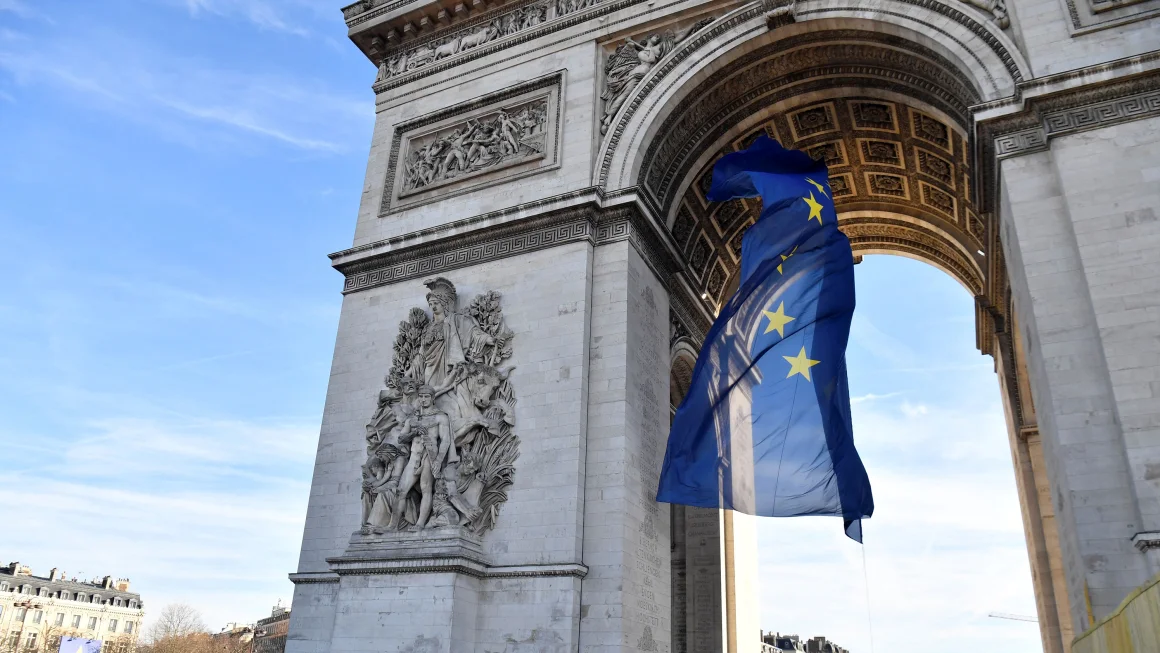





The president of the ECB, Christine Lagarde, to step down on 7 February 2027
She has informed the EU Governing Council as well as EU Council President of her decision on 29 October
Lagarde wants to leave office to gain the ability to freely express her opinion on world matters
Her successor will be appointed according to Article 283 of the Treaty on the Functioning of the European Union
Source։ European Central Bank, Reuters
More Quick Briefs:
·Inside Europe·Conservatives·Édouard Philippe·European Union·France·François Hollande·Jean-Luc Mélenchon·Marine Le Pen·Presidential Elections 2027·Raphaël Glucksmann·Socialists
·Inside Europe·Conservatives·Édouard Philippe·European Union·France·François Hollande·Jean-Luc Mélenchon·Marine Le Pen·Presidential Elections 2027·Raphaël Glucksmann·Socialists
France’s Spring 2027 Election: Can the Pro-EU Centre Recover? France Between Identity and Economic Politics. ↗︎
Glucksmann’s nomination boosts France’s centre-left, but moderate candidates remain divided as Le Pen and Mélenchon lead a recent presidential poll.
→Update (30.10.2026): Analysis: Divisions among French centrists increase the likelihood of a Le Pen-Mélenchon presidential run-off (Reuters)
→Update (27.10.2026): Joint Statement: 44 French journalists’ associations condemn reported assaults on Mediapart and Politis reporters at the far-right National Rally’s congress in Orléans (Mediapart, Le Monde)
→Update (26.10.2026): News: French presidential candidate Édouard Philippe loses support in new opinion poll ahead of 2027 election (POLITICO)
→Update (25.10.2026): Analysis: France faces mounting political and economic challenges amid concerns over its role in Europe (POLITICO)
→Update (25.10.2026): News: Marine Le Pen’s presidential campaign messaging overshadowed by Rassemblement National’s confrontational approach (Rapporteur)
→Update (25.10.2026): News: Marine Le Pen launches 2027 presidential campaign, promising French national renewal and challenging EU authority (RFI)
→Update (24.10.2026): News: Jordan Bardella re-elected president of France’s Rassemblement National with 98.98% of the vote (LCP)
→Update (23.10.2026): Analysis: Mélenchon proposes cancelling France’s public debt, raising questions about historical precedents (Le Monde)
→Update (23.10.2026): News: Mélenchon’s vision of a “New France” sparks identity clash with Le Pen (Rapporteur)
→Update (20.10.2026): Analysis: French riots expose political risks and opportunities ahead of 2027 presidential election (POLITICO)
→Update (14.10.2026): Polling: Mélenchon overtakes Philippe in French presidential poll (Public Sénat)
→Update (14.10.2026): News: Mélenchon courts France’s isolated voters (Rapporteur)
→Update (12.10.2026): Analysis: Édouard Philippe’s allies increasingly doubt his chances of defeating Marine Le Pen in France’s 2027 presidential election (POLITICO)
→Quick Brief:
→Raphaël Glucksmann, a pro-European MEP and Place Publique leader, won the centre-left primary on 11 October with 66%
→Édouard Philippe, prime minister from 2017 to 2020 and Horizons leader, seeks to unite centre-right and centrist voters
→François Hollande, Socialist president from 2012 to 2017, is considering another bid, potentially further splitting the centre-left
→An early-October poll puts far-right Le Pen at 35-37%, with radical-left Mélenchon reaching the runoff in every tested scenario. The race remains open
→Sources: Reuters, Le Monde, DLF - Europa heute
→Transparency Note: Use of AI
·Foreign Policy·Geopolitics·Security & Defence·Trade Policy·Transatlantic Relations·War in Ukraine·Congress·European Union·Midterms·Russia·Senate·USA
·Foreign Policy·Geopolitics·Security & Defence·Trade Policy·Transatlantic Relations·War in Ukraine·Congress·European Union·Midterms·Russia·Senate·USA
US Midterms: Europe’s Uncertainty Remains ↗︎
The US midterms could change congressional majorities, while Europe remains exposed to uncertainty over American security commitments, funding and trade policy.
→Update (30.10.2026): Analysis: Democrats hope to overcome decades of electoral defeats in Texas as a potential political breakthrough approaches (Reuters)
→Update (30.10.2026): Podcast: ECFR explores the future of democratic foreign policy after Trump (ECFR)
→Update (28.10.2026): Analysis: ECFR examines what US political volatility and a weakened Democratic Party mean for Europe (ECFR)
→Update (22.10.2026): Commentary: Trump’s proposed deals with Russia raise questions over Europe’s role and Ukraine’s sovereignty (ECFR)
→Quick Brief:
→Congressional powers: The 3 November elections determine control of Congress. New majorities could strengthen oversight, while the president retains substantial foreign-policy authority
→Ukraine and defence: Delays or withholding of approved US funding complicate European planning for Ukraine, security and development assistance
→Trade relations: US tariffs remain a source of transatlantic tension, with Russian energy imports creating additional exposure to American pressure
→European preparedness: The report identifies contingency funding, reduced Russian energy dependence and coordinated trade responses as ways to manage continued uncertainty
→Sources: ECFR, US Government Accountability Office, USAGov
→Transparency Note: Prepared with AI assistance.
·Economic Policy·Monetary Policy·Security & Defence·Budget·Council of the EU·EU Borrowing·European Commission·General Affairs Council·Multiannual Financial Framework
·Economic Policy·Monetary Policy·Security & Defence·Budget·Council of the EU·EU Borrowing·European Commission·General Affairs Council·Multiannual Financial Framework
Frugals vs. Friends of Cohesion: EU Budget Battle Intensifies ↗︎
Six fiscally conservative EU countries are demanding major cuts to Brussels’ proposed €2 trillion budget for 2028–2034, setting up a difficult fight over Europe’s future spending priorities. The 27 member states want to have a decision by the end of the year.
→Update (30.10.2026): News: EU tobacco tax revenue forecasts fall sharply amid negotiations over the bloc’s next long-term budget (Rapporteur)
→Update (27.10.2026): Analysis: Ukraine’s €70 billion funding shortfall threatens to complicate negotiations over the EU’s next long-term budget (Euronews)
→Update (26.10.2026): News: Austria threatens to veto the EU budget (Rapporteur)
→Update (26.10.2026): News: EU foreign aid chief says little is changing in Africa despite development efforts (Rapporteur)
→Update (26.10.2026): News: Rising debt costs and fraud allegations increase pressure on the EU budget (Rapporteur)
→Update (23.10.2026): Interview: António Costa targets November agreement on EU budget (Rapporteur)
→Update (22.10.2026): News: MEPs seek €7 billion more for Erasmus despite opposition from budget-conscious EU governments (EUobserver)
→Update (21.10.2026): Analysis: Who will stand up for Global Europe? (PubAffairs Bruxelles)
→Update (20.10.2026): News: EU budget negotiations raise questions over costs and funding (Rapporteur)
→Update (19.10.2026): Analysis: EU faces a perfect political storm amid mounting challenges (POLITICO)
→Update (16.10.2026): Interview: Irish minister says EU budget deal still possible by Christmas (YouTube)
→Update (16.10.2026): Interview: Cyprus president proposes shortening EU budget to three or four years (POLITICO)
→Update (16.10.2026): News: Costa targets November EU budget showdown (POLITICO)
→Update (16.10.2026): News: Costa proposes new EU taxes to break budget deadlock (Rapporteur)
→Update (15.10.2026): Podcast: Europe faces a new battle over the EU budget (ECFR)
→Update (15.10.2026): News: 17 European leaders issue joint statement on EU cohesion funding (Italian Government)
→Update (14.10.2026): News: EU leaders consider deep budget cuts as joint borrowing expands (EUobserver)
→Update (14.10.2026): News: EU capitals weaken budget deal deadline (POLITICO)
→Update (13.10.2026): News: France sets EU budget red lines on tech taxes and Buy European (Rapporteur)
→Update (13.10.2026): Interview: Austrian EU Affairs Minister Claudia Bauer rejects artificial budget deadline (Rapporteur)
→Update (13.10.2026): News: Spain hosts Friends of Cohesion meeting on next EU budget (Spanish Ministry of Foreign Affairs)
→Update (12.10.2026): Opinion: Will MEPs challenge €141bn in EU budget cuts? (EUobserver)
→Update (11.10.2026): News: MEPs warn Irish EU budget plan risks historic failure as €141 billion in cuts spare agriculture and cohesion funds (EUobserver)
→Update (11.10.2026): News: European Commission warns that EU budget cuts could undermine funding for crisis response (POLITICO)
→Update (10.10.2026): EU's Irish presidency wants 8% cut to proposed 2028-2034 budget plan (Reuters)
→Update (08.10.2026): Opinion: Cut the EU budget and we all lose (EUobserver)
→Update (08.10.2026): News: EU countries brace for €100B-€200B smaller budget (Politico)
→Update (08.10.2026): Analysis: EU’s 2028-2034 budget proposal creates new conflicts over spending priorities and financial burden-sharing (SWP)
→Update (08.10.2026): News: EU auditors warn of major budget shortfall unless the EU introduces new sources of revenue (Rapporteur)
→Update (07.10.2026): News: Iran war shock expected to shrink next EU budget (Rapporteur)
→Update (06.10.2026): News: Von der Leyen rebukes EU budget frugals over demands for deeper spending cuts (Rapporteur)
→Update (29.09.2026): News: EU governments brace for €100 billion cut to long-term budget proposal (POLITICO)
→Update (29.09.2026): News: EU cuts funding for women’s rights groups amid wider budget reductions (EUobserver)
→Update (29.09.2026): News: MEPs back €47 billion in new Erasmus funding as frugal states seek EU budget cuts (EUobserver)
→Update (29.09.2026): Commentary: EU budget cuts risk hurting member states’ own regions (EUobserver)
→Update (29.09.2026): News: EU leaders battle over budget as Parliament prepares resistance (Rapporteur)
→Update (25.09.2026): News: 12 countries oppose French push for EU defence preference (Euractiv)
→Update (23.09.2026): News: EU governments consider cutting development aid by up to 40 percent (EUobserver)
→Update (23.09.2026): News: Greece proposes EU-wide telecoms levy to fund budget and high-tech investment (Euractiv)
→Update (22.09.2026): News: France opposes cuts to foreign aid in next EU budget (POLITICO)
→Update (22.09.2026): News: Results of the General Affairs Council (Irish EU Presidency)
→Update (22.09.2026): News: France opposes cuts to foreign aid in next EU budget (POLITICO)
→Update (22.09.2026): News: Germany rejects Costa’s push for new EU budget taxes (POLITICO)
→Update (22.09.2026): News: EU ministers meet in Brussels for General Affairs Council (Council of the EU)
→Update (21.09.2026): Analysis: EU budget could strengthen rule of law safeguards but member states may blunt reforms (CER)
→Update (21.09.2026): News: Costa says EU budget needs new taxes governments are not already raising (POLITICO)
→Update (18.09.2026): News: Germany and Spain go head-to-head in EU budget fight (POLITICO)
→Update (17.09.2026): News: MEPs deadlocked over CAP’s place in next EU budget (Euractiv)
→Update (15.09.2026): News: Metsola urges Europe’s political centre to hold against extremes (Euractiv)
→Update (14.09.2026): News: EU plans cuts to staff and salaries in next long-term budget (POLITICO)
→Update (14.09.2026): News: EU countries split over scale of long-term budget cuts (Euractiv)
→Update (09.09.2026): News: Germany calls for hundreds of billions in EU budget cuts (Reuters)
→Update (09.09.2026): News: Costa says new EU taxes would reduce national contributions (POLITICO)
→Update (08.09.2026): News: France backs business tax to fund EU budget (Euractiv)
→Update (07.09.2026): News: Le Pen backs tobacco retailers against EU tax hikes (Euractiv)
→Update (07.09.2026): News: Ireland secures EU tax deal on carbon imports and e-waste (POLITICO)
→Update (04.09.2026): News: Spain urges EU climate adaptation fund and binding targets (Reuters)
→Update (04.09.2026): Commentary: EU budget could loosen China’s grip on critical raw materials (Euronews)
→Update (03.09.2026): News: EU budget negotiators criticise frugal states over cuts (EUobserver)
→Update (03.09.2026): Interview: Lithuania says eastern flank needs must shape EU budget (Euractiv)
→Update (02.09.2026): News: Spain worried by EU budget debate (Euractiv)
→Update (02.09.2026): News: EU budget camps remain deadlocked (EUobserver)
→Update (31.08.2026): News: Ireland seeks to break EU budget deadlock (POLITICO)
→Update (27.08.2026): Europe’s defence promise meets budget reality (ECFR)
→Quick Brief:
→Germany, Denmark, the Netherlands, Austria, Finland and Sweden want cuts of several hundred billion euros
→The European Commission has proposed a nearly €2 trillion seven-year budget for 2028–2034
→The six still want priority spending on defence, competitiveness, migration and European sovereignty
→They reject new joint EU borrowing and demand cuts across spending areas as national budgets face consolidation
→Sources: Euractiv, Reuters, Council of the EU
→Transparency Note: Use of AI
·Diplomacy·Economic Policy·European Governance·National Politics·Technology and Digital Policy·Transatlantic Relations·Canada·European Union·Mark Carney·SAFE·Unique Alliance·USA
·Diplomacy·Economic Policy·European Governance·National Politics·Technology and Digital Policy·Transatlantic Relations·Canada·European Union·Mark Carney·SAFE·Unique Alliance·USA
Canada Eyes Closer EU Alliance ↗︎
Canada is exploring an unprecedented new relationship with the European Union as Prime Minister Mark Carney seeks to reduce dependence on the United States and deepen economic and security ties with Europe.
→Update (29.10.2026): News: EU and Canada seek to strengthen bilateral ties and reduce vulnerability to US political uncertainty (POLITICO)
→Update (29.10.2026): Analysis: EU-Canada summit raises questions over the substance of closer ties amid disagreements over associate membership terminology (EUObserver)
→Update (29.10.2026): News: Von der Leyen reaffirms support for Canada’s proposed associate membership amid EU debate (Rapporteur)
→Update (28.10.2026): Interview: Lead MEP Javier Moreno Sánchez downplays Canada’s associate membership label dispute ahead of EU-Canada summit (EUObserver)
→Update (28.10.2026): News: Germany proposes revised wording to break EU-Canada diplomatic deadlock (Rapporteur)
→Update (27.10.2026): Analysis: ECFR explores how the EU and Canada can build new global partnerships amid geopolitical fragmentation (ECFR)
→Update (27.10.2026): News: Germany blocks EU statement on Canada’s potential associate membership (Rapporteur)
→Update (25.10.2026): Analysis: Canada and Europe seek to reshape the global order amid differing visions for its future (POLITICO)
→Update (23.10.2026): News: Senior MEP calls for concrete action to strengthen EU-Canada relations (Euronews)
→Update (22.10.2026): News: EU and Canada strengthen ties amid Trump’s unpredictable foreign policy, with Britain watching closely (Euronews)
→Update (22.10.2026): News: Germany leads opposition to Canada’s proposed EU associate membership (POLITICO)
→Update (30.09.2026): News: EU and Canada to announce sweeping new partnership pact (POLITICO)
→Update (22.09.2026): News: EU and Canada to unveil new partnership, but it may not be ‘associate membership,’ says ambassador (POLITICO)
→Update (20.09.2026): News: Costa says EU wants ‘closest possible relationship’ with Canada (POLITICO)
→Update (18.09.2026): Analysis: EU-Canada partnership could become model for other democracies (Euronews)
→Update (17.09.2026): News: Details emerge on Canada’s EU associate membership offer (EUobserver)
→Update (17.09.2026): News: EIB chief heads to Ottawa as EU-Canada ties deepen (POLITICO)
→Update (17.09.2026): News: Trump calls potential EU-Canada associate membership a ‘hostile act’ (Financial Times)
→Update (17.09.2026): Address to the European Parliament by Mark Carney (YouTube)
→Update (16.09.2026): News: Canada keeps EU ‘associate membership’ label at arm’s length (Euractiv)
→Update (15.09.2026): Analysis: How far can EU-Canada alliance go? (Euronews)
→Update (14.09.2026): Commentary: Canada’s unique alliance with EU is already taking shape (EUobserver)
→News: Canada eyes EU associate membership amid US tensions (Euronews)
→Commentary: EU should offer Canada deeper defence ties (ECFR)
→Quick Brief
→Carney says Canada is not seeking EU membership, but wants a “unique alliance” that could bring the country substantially closer to the bloc
→Ideas under discussion include easier movement of goods, services and workers, alongside deeper cooperation in defence, AI, energy and critical minerals
→Canada is already moving closer to EU structures: it became the first non-European country to participate in the EU’s SAFE defence instrument in 2026
→The shift comes as Canada-US trade tensions intensify, pushing Ottawa to diversify beyond its traditionally dominant economic relationship with its southern neighbour
→Sources: Reuters, Prime Minister of Canada, Council of the European Union
→Transparency Note: Use of AI
·Foreign Policy·Middle East Relations·Rule of Law·Security & Defence·Arab Israelis·Benjamin Netanyahu·Gadi Eisenkot·Israel·Naftali Bennett·Parliamentary Elections·Settler Violence·Yair Lapid
·Foreign Policy·Middle East Relations·Rule of Law·Security & Defence·Arab Israelis·Benjamin Netanyahu·Gadi Eisenkot·Israel·Naftali Bennett·Parliamentary Elections·Settler Violence·Yair Lapid
No Clear Winner in Israel Parliamentary Election: Arab Parties as Kingmakers for Coalition? ↗︎
Israel’s 27 October election tests Netanyahu’s leadership amid disputes over security, democratic freedoms, Arab political participation and growing international isolation.
→Update (29.10.2026): Report: Palestinians in Gaza and the West Bank see little hope for change following Israel’s election (The Straits Times)
→Update (28.10.2026): Analysis: Record turnout among Arab voters could increase their political influence in Israel (Reuters)
→Update (28.10.2026): News: Netanyahu expected to escalate violence as EU sanctions discussions remain on hold pending formation of a new Israeli government (EUObserver)
→Update (28.10.2026): News: Netanyahu and Eisenkot both claim the lead after Israel’s inconclusive parliamentary election (Reuters)
→Update (28.10.2026): Analysis: Israel faces renewed political uncertainty as competing coalition scenarios emerge following its parliamentary election (POLITICO)
→Update (27.10.2026): News: Israel’s opposition holds a narrow lead over Netanyahu’s bloc in initial election projections (Rapporteur)
→Update (27.10.2026): Poll Tracker: Israeli public broadcaster Kan provides an overview of party polling ahead of the 2026 Knesset elections (Kan News)
→Update (26.10.2026): Commentary: Former Israeli peace group leader warns that West Bank annexation policies could continue even if Netanyahu loses power (EUObserver)
→Update (26.10.2026): Explainer: Reuters profiles the leading candidates ahead of Israel’s parliamentary election (Reuters)
→Update (25.10.2026): Analysis: Israel’s election could challenge Brussels and Washington even under a more centrist leader (EUObserver)
→Update (25.10.2026): News: Israel to close West Bank crossings on election day as security crackdown intensifies (BBC)
→Update (24.10.2026): News: Israel expands military operations across the occupied West Bank after two soldiers killed, displacing around 1,200 Palestinians in Hebron (Reuters)
→Update (23.10.2026): Interview: Beth Oppenheim, Policy Fellow at the European Council on Foreign Relations (ECFR), argues that Netanyahu’s departure would not reverse Israel’s right-wing nationalist shift (EUObserver)
→Update (23.10.2026): News: Israeli forces begin demolishing Palestinian buildings in Hebron after two Israeli soldiers are shot dead (BBC News)
→Update (23.10.2026): Analysis: ECFR explores competing visions of Israel’s identity, security and political future (ECFR)
→Update (23.10.2026): Profile: Gadi Eisenkot offers security-focused alternative to Netanyahu ahead of Israeli elections (Reuters)
→Update (22.10.2026): Commentary: Israel’s security-driven shift challenges its liberal democracy ahead of elections (ECFR)
→Update (21.10.2026): Commentary: Netanyahu’s election campaign promotes fortress mentality amid Israel’s growing international isolation (Le Monde)
→Update (21.10.2026): Commentary: Can Israel break free of Netanyahu as Hungary did of Orbán? (EUobserver)
→Update (21.10.2026): News: Israelis abroad fly home to vote as opposition seeks to unseat Netanyahu (The Japan Times)
→Update (20.10.2026): News: Israel’s Ben-Gvir could gain electoral support as young voters turn to the far right (Reuters)
→Update (19.10.2026): Analysis: Deepfakes, bots and AI-driven disinformation raise concerns ahead of Israel’s elections (DW)
→Update (19.10.2026): Arab parties could hold balance of power in Israeli election as Ra’am fields Jewish candidate (Reuters)
→Quick Brief:
→Netanyahu faces former military chief Gadi Eisenkot’s centrist Yashar party and former premier Naftali Bennett’s Together list with Yair Lapid. Neither camp is assured a majority
→Leading contenders reject coalitions with Arab-led parties, despite their potentially decisive seats. This sidelines Arab Israelis and complicates government formation
→Settler violence exposes political differences: after settlers attacked European diplomats on 17 October, Eisenkot condemned “Jewish terror,” while Netanyahu’s office warned against premature conclusions
→War and fears over Israel’s democratic direction have driven some Israelis abroad. The election raises questions about security, civil liberties and international standing, though leadership change alone may not resolve them
→Sources: European Parliament Research Service, AP, Financial Times
→Transparency Note: Use of AI
·Economic Policy·Inside Europe·Housing Crisis·Maricarmen Abascal·Matrid·Pedro Sánchez·Protests·Spain
·Economic Policy·Inside Europe·Housing Crisis·Maricarmen Abascal·Matrid·Pedro Sánchez·Protests·Spain
Snap Elections on 29 November in Spain ↗︎
An 87-year-old Madrid pensioner whose eviction triggered protests can return to her longtime home, as her case adds pressure on Spain’s government to address the country’s wider housing crisis.
→Update (29.10.2026): News: Deadly rail disaster reignites Spain’s political crisis ahead of national elections (Rapporteur)
→Update (28.10.2026): News: Growing support for the radical right among young Spaniards signals shifting political attitudes (Rapporteur)
→Update (27.10.2026): Commentary: Spain’s deepening political divisions put public trust in democracy to the test (The Brussels Times)
→Update (26.10.2026): News: Spain’s conservative People’s Party (PP) and far-right Vox agree to coordinate Senate candidates in 23 constituencies ahead of November elections (EFE, PP)
→Update (25.10.2026): News: French-inspired youth protests turn violent in Barcelona, with 128 arrested, including 72 minors (Euronews, EFE)
→Update (23.10.2026): News: Alberto Núñez Feijóo pledges sweeping conservative reforms if he wins Spain’s November 29 election (POLITICO)
→Update (21.10.2026): News: Spain’s Vox rallies international allies ahead of elections (Rapporteur)
→Update (20.10.2026): News: Spain grants amnesty to Catalan separatist leaders ahead of November election (Catalan News)
→Update (20.10.2026): News: Spain’s conservatives hold coalition talks with far-right Vox (POLITICO)
→Update (19.10.2026): Commentary: Why Spain’s left failed to unite ahead of November’s snap election (EUobserver)
→Update (14.10.2026): News: Spain’s ruling Socialists lead state-run poll amid snap election speculation (Reuters)
→Update (14.10.2026): Polling: Spain’s latest voting intention trends (POLITICO)
→Update (12.10.2026): Interview: Spanish Socialist MEP sees no alternative to Sánchez as housing and immigration dominate snap election (EUobserver)
→Update (09.10.2026): Podcast: Sánchez’s snap election gamble raises questions about Spain’s political future and its implications for Europe (ECFR)
→Update (08.10.2026): News: Maricarmen, the 87-year-old woman whose eviction sparked major protests in Spain, dies in hospital (Euronews)
→Update (08.10.2026): News: Spain’s far-right Vox, led by Santiago Abascal, gains ground in election polls (POLITICO)
→Update (07.10.2026): News: Spanish unions call general strike for November 11, weeks before snap parliamentary election (Reuters)
→Update (06.10.2026): Analysis: Spanish election threatens political balance in Brussels as Sánchez’s Socialists face potential losses (POLITICO)
→Update (05.10.2026): Analysis: Sánchez bets on housing agenda to keep far right out of government in Spain’s snap election (EUobserver)
→Update (05.10.2026): News: Sánchez calls snap Spanish election for November 29 (POLITICO)
→Update (03.10.2026): News: Tens of thousands protest across Spain over deepening housing crisis (The Guardian)
→Update (02.10.2026): News: Sánchez loses key housing crisis vote after eviction of 87-year-old woman (BBC)
→Update (30.09.2026): Podcast: Did Spain’s government address protesters’ demands on housing? (EUobserver)
→Update (29.09.2026): News: Spain moves to stem housing protests (Rapporteur)
→Quick Brief:
→Maricarmen Abascal was evicted on 23 September from the Madrid apartment where she had lived for more than 70 years, turning her case into a symbol of Spain’s housing crisis
→The eviction prompted protests in Madrid, amid wider concerns over rising rents and access to affordable housing
→The property owner has agreed to let Abascal return under a new eight-year rental contract, with rent capped at 30% of her net income. She still has to approve the agreement formally
→Prime Minister Pedro Sánchez explicitly referred to Maricarmen’s case while calling for parliamentary support for new housing measures aimed at strengthening tenant protection and addressing Spain’s housing crisis
→Sources: BBC, Reuters, El País
→Transparency Note: Use of AI
·Energy Policy·Inside Europe·Security & Defence·War in Ukraine·Andrey Gyurov·Black Sea·Bulgaria·Defence·European Union·Iliana Yotova·Inflation·NATO·Presidential elections·Rumen Radev·Russia
·Energy Policy·Inside Europe·Security & Defence·War in Ukraine·Andrey Gyurov·Black Sea·Bulgaria·Defence·European Union·Iliana Yotova·Inflation·NATO·Presidential elections·Rumen Radev·Russia
Bulgaria: Presidential Elections with Record-Low Voter Turnout, Run-off on 1. November ↗︎
Bulgaria elects its president on 1 November in a second round amid divisions over Ukraine, relations with Russia, and Black Sea security.
→Update (29.10.2026): Analysis: Bulgaria’s presidential election raises questions over the next president’s independence from Prime Minister Rumen Radev (EUObserver)
→Update (26.10.2026): News: Bulgarian Prime Minister Rumen Radev frames presidential run-off as a choice “between peace and war” amid growing Black Sea security concerns (BNT)
→Update (25.10.2026): News: Bulgaria’s presidential rivals Yotova and Gyurov outline competing visions ahead of 1 November run-off, with Gyurov calling for a televised debate (The Sofia Globe, BTA)
→Update (25.10.2026): News: Bulgaria heads for closely contested presidential run-off on 1. November following record-low voter turnout (Rapporteur)
→Update (24.10.2026): Analysis: Bulgaria’s presidential election tests Rumen Radev’s political influence (EUObserver)
→Quick Brief:
→The vote: Campaigning has ended ahead of Sunday’s election, with 27 presidential tickets competing. A runoff is scheduled for 1 November if required
→Main contenders: President Iliana Yotova, backed by Prime Minister Rumen Radev’s Progressive Bulgaria, faces former caretaker prime minister Andrey Gyurov, supported by pro-European opposition parties
→European stakes: Russia’s war against Ukraine and Black Sea security dominate the campaign, alongside energy prices and inflation in the EU and NATO member states
→Presidential influence: Most executive power rests with the government, but the president represents Bulgaria internationally, commands the armed forces and can veto legislation
→Sources: BTA, AP, Bulgarian Parliament
→Transparency Note: Prepared with AI assistance.
·EU Public Policy·EU KIDS Act·European Commission·KIDS Act·Social Media
·EU Public Policy·EU KIDS Act·European Commission·KIDS Act·Social Media
EU KIDS Act Propose Age-Dependent Restrictions on Social Media Use ↗︎
The European Commission proposes an age-dependent use of social media for kids and teenagers in the EU.
→Update (29.10.2026): News: European Commission freezes decisions on national social media bans (Rapporteur)
→Update (27.10.2026): News: European capitals push back against Brussels over national social media bans (POLITICO)
→Update (22.10.2026): News: EU considers banning beauty filters and social media likes for children (Rapporteur)
→Update (12.10.2026): Commentary: EU social media ban proposal should not be dismissed despite concerns over its implementation (Rapporteur)
→Update (21.09.2026): Analysis: Can the EU protect children from social media harms? (Euronews)
→Quick Brief:
→The European Commission introduces a new KIDS Act to shape an age-dependent approach to social media use for children in the EU
→Under 13: children will not be able to access social media services. They can still use child-friendly video-sharing services through an account managed by a parent or guardian.
→Age 13 to under 15: children can use social media through a mini account managed by a parent or guardian, with limited features and a time restriction of 1 hour per day.
→From age 15 onwards: children will be able to open and manage their own social media account.
→Source: European Commission, EUObserver
→Further Sources:
→13.07.2026 - Analysis: EU expert panel recommends banning social media access for children under 13 (European Commission)
·Human Rights·Ukraine·War in Ukraine·Famine·Food crisis·Humanitarian Crisis·Oleshky·Russia
·Human Rights·Ukraine·War in Ukraine·Famine·Food crisis·Humanitarian Crisis·Oleshky·Russia
Food Crisis Deepens in Occupied Oleshky, Hope for the Civilians? ↗︎
Civilians in Russian-occupied Oleshky face an escalating humanitarian crisis as food shortages, mines and drone attacks leave residents increasingly isolated and make evacuation extremely difficult.
→Update (29.10.2026): News: Russia and Ukraine report completed demining around Russian-held Oleshky, paving the way for humanitarian aid deliveries and civilian evacuations (Reuters)
→Update (27.10.2026): News: Russia-Ukraine ceasefire expands beyond Oleshky into parts of Kherson region to secure humanitarian aid corridors (Reuters)
→Update (27.10.2026): News: Russia and Ukraine begin localised ceasefire in Oleshky to enable humanitarian aid deliveries and civilian evacuations (Reuters)
→Update (23.10.2026): News: Russia and Ukraine reportedly agree to a limited ceasefire in Russian-occupied Oleshky, Kherson Oblast (ISW)
→Update (22.10.2026): News: Italian MEP launches hunger strike over humanitarian crisis in Russian-occupied Oleshky (EUobserver)
→Update (20.10.2026): News: Kremlin pledges humanitarian assistance amid worsening food crisis in Russian-occupied Oleshky (Reuters)
→Update (16.10.2026): News: Pope contacts Putin over reported famine in Russian-occupied Oleshky (Vatican News)
→Quick Brief:
→Around 2,000 people are estimated to remain in Oleshky, down from about 24,000 before the full-scale invasion
→Regular food deliveries have been cut off since 26 May, leaving basic products increasingly unavailable
→Drones, mines and ongoing fighting make supply routes and evacuations extremely dangerous, while residents also struggle to access medical care
→Ukraine says it is ready to evacuate civilians with international support, but Ukrainian officials accuse Russia of blocking humanitarian access and evacuation efforts
→Sources: DW, UN Human Rights Monitoring Mission in Ukraine, Kyiv Independent
→Transparency Note: Use of AI
·Inside Europe·Deaths·Óscar Puente·Spain·Toledo·Train Crash
·Inside Europe·Deaths·Óscar Puente·Spain·Toledo·Train Crash
Deadly Train Crash Shakes Spain ↗︎
At least 68 people have died after two high-speed trains collided near Urda, central Spain, on 28 October, prompting an investigation and national mourning.
→Update (29.10.2026): Analysis: Deadly train crashes expose safety concerns and turn Spain’s high-speed railways into a political liability (POLITICO)
→Update (29.10.2026): News: Spanish Prime Minister Pedro Sánchez pledges tough action over possible safety failures following the Toledo train crash (Euronews)
→Update (29.10.2026): News: Spanish rescue teams search wrecked trains for survivors following deadly crash (Reuters)
→Update (29.10.2026): News: Deadly train accident in Spain raises concerns over railway safety (AP News)
→Update (28.10.2026): Visual Report: Reuters examines Spain’s deadly train crash through graphics and visual analysis (Reuters)
→Update (28.10.2026): Analysis: Spain’s deadly train disaster further complicates Prime Minister Pedro Sánchez’s already difficult re-election prospects (POLITICO)
→Quick Brief:
→A Renfe AVE struck a stationary Iryo train on the Madrid-Seville route near Urda, Toledo province. More than 540 passengers were aboard
→Regional authorities reported at least 68 deaths and dozens of injuries. The figures remain provisional
→Transport Minister Óscar Puente said investigators are examining a control-centre instruction following a signalling-system failure. The cause has not been conclusively established
→Spain declared three days of mourning, from 29 to 31 October. High-speed services between Madrid and Andalucía were suspended
→Sources: Rapporteur, Euronews, Spanish Government
→Transparency Note: Prepared with AI assistance.
·National Politics·Aleksandr Vučić·Serbia
·National Politics·Aleksandr Vučić·Serbia
Serbia’s student-led movement wins parliamentary elections Following Nationwide Protests ↗︎
Serbian President Aleksandar Vučić announced his resignation and early elections after months of anti-government protests that have become the biggest challenge to his 12 years in power.
→Update (29.10.2026): News: Head of Serbia’s public broadcaster RTS resigns following student-backed election victory (Reuters)
→Update (28.10.2026): Analysis: Vučić’s departure after 14 years offers the EU a second chance to rebuild relations with Serbia (CEPS)
→Update (28.10.2026): Interview: International Crisis Group analyst Marko Prelec says Serbia’s election winners seek closer EU relations (Euronews)
→Update (28.10.2026): Profile: Reuters introduces Serbia’s potential new leaders, including a banker, former basketball star, cardiologist and chemist, following the student-backed election victory (Reuters)
→Update (27.10.2026): News: Serbia’s student-backed election victory opens path to media reforms as press freedom groups demand independent oversight (N1 Serbia)
→Update (27.10.2026): News: Serbian broadcaster apologises for biased reporting following student-backed election victory (National Herald)
→Update (27.10.2026): News: Serbia’s student-backed election victory raises hopes for the country’s European future (Rapporteur)
→Update (26.10.2026): News: OSCE Reports Unequal Campaign Conditions and Voter Intimidation in Serbia’s Parliamentary Elections (OSCE/ODIHR).
→Update (26.10.2026): News: Serbia’s student-backed electoral list secures a decisive victory (Radar)
→Update (26.10.2026): Interview: University of Belgrade political scientist Bojan Vranić calls Vučić’s electoral defeat a historic moment for Serbian democracy (Euronews)
→Update (26.10.2026): News: Serbia awaits student-backed leaders’ governing plans following Vučić’s electoral defeat (Reuters)
→Update (25.10.2026): News: Serbia’s student-led movement wins parliamentary elections, marking a major political shift (Rapporteur)
→Update (25.10.2026): News: Serbia’s President Aleksandar Vučić concedes defeat following tense parliamentary elections (POLITICO)
→Update (24.10.2026): News: OSCE/ODIHR monitors Serbia’s elections (OSCE/ODIHR)
→Update (23.10.2026): News: Serbia’s student protests challenge President Vučić’s grip on power ahead of elections (POLITICO)
→Update (23.10.2026): News: Hundreds of thousands gather for student-led rally in Serbia (Rapporteur)
→Update (22.10.2026): Analysis: Serbian election observers warn of voter influence through Vučić’s “helicopter money” payments (CRTA)
→Update (22.10.2026): Analysis: Can Serbia’s student-led movement challenge Vučić’s political system in the elections? (EUobserver)
→Update (20.10.2026): Analysis: Five post-election scenarios for Serbia’s political future under Vučić (ECFR)
→Update (20.10.2026): News: Council of Europe sends election observers to Serbia ahead of parliamentary vote (Council of Europe)
→Update (20.10.2026): News: Serbia accuses EU election observers of political bias (Rapporteur)
→Update (16.10.2026): News: International observers warn of electoral irregularities ahead of Serbia’s parliamentary elections (Associated Press)
→Update (15.10.2026): News: OSCE deploys international observers for Serbia’s parliamentary elections on 25 October (OSCE Parliamentary Assembly)
→Update (14.10.2026): Video: Serbian volunteers prepare to closely monitor elections (DW)
→Update (12.10.2026): News: European Parliament sends seven observers to monitor Serbia’s elections (Srpske)
→Update (28.09.2026): News: Serbian President Aleksandar Vučić announces resignation and plans to become prime minister (Le Monde)
→Update (09.09.2026): News: Vučić calls snap election after dissolving Serbian parliament (POLITICO)
→Quick Brief:
→Aleksandr Vučić announced that he will resign in the coming weeks following 18-months of anti-government protests
→He announced his intention to campaign for the ruling Serbian Progressive Party (SNS) in the upcoming parliamentary elections
→His electoral list is going to be called "United Serbia" reminiscent of Putin's "United Russia"
→Vučić's second term as president would end at the end of May next year.
→Source: EURACTIV
·International Right·National Politics·Security & Defence·Ukraine·War in Ukraine·24 February 2022·Diplomacy·Hard Winter·Russia·USA
·International Right·National Politics·Security & Defence·Ukraine·War in Ukraine·24 February 2022·Diplomacy·Hard Winter·Russia·USA
Russia’s Invasion of Ukraine: Putin targets Ukraine’s economy and infrastructure, the EU Searches for New Money, and the USA Seems to Be on the Aggressor’s side ↗︎
More than four years after Russia launched its full-scale invasion, Ukraine continues to resist as the war has evolved from Moscow’s failed attempt at a rapid victory into a prolonged conflict with no political settlement in sight.
→Update (29.10.2026): Analysis: Russian daytime drone strikes across Ukraine kill at least 19 people and injure 82 (ISW)
→Update (29.10.2026): Analysis: ISW warns Russia may exploit the Oleshky humanitarian ceasefire to forcibly transfer Ukrainian evacuees into Russian-controlled territory or Russia (ISW)
→Update (28.10.2026): News: Netherlands pledges to provide Ukraine with all available air defence supplies (Rapporteur)
→Update (28.10.2026): Analysis: Russia and Ukraine maintain limited Kherson ceasefire, but concerns remain over civilians’ freedom to evacuate to Ukrainian-controlled territory (ISW)
→Update (28.10.2026): Report: Ukraine’s trains continue operating despite persistent threats from Russian drone attacks (Reuters)
→Update (27.10.2026): News: Denmark expresses strong scepticism over proposals for renewed dialogue with Russian President Vladimir Putin (Rapporteur)
→Update (27.10.2026): News: Finnish President Alexander Stubb and Norwegian Prime Minister Jonas Gahr Støre discuss dialogue with Russian President Vladimir Putin (POLITICO)
→Update (27.10.2026): News: Russia and Ukraine begin localised ceasefire in Oleshky to enable humanitarian aid deliveries and civilian evacuations (Reuters)
→Update (26.10.2026): Analysis: Russia leverages relationships across the Global South to counter Western influence amid its war against Ukraine (EUObserver)
→Update (24.10.2026): News: Ukraine says Starlink and Starshield now operate at speeds up to 400 km/h after a week of restrictions (Reuters)
→Update (23.10.2026): Analysis: ISW says Putin’s historical claims signal territorial ambitions in Ukraine beyond Donetsk Oblast (Institute for the Study of War)
→Update (23.10.2026): Analysis: Ukrainian officials report continued Starlink and Starshield speed restrictions affecting military operations (ISW)
→Update (23.10.2026): Analysis: ISW challenges the narrative of inevitable Russian victory in Ukraine (Institute for the Study of War)
→Update (23.10.2026): News: EU plans to cover two-thirds of new €70 billion funding package for Ukraine (Rapporteur)
→Update (22.10.2026): News: Brussels considers new funding agreement to support Ukraine (Rapporteur)
→Update (22.10.2026): Analysis: ISW says Kremlin seeks US economic concessions to sustain Ukraine war (Institute for the Study of War)
→Update (22.10.2026): News: Russian missiles strike Kyiv as Ukrainian drones target Russia (Reuters)
→Update (22.10.2026): News: EU seeks UK, Canadian and Japanese support to close Ukraine’s €70 billion funding gap for 2027 (EUobserver)
→Update (21.10.2026): News: Heavy Russian casualties emerge from fighting near Dobropillia in Ukraine (EUobserver)
→Update (21.10.2026): News: Bulgaria refuses to help close Ukraine’s funding gap (Rapporteur)
→Update (20.10.2026): News: Zelenskyy says US resumed intelligence sharing after talks with Rubio in Oslo (Newscord)
→Update (20.10.2026): News: Kallas accuses US of pushing Ukraine towards surrender (Rapporteur)
→Update (20.10.2026): Analysis: Starlink speed restrictions continue and limit Ukraine’s ability to intercept Russian strike drones (ISW)
→Update (20.10.2026): Analysis: Ukraine needs another €70 billion as EU faces funding challenge (Euronews)
→Update (20.10.2026): News: Ukrainian President Zelenskyy to visit Norway (Norwegian Government)
→Update (19.10.2026): Analysis: Ukrainian officials report continued disruptions to US assistance (ISW)
→Update (19.10.2026): News: Zelensky speaks to US envoys as Trump accuses him of not wanting to end the war (Le Monde)
→Update (19.10.2026): News: Putin seeks Ukraine summit with Trump and Xi but refuses talks with Zelenskyy (Euronews)
→Update (19.10.2026): Analysis: How dependent is Ukraine on US-controlled Starlink? (DW)
→Update (18.10.2026): Analysis: Ukraine’s ability to intercept Russian drones using Starlink and Starshield remains unclear (ISW)
→Update (18.10.2026): News: Rubio says Trump may take 60 days to decide on Russia sanctions (Reuters)
→Update (18.10.2026): Analysis: Putin targets Ukraine’s economy through intensified airstrikes (DIE ZEIT)
→Update (17.10.2026): News: Zelenskyy urges neighbours to allow Ukrainian grain transit (Reuters)
→Update (17.10.2026): Analysis: Trump-Zelenskyy rift threatens vital US support for Ukraine (Reuters)
→Update (16.10.2026): Commentary: ECFR argues Europe should increase support for Ukraine in response to Putin’s escalating attacks (ECFR)
→Update (16.10.2026): News: Zelenskyy warns US-Russia diesel deal could weaken sanctions (EUobserver)
→Update (16.10.2026): News: Zelenskyy rallies European allies as relations with Trump deteriorate (Le Monde)
→Update (16.10.2026): Analysis: ISW reports continued Russian deportations of Crimean Tatars and alleged forced transfers of Ukrainian civilians and children (ISW)
→Update (16.10.2026): News: White House reportedly ordered Starshield restrictions in Ukraine (Reuters)
→Update (15.10.2026): News: Zelenskyy urges EU unity, more funding and Russia sanctions (EUobserver)
→Update (15.10.2026): Analysis: Ukraine reportedly regains unrestricted SpaceX Starshield access (ISW)
→Update (15.10.2026): News: Zelenskyy says Ukraine will resume strikes on Russian oil refineries (Reuters)
→Update (15.10.2026): Analysis: Ukrainian strikes expose Russian digital infrastructure vulnerabilities (POLITICO)
→Update (14.10.2026): Interview: Zelenskyy says Ukraine is losing the US as a strong partner (Reuters)
→Update (14.10.2026): News: Black Sea becomes new front in Russia-Ukraine grain export war (EUobserver)
→Update (14.10.2026): Analysis: SpaceX’s Starshield restrictions threaten Ukrainian drone operations (ISW)
→Update (14.10.2026): News: UK to accelerate missile deliveries to Ukraine (Rapporteur)
→Update (14.10.2026): News: Andy Burnham backs Ukraine during Zelenskyy’s UK visit (POLITICO)
→Update (14.10.2026): News: Russian strikes hit 30 Ukrainian energy facilities despite reported ceasefire agreement (Reuters)
→Update (13.10.2026): News: Ukraine reports record Russian casualties as Moscow seeks recruits (EUobserver)
→Update (12.10.2026): News: US hopes diesel deal will ease Moscow peace talks (Reuters)
→Update (12.10.2026): Analysis: Russian Offensive Campaign Assessment (ISW)
→Update (12.10.2026): News: EU adopts nearly 1,600 new sanctions listings targeting Russia (Reuters)
→Update (12.10.2026): News: European leaders criticise Trump’s plan to buy Russian diesel, warning it undermines support for Ukraine (POLITICO)
→Update (11.10.2026): News: European leaders rally behind Zelenskyy after Trump calls for a new Ukrainian leader (POLITICO)
→Update (10.10.2026): Analysis: Putin falsely blames Ukraine for stalled peace talks despite Russia’s refusal to make concessions (ISW)
→Update (09.10.2026): Analysis: Trump and Putin agree to waive sanctions on Russian diesel, potentially funding Russia’s war in Ukraine (ISW)
→Update (09.10.2026): Analysis: Civilians in Russian-occupied Oleshky reportedly forced to eat dogs to survive amid severe humanitarian crisis (EUobserver)
→Update (08.10.2026): Analysis: Europe’s far-right surge threatens NATO defence spending commitments and continued military aid to Ukraine (POLITICO)
→Update (07.10.2026): Analysis: Russian mass drone and missile strikes across Ukraine kill or injure at least 135 civilians, including four children (ISW)
→Update (06.10.2026): Analysis: Ukraine deploys AI-controlled machine-gun turrets against Russian jet-powered drones over Kyiv (EUobserver)
→Update (05.10.2026): Analysis: Russian drone strike injures Moldovan citizen for the first time at Ukraine-Moldova border crossing (ISW)
→Update (04.10.2026): News: Kyiv bridge hit during German Chancellor’s snap visit (Rapporteur)
→Update (04.10.2026): Interview: EU envoy in Kyiv urges stronger air defences and hybrid war response, saying Putin ‘understands only strength’ (EUobserver)
→Update (03.10.2026): Analysis: Russia strikes Kyiv bridge to disrupt transport, economy and civilian life (ISW)
→Update (02.10.2026): Analysis: Ukraine deploys domestically produced FP-7 ballistic missile for first time (EUobserver)
→Update (02.10.2026): Analysis: Putin portrays European responses to Russian threats as aggression (ISW)
→Update (02.10.2026): Analysis: Russia governs occupied Oleshky through humanitarian decline (ISW)
→Update (30.09.2026): Analysis: Russia begins winter campaign targeting Ukraine’s energy security (ISW)
→Update (30.09.2026): Analysis: Ukraine’s war chest is running low at a critical moment (POLITICO)
→Update (30.09.2026): News: Russian air strikes kill three and injure seven in and around Kyiv (Reuters, MarketScreener)
→Update (29.09.2026): Analysis: Russian drone strikes Kyiv research institute and explodes near EU embassy (EUobserver)
→Update (29.09.2026): News: Zelenskyy says North Korea prepares to deploy another 10,000 troops to Russia (Reuters)
→Update (28.09.2026): News: Ukraine regains territory and captures POWs in frontline push (POLITICO)
→Update (28.09.2026): Analysis: Ukraine’s Operation Vivaldi uses deception to liberate five settlements north of Lyman (ISW)
→Update (28.09.2026): News: Kremlin says Ukraine is ‘paying the price’ for attacks on Russia (Reuters)
→Update (26.09.2026): Analysis: Ukraine’s new counteroffensive tactics could help break positional warfare and restore tactical manoeuvre (ISW)
→Update (25.09.2026): Analysis: Russia intensifies strikes on Ukraine’s data centres and telecommunications infrastructure (ISW)
→Update (24.09.2026): News: Russian missile attack on Kyiv kills civilians and damages residential areas (Reuters)
→Update (23.09.2026): Analysis: Russian tank survives 40 drone strikes, suggesting mechanised warfare could make comeback (EUobserver)
→Update (23.09.2026): Analysis: Kremlin rejects proposed energy ceasefire and reiterates maximalist war demands (ISW)
→Update (23.09.2026): Analysis: Kremlin uses sham elections to manufacture legitimacy in occupied Ukraine (ISW)
→Update (22.09.2026): News: Ukraine races to counter new jet-powered Russian drones (BBC)
→Update (22.09.2026): Analysis: Russian Ministry of Defence falsely claims encirclement of Dobropillya as part of cognitive warfare campaign (ISW)
→Update (22.09.2026): Analysis: Western tech helps funnel foreign recruits into Russia’s war (POLITICO)
→Update (21.09.2026): Analysis: Ukraine’s largest Moscow air raid overwhelms defences and hits key oil refinery (EUobserver)
→Update (20.09.2026): Analysis: Russia secretly plans to expand kamikaze drone production (POLITICO) massively
→Update (20.09.2026): News: Ukrainian drones hit Moscow oil refinery, killing two (Reuters)
→Update (19.09.2026): Analysis: Russian Ministry of Defence exaggerates battlefield gains ahead of UN General Assembly (ISW)
→Update (18.09.2026): Analysis: Tusk reveals classified estimates of Ukrainian battlefield casualties (EUobserver)
→Update (18.09.2026): Analysis: Kremlin denies post-election mobilisation amid fears of public backlash (ISW)
→Update (18.09.2026): Podcast: Ukraine faces mounting pressure ahead of wartime winter (ECFR)
→Update (17.09.2026): Analysis: Russia pushes to capture Dobropillia before autumn conditions worsen (EUobserver)
→Update (17.09.2026): Analysis: Russia continues deporting Ukrainian female political prisoners to distant penal colonies (ISW)
→Update (17.09.2026): News: Russia targets passenger trains to undermine Ukraine’s economy and morale (POLITICO)
→Update (16.09.2026): Analysis: Ukrainian forces reportedly advance beyond Zherebets River (EUobserver)
→Update (16.09.2026): Analysis: Putin frames Duma elections as referendum on Ukraine war (ISW)
→Update (15.09.2026): Analysis: Ukraine hits record number of Russian refineries as Trump pushes energy ceasefire (EUobserver)
→Update (15.09.2026): Analysis: Ukraine’s Operation Vivaldi disrupts Russia’s Fortress Belt encirclement (ISW)
→Update (14.09.2026): Analysis: Ukraine races to counter Russia’s jet-powered drones (POLITICO)
→Update (14.09.2026): Analysis: Zelensky reiterates readiness for mutual energy strikes moratorium (ISW)
→Update (13.09.2026): Analysis: Russian strikes near Polish border signal growing escalation (ISW)
→Update (12.09.2026): Analysis: Ukraine disrupts Russia’s Donbas offensive plans (ISW)
→Update (13.09.2026): Analysis: Anthropic AI joins Ukraine war after Russian exploitation (EUobserver)
→Update (11.09.2026): Analysis: Russian Offensive Campaign Assessment (ISW)
→Update (10.09.2026): Analysis: Russia spent over €110bn on the war so far in 2026 (EUobserver)
→Update (10.09.2026): Analysis: Russian Offensive Campaign Assessment (ISW)
→Update (10.09.2026): Analysis: Russian Occupation Update (ISW)
→Update (10.09.2026): Analysis: Zelenskyy gambles on pressure to force Putin into peace talks (POLITICO)
→Update (09.09.2026): Analysis: Russia’s claimed Kharkiv encirclement lacks evidence (EUobserver)
→Update (09.09.2026): News: Zelenskyy’s plane nearly hit by drone en route to Oslo (Euronews)
→Quick Brief:
→Russia launched its full-scale invasion on 24 February 2022, expecting rapid military gains, but its attempt to seize Kyiv failed as Ukrainian forces resisted
→The failed initial offensive developed into a long war of attrition, with Russia occupying Ukrainian territory while Ukraine continues to defend itself and strike Russian military and economic targets
→Winter has repeatedly intensified pressure on civilians: Russia has systematically targeted Ukraine’s electricity and heating infrastructure, causing widespread outages and disruption
→Diplomacy has not ended the war: renewed US-led efforts have so far failed to bridge fundamental differences between Moscow and Kyiv, while Russian military operations continue
→Sources: UN Human Rights Monitoring Mission in Ukraine, Reuters, Associated Press
→Transparency Note: Use of AI