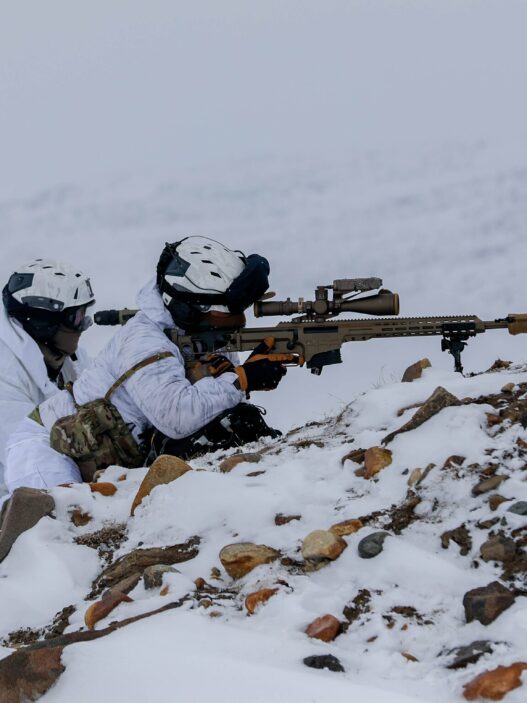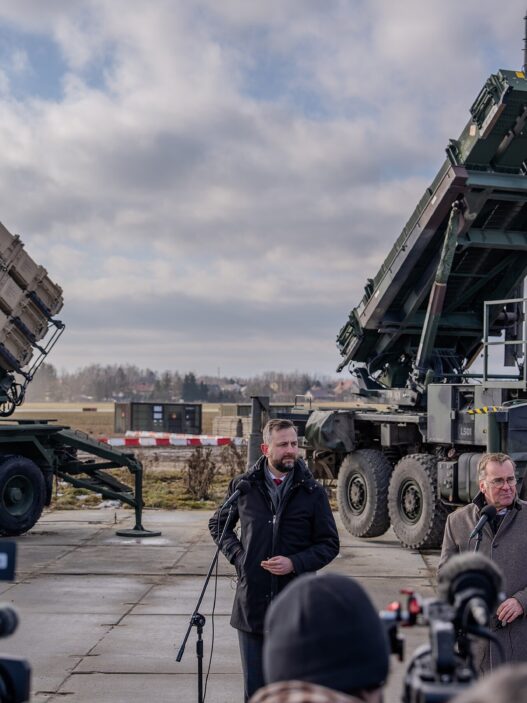














Europe is increasingly accelerating efforts toward what policymakers call “strategic autonomy”, as a broad push to strengthen the continent’s independent defense and security capabilities amid growing uncertainty over long-term American commitments to European security. While discussions around European defense integration are not new, momentum has intensified sharply throughout 2025 and into 2026 due to a convergence of geopolitical pressures: Russia’s continued war in Ukraine, mounting fears of hybrid warfare across Europe, and, crucially, evolving U.S. strategic priorities that are shifting Washington’s focus toward the Indo-Pacific region and competition with China.
In recent months, European leaders and NATO officials have openly acknowledged concerns that the United States may no longer be willing — or politically able — to shoulder the overwhelming burden of Europe’s conventional defense indefinitely. Washington has repeatedly urged European allies to dramatically increase defense spending, expand military-industrial production, and assume greater responsibility for NATO’s conventional deterrence posture on the continent. U.S. defense officials have increasingly framed Europe as needing to “stand on its own feet,” particularly as American military planning pivots toward Taiwan contingencies, maritime competition in the Pacific, and broader strategic rivalry with Beijing.
As a result, the European Union and several member states have announced new initiatives aimed at deepening defense coordination and reducing reliance on American military infrastructure. These efforts include expanded joint procurement programs, investment into Europe’s defense industrial base, development of rapid deployment capabilities, and discussions surrounding a more cohesive European pillar within NATO. Germany, France, and Poland have all significantly increased defense spending, while countries along NATO’s eastern flank continue to warn that Europe faces a prolonged era of insecurity due to Russian aggression.
The debate over European strategic autonomy has also widened beyond purely military concerns. Policymakers increasingly frame defense preparedness alongside issues of energy security, cybersecurity, critical infrastructure protection, and supply-chain resilience. The sabotage of undersea cables in the Baltic Sea, repeated cyberattacks attributed to Russian-linked actors, and fears over disinformation campaigns have reinforced the perception that Europe must prepare for a broader spectrum of conflict that extends beyond traditional warfare.
However, substantial divisions remain within Europe regarding how far strategic autonomy should go. Eastern European states — particularly Poland and the Baltic countries — remain strongly attached to the U.S. security umbrella and continue to view NATO, rather than the EU, as the cornerstone of continental defense. France has long advocated for a more independent European defense identity, while Germany has historically approached military leadership more cautiously, though this stance has shifted considerably following Russia’s invasion of Ukraine. Questions also remain regarding funding, interoperability between European militaries, and whether Europe can realistically compensate for critical American military capabilities such as intelligence, logistics, missile defense, and nuclear deterrence.
Commentary and opinion by the author:
Europe’s push toward a post-American security order is not simply the product of panic over Russia: it is also the result of a slowly collapsing assumption that the United States will indefinitely prioritize European security above all else. For decades, Europe operated under the comfort of overwhelming American military backing while simultaneously underinvesting in its own defense architecture. That arrangement is now being tested by two simultaneous realities: Russia’s return as a major conventional threat, and Washington’s strategic pivot toward the Indo-Pacific. Europe is realizing, perhaps belatedly, that American geopolitical bandwidth is not infinite.
The irony is that the United States itself has been warning Europe about this for years. Washington’s repeated demands for burden-sharing were often treated in Europe as rhetorical pressure or temporary political theatrics. But the message has become increasingly structural: the U.S. wants Europe to take over the majority of NATO’s conventional defense responsibilities so American resources can be concentrated on China and the Pacific theater. This is not isolationism in the traditional sense — it is strategic prioritization. From Washington’s perspective, preparing for a potential confrontation in the Indo-Pacific requires shifting manpower, logistics, and political attention away from Europe.
Still, the concept of “strategic autonomy” remains easier to sloganize than to operationalize. Europe possesses enormous economic capacity, but military integration is far more politically sensitive than market integration. European states still have different threat perceptions, procurement preferences, and strategic cultures. Poland views Russia as an immediate existential threat; France often frames autonomy through the lens of sovereignty and global influence; Germany continues to navigate domestic discomfort around militarization despite its recent policy shifts. The EU may be economically integrated, but security policy remains deeply national.
More importantly, Europe cannot fully replace the United States overnight — and perhaps not even in the medium term. American intelligence networks, strategic airlift capabilities, nuclear deterrence, and command infrastructure remain deeply embedded within NATO’s operational backbone. The reality is that Europe is not preparing to sever itself from the United States, but rather preparing for the possibility that American attention may become conditional, selective, or strategically diverted elsewhere.
The broader geopolitical implication is significant: the transatlantic alliance is no longer operating on the unquestioned assumptions of the post-Cold War era. Instead, Europe is entering a period of strategic recalibration in which autonomy is increasingly viewed not as ideological ambition, but as strategic necessity. Whether Europe can translate that realization into coherent military capability, however, remains an entirely different question.
Sources: Institut de Recherche Stratégique de l’Ecole Militaire, European Council, European Commission, European Parliament, U.S. Embassy, Reuters, BBC, Internationale Politik Quarterly, SIPRI, Polska Agencja Prasowa, GLOBSEC, CELIS Institute, CEPA, Politico, The Guardian, Le Monde, Foreign Policy Association, American-German Institute, Global Policy Journal