


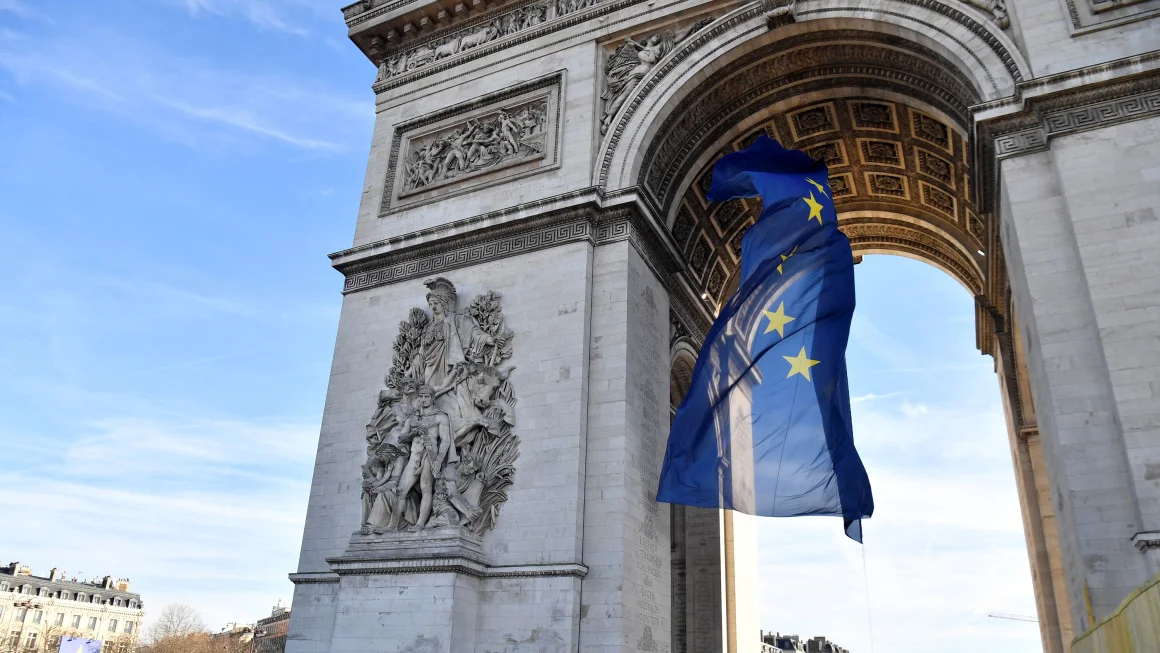






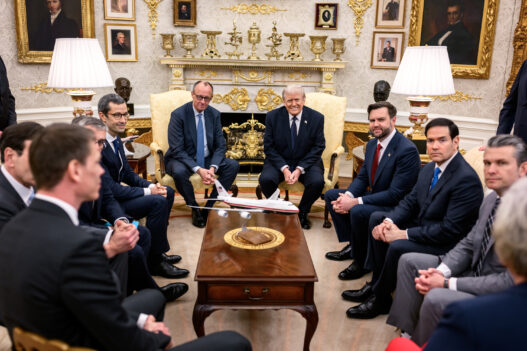
European governments are under pressure from Donald Trump to join a US-led naval operation to reopen the Strait of Hormuz, disrupted by the war with Iran. Washington frames this as both a response to Iranian attacks and a test of allied burden-sharing.
The European Union, however, has made clear it will not engage in direct offensive operations. As EU High Representative Kaja Kallas stated during the Foreign Affairs Council on 16 March 2026, “nobody is ready to put their people in harm’s way” in Hormuz.
Background
Since late February, US and Israeli strikes on Iran have triggered a broader regional conflict. Tehran has retaliated against Israeli and US targets and has significantly disrupted maritime traffic through Hormuz—a chokepoint through which around 20 percent of global oil transits.
The impact extends beyond energy markets. Fertiliser and food supply chains are also affected, raising concerns over inflation and potential food insecurity. Restarting maritime flows is therefore a priority for European governments, but they seek to do so without escalation.
A consistent European line
The EU’s position reflects a longstanding approach: prioritising de-escalation, freedom of navigation, and limited defensive engagement. At the Foreign Affairs Council in mid-March, ministers confirmed that Operation ASPIDES would not be extended into the Strait for now, despite ongoing discussions on how to maintain maritime security.
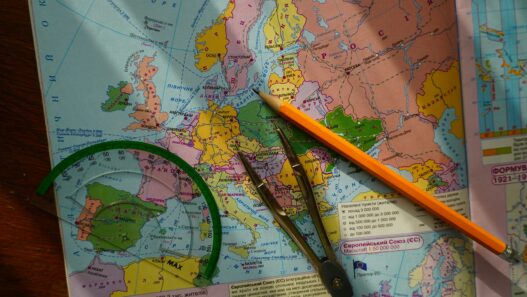
Several key Member States—including Germany, France, Spain, and Italy—have explicitly ruled out participation in a US-led combat-oriented mission. Their position converges on three points: lack of consultation by Washington, the need for an international mandate, and the priority given to diplomacy.
Southern European countries such as Greece and Italy, while highly exposed due to shipping interests, have also favoured a cautious approach focused on stability and risk containment rather than escalation.
Defensive options under discussion
At the same time, the EU is examining ways to secure maritime traffic without aligning with US offensive objectives. Discussions include a possible modification of ASPIDES or the development of a limited European naval presence focused on escorting commercial vessels.
In practice, “securing the strait” in European terms would involve defensive measures such as convoy protection, air and counter-drone defence, surveillance, and potentially mine-clearing operations. The objective is to restore a safe navigation corridor without engaging in coercive operations against Iran.
France, under Emmanuel Macron, has played a leading role in advocating a “purely defensive” naval mission, coordinated with European and non-European partners, to escort commercial vessels and gradually reopen the Strait.
Conclusion
Tensions with Washington have increased as Trump criticises European allies for refusing to participate. However, the EU’s position remains unchanged.
By rejecting a US-led military operation while exploring defensive alternatives, Europe signals a dual approach: continued cooperation with the United States on diplomatic and economic pressure, combined with a clearer refusal to be drawn into escalation or to let Washington unilaterally define the scope and geography of allied military engagement.
Sources
EEAS – Foreign Affairs Council: Press remarks by High Representative Kaja Kallas (16 March 2026)
EEAS – Foreign Affairs Council: Press conference by High Representative Kaja Kallas (16 March 2026)
Détroit d’Ormuz : les Européens refusent d’être entraînés par Donald Trump dans sa guerre contre l’Iran