








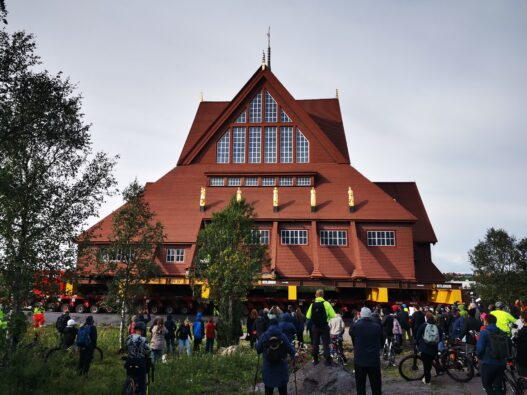
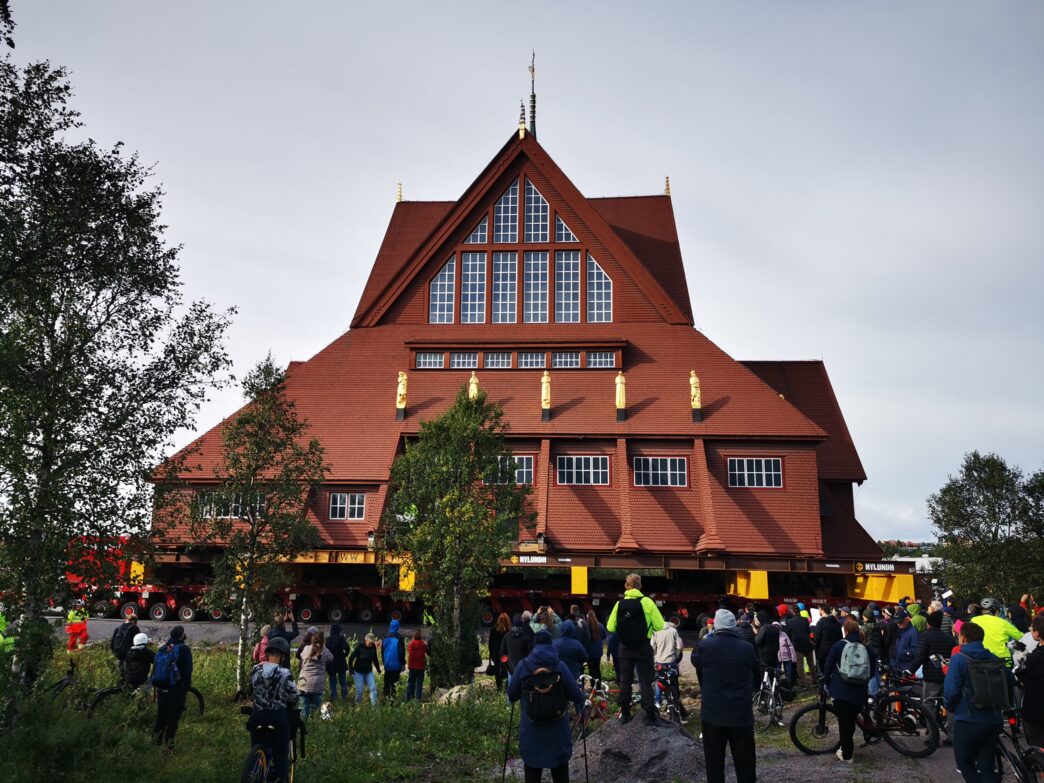
The Guardian has recently drawn attention to Kiruna, a city in the far north of Sweden. The mine has become a symbol of Europe’s commitment to implementing domestic rare earth production, with the aim of reducing its dependency on China.
However, the search for a balance between the implementation of production and sustainable development is far from straightforward. The Kiruna case shows how the absence of a complete industrial supply chain and long development timelines can represent a major obstacle to Europe’s objective of reducing strategic dependencies.
What are the rare earths and Why they matter
The term rare earths can be misleading. As The Guardian notes, “speckled like crumbs in the earth’s crust, the tag ‘rare’ stuck because of the difficulty accessing them, mining them, and separating them from the ore in which they are found, a process that can take a decade”.
Rare earths are essential materials for high-tech production, such as smartphones and electric motors, and as Europe pushes to become greener and more technologically advanced, demand for these materials has increased significantly.
This has led the EU to depend on China for up to 98% of its rare earth imports. The relationship between China and the EU in the trade of these particularly sensitive and essential materials therefore appears highly risky and unbalanced. For this reason, Europe has accused China of “weaponising” its power over rare earths, given its ability and resources to regulate and restrict supply to countries that depend on its exports of such critical materials.
Environmental and Political constraints in the Kiruna project
The project, managed by the state-owned company LKAB, concerns one of the largest European deposits of these critical materials for the green transition, the digital sector and defence. In Kiruna, however, the difficulties do not relate solely to the complexity of building a complete and effective supply chain, but also to complying with environmental and social constraints.
Deep mining activities involve risks of subsidence, already responsible for the relocation of parts of the city, as well as a significant impact on the territory and on local communities. These factors affect the speed and efficiency of authorisation procedures and thus highlight a structural difference with China. Beijing has been able to develop a complete supply chain by expanding its extraction and refining capacity in a context characterised by less stringent environmental standards, accepting environmental and social costs that Europe is politically and socially unwilling to bear. This has contributed to the creation of China’s advantage, which is today extremely difficult to match.
The difficulties faced by Kiruna are part of a broader European attempt to strengthen its autonomy in the sector of critical raw materials. The European Commission has promoted the Green Deal Industrial Plan, within which the Critical Raw Materials Act is embedded, with the aim of accelerating the development of internal industrial capacities and reducing dependencies on external suppliers. The objective of the CRMA is to diversify imports of these critical materials while strengthening the internal supply chain, thereby initiating a process of de-risking and securing access to resources.
The Swedish case shows that, despite the recent policy framework put forward by the European Commission, the development of mines and complete supply chains remains constrained by long timelines, technical complexity and environmental requirements, limiting the short-term impact of these initiatives.
Sources:
The Guardian; The Green Deal Industrial Plan; European Commission; Critical Raw Materials Act