






On 4 October, Merz visited Kyiv and announced around €1 billion in additional military support, alongside €350 million for Ukraine’s energy infrastructure
Merz argued that Ukraine’s defence protects Germany and Europe, warning that Russia would eventually turn its war machine against them if it were not stopped
He warned that a German government unable to meet its responsibilities would have far-reaching consequences for Europe, pledging to keep his administration stable and maintain support for Ukraine
Politically, this frames his government’s stability as a strategic European responsibility, adding a security dimension to his call for coalition unity
Sources: German Federal Government, Tagesschau, Tagesschau
Transparency Note: Use of AI
More Quick Briefs:
·EU Enlargement·Inside Europe·Ukraine·Budget·European Parliament·European Union·euroscepticism·France·Italy·Parliamentary Elections·Poland·Spain
·EU Enlargement·Inside Europe·Ukraine·Budget·European Parliament·European Union·euroscepticism·France·Italy·Parliamentary Elections·Poland·Spain
Europe’s election supercycle could shift power in Brussels ↗︎
Spain’s snap election on 29 November opens a series of votes in four of the EU’s biggest member states that could give nationalist parties more leverage over common EU decisions.
→Spain votes first: Pedro Sánchez’s Socialists face a challenge from the conservative People’s Party, which could need support from far-right Vox to govern.
→Three elections to watch: Marine Le Pen leads presidential polling in France. In Poland, nationalist parties challenge Donald Tusk’s coalition, while Giorgia Meloni seeks a second term in Italy.
→What’s at stake for the EU: If more Eurosceptic parties enter government and act together, they could make it harder to agree on Ukraine aid, EU enlargement and the bloc’s next budget.
→Public support remains high: In the European Parliament’s July Eurobarometer, 74% said their country benefits from EU membership, matching the survey’s record.
→Flexible alliances: If Eurosceptic gains make EU-wide agreement harder, governments could work together more often in smaller, issue-specific groups, as they do in the Coalition of the Willing for Ukraine.
→Sources: The Guardian, European Parliament
→AI-assisted: Reviewed by the Briefing Team.
·Climate Policy·Energy Policy·Environmental Policy·United Nations·Australia·Clean Electricity·COP31·Council of the EU·European Commission·European Union·Fossil Fuels·UNEP
·Climate Policy·Energy Policy·Environmental Policy·United Nations·Australia·Clean Electricity·COP31·Council of the EU·European Commission·European Union·Fossil Fuels·UNEP
Fossil Fuels and Climate Finance Top COP31 Agenda: Electifrication Now! But Is It Clean? ↗︎
Governments meet in Antalya from 9 to 20 November to discuss how to move away from fossil fuels and close the funding gap for countries adapting to climate change.
Updates
→News: COP31 Climate Talks Extended Amid Disagreements Over Fossil Fuels (AP)
→Analysis: Why China Is Reluctant to Assume Global Climate Leadership (Reuters)
→News: COP31 draft agreement calls for an immediate transition away from fossil fuels as countries negotiate a new global climate deal (Rapporteur)
→News: UN climate chief urges faster progress at COP31 as divisions over fossil fuels threaten international climate negotiations (Reuters)
→Official Announcement: EU and Global Green Growth Institute sign €10 million agreement aiming to mobilise €1 billion in climate-aligned investment (European Commission)
→News: Climate-vulnerable developing nations demand greater financial support at COP31 to address climate-related disasters, while wealthy countries face criticism for their limited commitments (Reuters)
→News: Small island nations seek to channel remittances from overseas communities into climate resilience projects as they face growing threats from climate change (Reuters)
→News: COP31 highlights human rights and environmental concerns over critical mineral mining as demand grows for materials needed for the clean energy transition (AP)
→News: UN Secretary-General António Guterres warns of accelerating climate change at COP31 and urges stronger global action on fossil fuels and climate justice (Reuters, United Nations)
→Official Announcement: EU signs Global Geothermal Pledge at COP31, reaffirming its commitment to expanding geothermal energy as part of the clean energy transition (European Commission)
→Official Announcement: EU and Organisation of African, Caribbean and Pacific States reaffirm climate commitments at COP31, focusing on translating shared priorities into concrete action (Council of the EU)
→Analysis: Six key issues to watch at COP31 climate talks, including emissions reductions, climate finance and international cooperation (Rapporteur)
→News: Turkish villagers urge COP31 leaders to witness the environmental devastation caused by coal mining and energy production (Reuters)
→The summit: Turkey hosts COP31, while Australia leads the negotiations. Heads of state and government meet on 11 and 12 November
→Fossil fuels: Brazil’s outgoing COP presidency published a voluntary roadmap on 3 November. It calls for fossil fuel production and demand to fall as clean energy expands
→Adaptation finance: Developing countries received $28.2–31.7 billion in international public adaptation finance in 2024. The UN Environment Programme estimates they will need around $305 billion annually by 2035
→EU position: The EU will press governments to implement their national climate plans, accelerate the shift away from fossil fuels and expand the use of clean electricity
→Sources: Council of the EU, COP30 Presidency, UNEP, UNFCCC
→Transparency Note: AI-assisted. Reviewed by the Briefing Team.
·Economic Policy·Monetary Policy·Security & Defence·Budget·Council of the EU·EU Borrowing·European Commission·General Affairs Council·Multiannual Financial Framework
·Economic Policy·Monetary Policy·Security & Defence·Budget·Council of the EU·EU Borrowing·European Commission·General Affairs Council·Multiannual Financial Framework
Frugals vs. Friends of Cohesion: EU Budget Battle Intensifies ↗︎
Six fiscally conservative EU countries are demanding major cuts to Brussels’ proposed €2 trillion budget for 2028–2034, setting up a difficult fight over Europe’s future spending priorities. The 27 member states want to have a decision by the end of the year.
Updates
→News: Campaigners Warn Soil Degradation Could Cost EU €509 Billion (Euronews)
→News: António Costa Proposes €204 Billion Cut to EU Budget (Rapporteur)
→Analysis: EU Struggles to Introduce New Budget Revenue Sources (Rapporteur)
→News: Austria Urges Costa to Make Deeper EU Budget Cuts (Rapporteur)
→Interview: Czech MEP Niedermayer Criticises Babiš’s Opposition to EU Budget Revenue (EUobserver)
→News: Support grows for a digital levy to help finance the EU’s next long-term budget (Rapporteur)
→Official Announcement: Council of the EU and European Parliament reach an agreement on the EU’s 2027 annual budget (Council of the EU)
→News: European Council President António Costa plans to present a new compromise on the EU’s long-term budget within 10 days (Rapporteur)
→News: German Chancellor Friedrich Merz and Hungarian Prime Minister Péter Magyar clash over EU financial support for Ukraine and the bloc’s next long-term budget (Rapporteur)
→Interview: Estonia rejects Germany’s calls for cuts to the EU’s next long-term budget (Rapporteur)
→News: German Chancellor Friedrich Merz warns that failure to agree on EU aid for Ukraine could block negotiations on the bloc’s next long-term budget (Euronews)
→Interview: EU’s real deadline for reaching an agreement on its next long-term budget comes into focus (Rapporteur)
→News: EU budget disputes stall key Brussels priorities, including AI chips, Arctic policy and agriculture (POLITICO)
→News: Finland warns that EU financial support for Ukraine must not depend on negotiations over the bloc’s long-term budget (Rapporteur)
→News: Firefighters from 19 countries protest proposed EU disaster response budget cuts in Brussels (EUObserver)
→Update (02.11.2026): News: European cultural organisations warn of severe consequences as proposed EU budget cuts threaten to reduce cultural funding by 30% (EUObserver)
→Update (30.10.2026): News: EU tobacco tax revenue forecasts fall sharply amid negotiations over the bloc’s next long-term budget (Rapporteur)
→Update (27.10.2026): Analysis: Ukraine’s €70 billion funding shortfall threatens to complicate negotiations over the EU’s next long-term budget (Euronews)
→Update (26.10.2026): News: Austria threatens to veto the EU budget (Rapporteur)
→Update (26.10.2026): News: EU foreign aid chief says little is changing in Africa despite development efforts (Rapporteur)
→Update (26.10.2026): News: Rising debt costs and fraud allegations increase pressure on the EU budget (Rapporteur)
→Update (23.10.2026): Interview: António Costa targets November agreement on EU budget (Rapporteur)
→Update (22.10.2026): News: MEPs seek €7 billion more for Erasmus despite opposition from budget-conscious EU governments (EUobserver)
→Update (21.10.2026): Analysis: Who will stand up for Global Europe? (PubAffairs Bruxelles)
→Update (20.10.2026): News: EU budget negotiations raise questions over costs and funding (Rapporteur)
→Update (19.10.2026): Analysis: EU faces a perfect political storm amid mounting challenges (POLITICO)
→Update (16.10.2026): Interview: Irish minister says EU budget deal still possible by Christmas (YouTube)
→Update (16.10.2026): Interview: Cyprus president proposes shortening EU budget to three or four years (POLITICO)
→Update (16.10.2026): News: Costa targets November EU budget showdown (POLITICO)
→Update (16.10.2026): News: Costa proposes new EU taxes to break budget deadlock (Rapporteur)
→Update (15.10.2026): Podcast: Europe faces a new battle over the EU budget (ECFR)
→Update (15.10.2026): News: 17 European leaders issue joint statement on EU cohesion funding (Italian Government)
→Update (14.10.2026): News: EU leaders consider deep budget cuts as joint borrowing expands (EUobserver)
→Update (14.10.2026): News: EU capitals weaken budget deal deadline (POLITICO)
→Update (13.10.2026): News: France sets EU budget red lines on tech taxes and Buy European (Rapporteur)
→Update (13.10.2026): Interview: Austrian EU Affairs Minister Claudia Bauer rejects artificial budget deadline (Rapporteur)
→Update (13.10.2026): News: Spain hosts Friends of Cohesion meeting on next EU budget (Spanish Ministry of Foreign Affairs)
→Update (12.10.2026): Opinion: Will MEPs challenge €141bn in EU budget cuts? (EUobserver)
→Update (11.10.2026): News: MEPs warn Irish EU budget plan risks historic failure as €141 billion in cuts spare agriculture and cohesion funds (EUobserver)
→Update (11.10.2026): News: European Commission warns that EU budget cuts could undermine funding for crisis response (POLITICO)
→Update (10.10.2026): EU's Irish presidency wants 8% cut to proposed 2028-2034 budget plan (Reuters)
→Update (08.10.2026): Opinion: Cut the EU budget and we all lose (EUobserver)
→Update (08.10.2026): News: EU countries brace for €100B-€200B smaller budget (Politico)
→Update (08.10.2026): Analysis: EU’s 2028-2034 budget proposal creates new conflicts over spending priorities and financial burden-sharing (SWP)
→Update (08.10.2026): News: EU auditors warn of major budget shortfall unless the EU introduces new sources of revenue (Rapporteur)
→Update (07.10.2026): News: Iran war shock expected to shrink next EU budget (Rapporteur)
→Update (06.10.2026): News: Von der Leyen rebukes EU budget frugals over demands for deeper spending cuts (Rapporteur)
→Update (29.09.2026): News: EU governments brace for €100 billion cut to long-term budget proposal (POLITICO)
→Update (29.09.2026): News: EU cuts funding for women’s rights groups amid wider budget reductions (EUobserver)
→Update (29.09.2026): News: MEPs back €47 billion in new Erasmus funding as frugal states seek EU budget cuts (EUobserver)
→Update (29.09.2026): Commentary: EU budget cuts risk hurting member states’ own regions (EUobserver)
→Update (29.09.2026): News: EU leaders battle over budget as Parliament prepares resistance (Rapporteur)
→Update (25.09.2026): News: 12 countries oppose French push for EU defence preference (Euractiv)
→Update (23.09.2026): News: EU governments consider cutting development aid by up to 40 percent (EUobserver)
→Update (23.09.2026): News: Greece proposes EU-wide telecoms levy to fund budget and high-tech investment (Euractiv)
→Update (22.09.2026): News: France opposes cuts to foreign aid in next EU budget (POLITICO)
→Update (22.09.2026): News: Results of the General Affairs Council (Irish EU Presidency)
→Update (22.09.2026): News: France opposes cuts to foreign aid in next EU budget (POLITICO)
→Update (22.09.2026): News: Germany rejects Costa’s push for new EU budget taxes (POLITICO)
→Update (22.09.2026): News: EU ministers meet in Brussels for General Affairs Council (Council of the EU)
→Update (21.09.2026): Analysis: EU budget could strengthen rule of law safeguards but member states may blunt reforms (CER)
→Update (21.09.2026): News: Costa says EU budget needs new taxes governments are not already raising (POLITICO)
→Update (18.09.2026): News: Germany and Spain go head-to-head in EU budget fight (POLITICO)
→Update (17.09.2026): News: MEPs deadlocked over CAP’s place in next EU budget (Euractiv)
→Update (15.09.2026): News: Metsola urges Europe’s political centre to hold against extremes (Euractiv)
→Update (14.09.2026): News: EU plans cuts to staff and salaries in next long-term budget (POLITICO)
→Update (14.09.2026): News: EU countries split over scale of long-term budget cuts (Euractiv)
→Update (09.09.2026): News: Germany calls for hundreds of billions in EU budget cuts (Reuters)
→Update (09.09.2026): News: Costa says new EU taxes would reduce national contributions (POLITICO)
→Update (08.09.2026): News: France backs business tax to fund EU budget (Euractiv)
→Update (07.09.2026): News: Le Pen backs tobacco retailers against EU tax hikes (Euractiv)
→Update (07.09.2026): News: Ireland secures EU tax deal on carbon imports and e-waste (POLITICO)
→Update (04.09.2026): News: Spain urges EU climate adaptation fund and binding targets (Reuters)
→Update (04.09.2026): Commentary: EU budget could loosen China’s grip on critical raw materials (Euronews)
→Update (03.09.2026): News: EU budget negotiators criticise frugal states over cuts (EUobserver)
→Update (03.09.2026): Interview: Lithuania says eastern flank needs must shape EU budget (Euractiv)
→Update (02.09.2026): News: Spain worried by EU budget debate (Euractiv)
→Update (02.09.2026): News: EU budget camps remain deadlocked (EUobserver)
→Update (31.08.2026): News: Ireland seeks to break EU budget deadlock (POLITICO)
→Update (27.08.2026): Europe’s defence promise meets budget reality (ECFR)
→Quick Brief:
→Germany, Denmark, the Netherlands, Austria, Finland and Sweden want cuts of several hundred billion euros
→The European Commission has proposed a nearly €2 trillion seven-year budget for 2028–2034
→The six still want priority spending on defence, competitiveness, migration and European sovereignty
→They reject new joint EU borrowing and demand cuts across spending areas as national budgets face consolidation
→Sources: Euractiv, Reuters, Council of the EU
→Transparency Note: Use of AI
·Economic Policy·Inside Europe·Housing Crisis·Maricarmen Abascal·Matrid·Pedro Sánchez·Protests·Spain
·Economic Policy·Inside Europe·Housing Crisis·Maricarmen Abascal·Matrid·Pedro Sánchez·Protests·Spain
Snap Elections on 29 November in Spain: Between Housing Crisis, Deadly Train Crash, Corruption and Ceuta ↗︎
The eviction of an elderly pensioner in Madrid has sparked wider debate over Spain’s housing crisis, while a deadly train crash, growing concerns over public safety and political disputes ahead of the upcoming election have intensified pressure on the government.
Updates
→News: Sánchez and Feijóo Clash Over Corruption, Migration and Rail Disasters Ahead of Spanish Elections (RTVE)
→Analysis: Spain’s Foreign Policy Faces an Uncertain Future (ECFR)
→Analysis: Sánchez’s Potential Exit Threatens Europe’s Political Left (Rapporteur)
→Analysis: Vox Reshapes Spanish Politics Ahead of Parliamentary Elections (Rapporteur)
→News: Spanish opposition leader Alberto Núñez Feijóo pledges an audit of Spain’s public finances, questioning the reliability of official economic figures (POLITICO)
→Analysis: Spanish Prime Minister Pedro Sánchez faces setbacks in his efforts to win over Generation Z voters (Rapporteur)
→News: Spanish opposition leader Alberto Núñez Feijóo calls for Spain to withdraw from hosting the 2030 FIFA World Cup if Morocco is awarded the final (POLITICO)
→Analysis: Spanish Prime Minister Pedro Sánchez seeks to capitalise on opposition to US President Donald Trump at home and abroad (Rapporteur)
→Analysis: EU support for Morocco’s Western Sahara position remains conditional, while Spain’s upcoming election could prove decisive for the territory’s future (EUObserver)
→News: Spanish Prime Minister Pedro Sánchez’s Latin American allies skip Madrid summit (Rapporteur)
→News: Spanish Prime Minister Pedro Sánchez pledges to restore public trust in railway safety following deadly train crash (Rapporteur)
→News: Deadly rail disaster reignites Spain’s political crisis ahead of national elections (Rapporteur)
→News: Growing support for the radical right among young Spaniards signals shifting political attitudes (Rapporteur)
→Commentary: Spain’s deepening political divisions put public trust in democracy to the test (The Brussels Times)
→News: Spain’s conservative People’s Party (PP) and far-right Vox agree to coordinate Senate candidates in 23 constituencies ahead of November elections (EFE, PP)
→Update (25.10.2026): News: French-inspired youth protests turn violent in Barcelona, with 128 arrested, including 72 minors (Euronews, EFE)
→Update (23.10.2026): News: Alberto Núñez Feijóo pledges sweeping conservative reforms if he wins Spain’s November 29 election (POLITICO)
→Update (21.10.2026): News: Spain’s Vox rallies international allies ahead of elections (Rapporteur)
→Update (20.10.2026): News: Spain grants amnesty to Catalan separatist leaders ahead of November election (Catalan News)
→Update (20.10.2026): News: Spain’s conservatives hold coalition talks with far-right Vox (POLITICO)
→Update (19.10.2026): Commentary: Why Spain’s left failed to unite ahead of November’s snap election (EUobserver)
→Update (14.10.2026): News: Spain’s ruling Socialists lead state-run poll amid snap election speculation (Reuters)
→Update (14.10.2026): Polling: Spain’s latest voting intention trends (POLITICO)
→Update (12.10.2026): Interview: Spanish Socialist MEP sees no alternative to Sánchez as housing and immigration dominate snap election (EUobserver)
→Update (09.10.2026): Podcast: Sánchez’s snap election gamble raises questions about Spain’s political future and its implications for Europe (ECFR)
→Update (08.10.2026): News: Maricarmen, the 87-year-old woman whose eviction sparked major protests in Spain, dies in hospital (Euronews)
→Update (08.10.2026): News: Spain’s far-right Vox, led by Santiago Abascal, gains ground in election polls (POLITICO)
→Update (07.10.2026): News: Spanish unions call general strike for November 11, weeks before snap parliamentary election (Reuters)
→Update (06.10.2026): Analysis: Spanish election threatens political balance in Brussels as Sánchez’s Socialists face potential losses (POLITICO)
→Update (05.10.2026): Analysis: Sánchez bets on housing agenda to keep far right out of government in Spain’s snap election (EUobserver)
→Update (05.10.2026): News: Sánchez calls snap Spanish election for November 29 (POLITICO)
→Update (03.10.2026): News: Tens of thousands protest across Spain over deepening housing crisis (The Guardian)
→Update (02.10.2026): News: Sánchez loses key housing crisis vote after eviction of 87-year-old woman (BBC)
→Update (30.09.2026): Podcast: Did Spain’s government address protesters’ demands on housing? (EUobserver)
→Update (29.09.2026): News: Spain moves to stem housing protests (Rapporteur)
→Quick Brief:
→Maricarmen Abascal was evicted on 23 September from the Madrid apartment where she had lived for more than 70 years, turning her case into a symbol of Spain’s housing crisis
→The eviction prompted protests in Madrid, amid wider concerns over rising rents and access to affordable housing
→The property owner has agreed to let Abascal return under a new eight-year rental contract, with rent capped at 30% of her net income. She still has to approve the agreement formally
→Prime Minister Pedro Sánchez explicitly referred to Maricarmen’s case while calling for parliamentary support for new housing measures aimed at strengthening tenant protection and addressing Spain’s housing crisis
→Sources: BBC, Reuters, El País
→Transparency Note: Use of AI
·Middle East Relations·Houthis·Iran·Iran War·Saudi Arabia
·Middle East Relations·Houthis·Iran·Iran War·Saudi Arabia
Middle East – Weekly Briefing ↗︎
Renewed US-Iran exchanges, attacks on Gulf states and rising threats to Strait of Hormuz shipping have heightened regional tensions, while diplomatic efforts and concerns over Iran’s nuclear programme remain unresolved.
→The United States deployed the USS Theodore Roosevelt to the Middle East on November 15, bringing the number of US aircraft carriers operating in the region to three. The deployment comes amid stalled negotiations with Iran and uncertainty over the ceasefire's durability and subsequent diplomatic arrangements. Although President Donald Trump described further strikes as unlikely, he maintained that US forces remained prepared to respond if necessary.
→The United States and Iran exchanged fire on November 17, after Iran’s Islamic Revolutionary Guard Corps (IRGC) claimed to have targeted a US radar installation at Sheikh Isa Air Base in Bahrain. US fighter jets subsequently struck an Iranian missile launch site on Qeshm Island, near the Strait of Hormuz. Bahrain reported intercepting the attack, with no casualties or damage.
→Iran launched further attacks against Kuwait and Bahrain on November 18, including drone strikes targeting a US-used airbase in Kuwait and additional attacks on Bahrain. The incidents followed the US strike on Qeshm Island and marked a renewed escalation after a period of relative calm. The attacks have increased the risk of the conflict spreading further across the Gulf.
→Regional governments and organisations condemned Iran’s attacks. Saudi Arabia denounced the strikes on Kuwait and Bahrain, as well as an attack on a United Arab Emirates-linked tanker transiting the Strait of Hormuz. The Arab League and Gulf Cooperation Council also warned that the incidents threatened regional security and could widen the confrontation. Qatar called the attacks a dangerous escalation that could undermine diplomatic efforts.
→The International Atomic Energy Agency (IAEA) continues to face restrictions on access to Iran’s nuclear facilities. France, Germany, the United Kingdom and the United States expressed concern that little progress had been made in verifying Tehran’s nuclear activities. The IAEA has reported that it has not received information on the status of Iran’s declared nuclear facilities and nuclear material, and has not been granted access to the sites it requested to inspect.
→Saudi Arabia’s capital, Riyadh, was targeted in a Houthi attack on November 19, damaging several floors of the Public Investment Fund (PIF) Tower in the city’s financial district and nearby buildings. No injuries were reported. The Houthis also claimed to have targeted King Khalid International Airport, Khamis Mushait airbase and a petrochemical facility in Jubail.
→Maritime security incidents around the Strait of Hormuz increased in October and November. The United Kingdom Maritime Trade Operations (UKMTO) recorded 31 reported attacks in and around the strait in October and approximately 19 more by November 18. The International Maritime Organisation (IMO) confirmed 34 attacks over the same two-month period. The increase threatens commercial shipping and energy exports through one of the world's most strategically important maritime routes.
→The latest developments highlight the fragility of diplomatic efforts to end the conflict. Continued US-Iran exchanges, attacks on Gulf states and Houthi operations against Saudi targets risk widening the confrontation, while restrictions on nuclear inspections and disruptions to maritime traffic add further complications to regional stability and global energy security.
→Sources:
→France, Germany, UK and US raise concerns over UN nuclear inspector access in Iran - Al Jazeera
→USS Roosevelt arrives in the Middle East – Al Jazeera
→Iran attacks US military radar system in Bahrain with drones – Reuters
→Kuwait, Bahrain face new Iran attacks after US strike on Qeshm Island – Al Jazeera
→Riyadh’s tallest skyscraper hit in Houthi strike on Saudi wealth fund HQ – Reuters
→Strait of Hormuz attacks have increased to the highest level since Iran war began – ABC News
·Security & Defence·Transatlantic Relations·Ukraine·War in Ukraine·Crimea·NATO·Poland·Russia·Security·Ukraine
·Security & Defence·Transatlantic Relations·Ukraine·War in Ukraine·Crimea·NATO·Poland·Russia·Security·Ukraine
Russia’s War in Ukraine – Weekly Briefing ↗︎
Ukraine’s expanding drone campaign against Russian infrastructure has triggered retaliatory strikes, while Russian incursions into Polish airspace raise concerns about the wider security implications of the war.
→Ukraine struck the Kerch Bridge, which connects Russia to occupied Crimea, during a large-scale overnight drone operation on November 16. The attack temporarily suspended road traffic and reportedly left around 2,000 vehicles stranded. Russia described the damage as limited, although subsequent satellite imagery showed the bridge’s road section severed while the railway remained intact. The strike marked another significant attempt by Kyiv to disrupt a key logistical route supporting Russian operations in Crimea.
→Ukraine launched its largest reported drone attack on Russia since the full-scale invasion began in 2022. Russia’s Defence Ministry claimed that its air defences intercepted 1,336 Ukrainian drones across 16 regions, including approximately 600 directed towards the Moscow region. Oil refineries and industrial facilities in the Rostov and Krasnodar regions were among the reported targets, with fires and injuries recorded at some locations.
→Russian President Vladimir Putin vowed retaliation following the attacks on the Kerch Bridge, describing the damage as serious. On November 20, Russia launched a major missile and drone barrage across Ukraine, reportedly involving more than 400 drones and over 110 missiles. The attacks killed at least eight people and injured 28, while damaging residential buildings, medical facilities, transport infrastructure and energy installations.
→Kyiv’s transport infrastructure was among the principal targets of the Russian offensive. Ukrainian authorities reported damage to the Podilskyi, Darnitskyi and Southern bridges across the Dnipro River, prompting traffic restrictions. Strikes on power plants, substations, and transmission infrastructure also forced Ukraine’s three operational nuclear power plants to reduce generation, causing emergency electricity outages across 11 regions.
→The Russian bombardment also raised concerns about the conflict’s spillover into NATO territory. Poland reported that two Russian missiles and a suspected drone entered its airspace on November 20, with the incidents occurring during multinational European military exercises in the country. Polish Prime Minister Donald Tusk described the incidents as a likely deliberate provocation, while NATO Secretary-General Mark Rutte called the airspace violation grave. No injuries or damage were immediately reported.
→Diplomatic efforts continued following the trilateral meeting between US President Donald Trump, Russian President Vladimir Putin and Chinese President Xi Jinping in Shenzhen on November 19. The meeting produced no breakthrough on Ukraine, although the leaders discussed the conflict alongside nuclear arms control, trade and other international issues. Trump later joined discussions in Berlin with Ukrainian President Volodymyr Zelenskyy, US envoys, and European leaders.
→US envoy Jared Kushner said Russia appeared comfortable with the possibility of NATO Article 5-like security guarantees for Ukraine after the war. However, the proposal remains undefined, and Moscow reiterated its opposition to any form of Ukrainian NATO membership. Russian Deputy Foreign Minister Sergei Ryabkov also rejected the prospect of quasi-membership in the alliance, underscoring the continuing gap between the parties over Ukraine’s postwar security arrangements.
→The latest escalation demonstrates the growing intensity of attacks against military, energy and transport infrastructure, alongside increased risks to neighbouring NATO states. With Ukraine and Russia maintaining incompatible positions on territorial concessions and postwar security guarantees, the prospects for a negotiated settlement remain uncertain. Further strikes on critical infrastructure and airspace incidents could heighten regional security concerns, particularly as winter approaches and European states prepare for potential postwar security responsibilities.
→Sources:
→Ukraine hits Kerch bridge between Russia and occupied Crimea – The Guardian
→Ukraine launches biggest drone attack on Russia since war began – Reuters
→Kushner says he believes Russia is ‘comfortable’ with NATO-like security guarantees for Ukraine – Associated Press
→Russia unleashes retaliatory barrage on Kyiv bridges – Al Jazeera
→Russian missiles land in Poland as Europe held military drills nearby – Associated Press
·Diplomacy·Foreign Policy·Security & Defence·War in Ukraine·EEAS·European Commission·European Union·High Representative·Kaja Kallas·Russia·Ukraine
·Diplomacy·Foreign Policy·Security & Defence·War in Ukraine·EEAS·European Commission·European Union·High Representative·Kaja Kallas·Russia·Ukraine
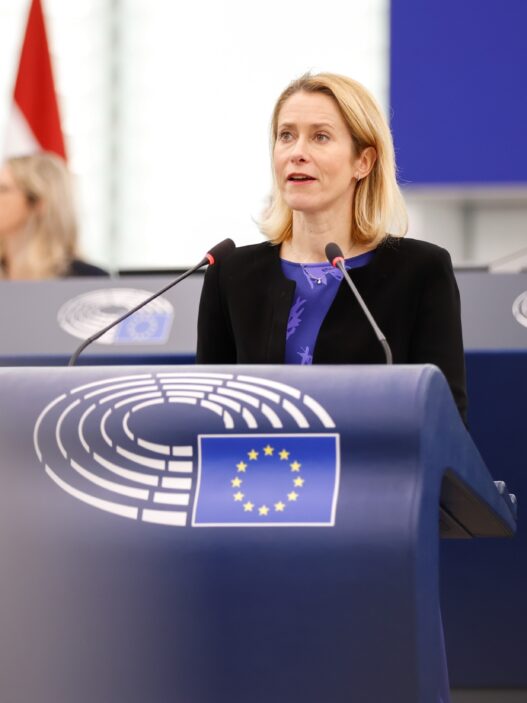
Profile Kaja Kallas: Europe’s Sidelined Top Diplomat ↗︎
EU foreign policy chief Kaja Kallas faces growing challenges to her authority as European leaders increasingly bypass her in major diplomatic decisions.
→Political background: Estonia’s former prime minister became the EU’s High Representative in 2024, emerging as a prominent critic of Russia and supporter of Ukraine.
→Excluded from negotiations: Despite seeking a leading role in Ukraine peace talks, Kallas was left out of Europe’s negotiating team. Moscow openly opposes her participation.
→Institutional power struggle: Proposals to reform the EEAS and transfer responsibilities to the European Commission threaten her diplomatic autonomy.
→Controversial diplomacy: Critics within the EU question her confrontational approach and statements on Russia, China and Israel. Kallas defends her positions and insists she represents all 27 member states.
→Sources: Euronews | The Guardian | EEAS
→AI-assisted: Reviewed by the Briefing Team.
·Cyber Security·Security & Defence·Britain·Council of the EU·ECFR·European Union·France·Iran·Revolution Guards·Sabotage·Sanctions·USA
·Cyber Security·Security & Defence·Britain·Council of the EU·ECFR·European Union·France·Iran·Revolution Guards·Sabotage·Sanctions·USA
Suspected Iranian sabotage puts Europe on alert ↗︎
EU foreign ministers warned of a growing threat from Iran after France blamed Tehran for cyberattacks on supermarket refrigeration systems and Britain investigated a suspected plot against an airbase.
→Cyber sabotage: France says the October attacks targeted more than 700 retail sites, causing fires and food losses. French investigators attributed the campaign to a unit linked to Iran’s Revolutionary Guards.
→Military targets: Britain suspects Iranian involvement in a foiled plot at RAF Fairford. MI5 says Tehran is increasingly targeting military sites while continuing to use criminal proxies to intimidate dissidents and Iranian media abroad. Iran denies involvement in hostile activity in Britain.
→Possible motive: ECFR argues Tehran may be trying to deter renewed US and Israeli strikes by showing it can disrupt operations at European bases used by US forces.
→EU response: France says it will propose new EU sanctions. On 16 November, EU foreign ministers said the bloc was ready to respond and called for continued diplomacy in the region.
→Sources: ECFR, France Diplomatie, Council of the EU
→AI-assisted. Reviewed by the Briefing Team.
·Economic Policy·Education Policy·European Governance·Inside Europe·Affordable Housing·Corruption·Gen Z·Lack of Jobs·Military Service·School Conditions·Student Protests·Youth Protests
·Economic Policy·Education Policy·European Governance·Inside Europe·Affordable Housing·Corruption·Gen Z·Lack of Jobs·Military Service·School Conditions·Student Protests·Youth Protests
Gen Z Takes to Europe’s Streets ↗︎
Since early October, young people across Europe have mobilised over underfunded schools, unaffordable housing and corruption.
Updates
→News: Italian Workers and Students Protest Rising Living Costs (AP)
→Analysis: Europe’s youngest MEPs describe Generation Z protests across the continent as a sign of growing political disconnection rather than apathy (EUObserver)
→Analysis: Youth protests across Europe reflect growing frustration over declining living standards and the erosion of the postwar promise of a better future (EUObserver)
→France, Belgium and Italy: School protests began in France in September, with students in Belgium and Italy also demanding better school conditions
→Spain and Portugal: Protesters set up camps in Madrid, Lisbon and Porto to demand affordable housing
→Germany and Denmark: German rallies called for better schools and opposed conscription, while Danish students protested proposed cuts to study grants
→Serbia and Albania: Serbia’s student-backed list won a parliamentary majority on 25 October, while Albanian students protested over corruption and a lack of jobs
→Sources: Reuters, Le Monde, Danish High School Students’ Association
→Transparency Note: AI-assisted. Reviewed by the Briefing Team.
·Geopolitics·Inside Europe·Security & Defence·Trade Policy·UK·Andy Burnham·Brejoin·Closer Cooperation·Conservatives·European Union·UK-EU Summit
·Geopolitics·Inside Europe·Security & Defence·Trade Policy·UK·Andy Burnham·Brejoin·Closer Cooperation·Conservatives·European Union·UK-EU Summit
Brejoin? Burnham Reopens Debate on Britain Rejoining the EU ↗︎
Ahead of the 20 November UK-EU summit, Centre for European Reform director Charles Grant argues that Prime Minister Andy Burnham has reopened the debate on EU membership, though he sees little chance of Britain rejoining within a decade.
Updates
→News: EU and UK Leaders Hold Bilateral Summit (Council of the EU)
→News: EU and UK Sign Deals on Trade, Youth Mobility and Emissions (Reuters)
→News: EU and UK Prepare Trade, Energy and Youth Mobility Deals (France 24)
→Commentary: Britain’s Strategic Options Point Towards Closer EU Ties (Rapporteur)
→Commentary: Europe Must Strengthen EU-UK Security and Defence Cooperation (Euronews)
→News: UK contributions emerge as a potential new source of funding for the EU budget (Rapporteur)
→News: UK Prime Minister Andy Burnham says Brexit has diminished Britain’s influence and calls for closer ties with the European Union (POLITICO)
→Commentary: UK Prime Minister Andy Burnham faces renewed questions over Brexit and the case for closer relations with the European Union (EUObserver)
→News: EU foreign policy chief Kaja Kallas calls for gradual UK-EU rapprochement ahead of next week’s summit, advocating small steps towards closer cooperation (EUObserver)
→The immediate agenda: Burnham is seeking closer cooperation on food trade, energy and security.
→The case for closer ties: Grant argues that weaker trade with the EU drives the debate in Britain, while EU governments have more to gain from closer security and defence ties.
→Domestic opposition: The Conservatives oppose rejoining, and senior Labour figures are wary of reopening the debate, particularly over free movement.
→The EU’s terms: Grant expects most member states to welcome a British return but sees France as a possible obstacle. He doubts the UK would recover its former EU budget rebate.
→Sources: Centre for European Reform, European Council, The Guardian
→Transparency Note: AI-assisted. Reviewed by the Briefing Team.
·European Governance·Inside Europe·Security & Defence·Aviation Security·Border Security·Cybersecurity·DIsinformation·Hybrid Threats·Poland·Supermarket Refrigeration Systems·Weekly Briefing
·European Governance·Inside Europe·Security & Defence·Aviation Security·Border Security·Cybersecurity·DIsinformation·Hybrid Threats·Poland·Supermarket Refrigeration Systems·Weekly Briefing
European Security Faces Multiple Hybrid Threats ↗︎
Aviation bomb threats, suspected cyberattacks and security concerns along NATO’s eastern border have exposed vulnerabilities across Europe, although no coordinated campaign has been established.
Updates
→News: Tusk Says Russian Missile Incursion Into Poland Appears Intentional (POLITICO Europe)
→News: East-Central Europe Records Over 50 Unconventional Security Incidents (Euronews)
→Analysis: Inside the Hoax Bomb Threats Disrupting European Schools and Airports (Reuters)
→News: EU urges Europeans to prepare for 72 hours without external assistance during crises (Euronews)
→Analysis: Euronews examines Europe’s preparedness and ability to defend against hybrid threats (Euronews)
→News: More than 3,700 Italian schools receive renewed bomb threats as Prime Minister Giorgia Meloni seeks cross-party unity and opposition leaders demand stronger cybersecurity measures (Reuters)
→News: Schools evacuated in the UK and across Europe following a wave of bomb threats, raising concerns over coordinated security disruptions (Metro)
→News: At least 300 schools across Italy evacuated following emailed bomb threats (Reuters)
→News: European Commission plans security talks after a wave of bomb hoaxes disrupted 20 airports and dozens of flights across Europe (EUObserver)
→News: France blames Iran for cyberattacks targeting supermarket refrigeration systems (POLITICO)
→News: Bomb threats accompanied by the warning “The clock is ticking” disrupt television broadcasters across Europe, raising concerns over coordinated intimidation (Reuters)
→News: More European flights face bomb threats, raising concerns over aviation security (POLITICO)
→Aviation Security: Bomb threats disrupted flights across Europe, prompting diversions and heightened security measures. The European Commission strengthened information-sharing, while investigations continue into possible coordination behind the incidents
→Border Security: Poland reported suspicious movements near its border with Russia’s Kaliningrad region. Prime Minister Donald Tusk warned of possible provocations, but the intentions behind the activity remain unclear
→Cybersecurity: Suspected cyberattacks disrupted supermarket refrigeration systems in several European countries, exposing vulnerabilities in civilian infrastructure. Russian involvement has been suggested but remains unconfirmed
→Disinformation and Preparedness: Reports of Russian disinformation affecting NATO support in Montenegro and Albania highlight security challenges in the Western Balkans. Separately, European military exercises in Poland underline efforts to strengthen defence cooperation
→Sources: Rapporteur, POLITICO Europe, Reuters, France 24, POLITICO Europe, POLITICO Europe, EUobserver
→AI Transparency Note
·Inside Europe·Security & Defence·Andris Kulbergs·European Union·Kyiv·Latvia·NATO
·Inside Europe·Security & Defence·Andris Kulbergs·European Union·Kyiv·Latvia·NATO
Latvian Parliament Approves Kulbergs’ Second Government ↗︎
Latvia’s parliament approved Prime Minister Andris Kulbergs’ second cabinet by 57 votes to 34 on 17 November, giving his new two-party coalition a mandate to govern.
→Narrow majority: Kulbergs’ United List and the national-conservative National Alliance hold 51 of 100 seats. Opposition party Latvia First also backed the cabinet in the confidence vote.
→Domestic priorities: Kulbergs pledged to attract private investment, cut bureaucracy and reduce the size of the public sector.
→Defence and Ukraine: The government plans to keep defence spending at 5% of GDP and continue military, political and economic support for Kyiv.
→EU policy: Both coalition partners are represented in the European Conservatives and Reformists group in the European Parliament. Their coalition agreement backs Ukraine’s path to EU and NATO membership.
→Sources: Saeima, Reuters, EUalive
→AI-assisted: Reviewed by the Briefing Team.