






The Council on 15 June adopted a new package of restrictive measures in response to Russia’s war of aggression against Ukraine, placing greater emphasis on disrupting the networks that sustain Russia’s war effort beyond its borders. In addition to expanding sanctions against Russia’s military-industrial complex, the package targets the shadow fleet used to circumvent energy sanctions, Chinese companies supplying critical components to the Russian defence sector, and individuals responsible for Foreign Information Manipulation and Interference (FIMI). The package suggests an increasing EU focus on the external commercial, logistical, and information networks that enable Russia to sustain its war.
The package adds 34 individuals and 47 entities to the EU sanctions list. It is intended to constrain Russia’s military-industrial complex, reduce Russian energy revenues by targeting the shadow fleet ecosystem, and address Russia’s systematic repression and human rights violations, including its flagrant disregard for the Chemical Weapons Convention. Ukraine’s Ministry of Defence has reported over 9,000 incidents of banned chemical weapon use by Russia.
Among the new designations are seven individuals and 21 entities supporting Russia’s military-industrial complex, including defence manufacturers, drone suppliers, technology companies, and facilitators operating in third countries. These include Russian defence enterprises such as JSC Lavochkin Research and Production Association, ERA Military Innovation Technopolis, and the Foundation for Advanced Studies, as well as Chinese suppliers including Shenzhen Minghuaxin and Xinxiang Richful Lubricant Additive Company, reflecting the EU’s growing focus on foreign companies providing goods and technologies that support Russia’s defence production.
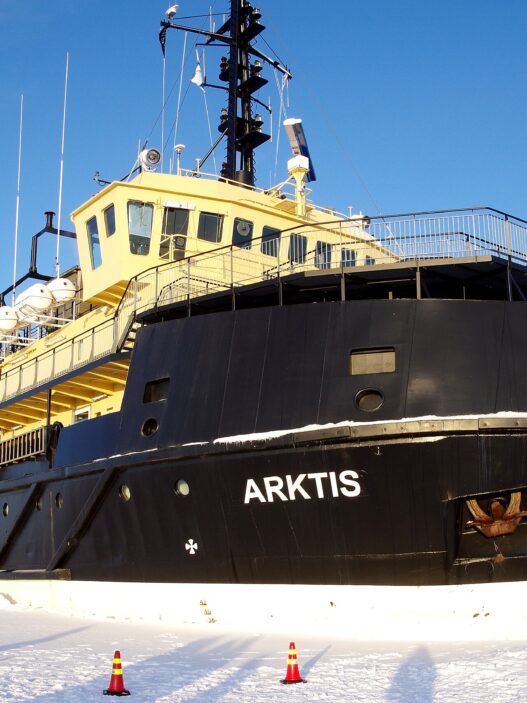
The package also designates two individuals and 24 entities involved in the shipment and export of Russian crude oil and petroleum products through the shadow fleet. These include Lukoil-Western Siberia and a network of companies based in Russia, Liberia, Türkiye, the United Arab Emirates, Azerbaijan, and Hong Kong that facilitate the transport and sale of Russian oil despite existing restrictions.
In addition, the Council sanctioned 10 individuals and one entity involved in Foreign Information Manipulation and Interference (FIMI). Those designated include prominent media personalities and propagandists, such as Anatoly Kuzichev, Kirill Fedorov, Roman Antonovskii, and Maria Volkonskaya, editor-in-chief of the state-controlled newspaper Krymskaya Gazeta. According to the Council, they have promoted or legitimised Russia’s war against Ukraine and disseminated manipulative narratives targeting Ukraine.
The Council also renewed the restrictive measures introduced in response to Russia’s annexation of Crimea and Sevastopol until June 2027.
Commenting on the new sanctions, Kaja Kallas stated:
“Today, we approved another batch of sanctions to put more pressure on Russia to end the war. These measures strike at the heart of Russia’s military-industrial complex, its shadow fleet, and the networks that fuel Moscow’s hybrid attacks against Europe. In parallel, work is underway on the broader 21st sanctions package. Every measure shrinks Russia’s room for manoeuvre. And the numbers speak volumes. Western sanctions have already cost Russia an estimated €1 to €1.3 trillion. Brick by brick, we are collapsing the foundations of Russia’s war economy.”
Since the start of Russia’s full-scale invasion on 24 February 2022, the EU has imposed an unprecedented sanctions regime in addition to the measures introduced following Russia’s 2014 annexation of Crimea. These sanctions include individual and sectoral economic measures, diplomatic restrictions, and visa-related measures. Designated individuals are subject to travel bans and asset freezes, while listed entities also face asset freezes. The measures respond not only to Russia’s invasion of Ukraine but also to its hybrid activities and deteriorating human rights situation.
The sanctions are designed to be targeted, proportionate, and temporary. As such, they are regularly reviewed and amended in line with the EU’s stated objective of ending Russia’s aggression against Ukraine. The sanctions regime also extends to Belarus, Iran, and North Korea because of their support for Russia’s war effort.
According to the European Commission, since February 2022, the EU has prohibited the export to Russia of more than €48 billion worth of goods and banned imports from Russia worth €91.2 billion. Compared with 2021 trade volumes, 54% of EU exports to Russia and 58% of imports from Russia are now subject to embargoes. Together with other like-minded partners, the EU has also reserved the right to suspend Russia’s most-favoured-nation treatment under the World Trade Organization (WTO) and has halted all work related to Belarus’s accession to the WTO.
The extent to which this latest package of sanctions will increase pressure beyond the existing sanctions regime remains uncertain. The effectiveness of sanctions as a tool for influencing state behaviour remains a contested issue in international relations. Russia has thus far demonstrated a significant capacity to adapt to Western sanctions, largely by deepening its economic relationship with China.
Bilateral trade between Russia and China has grown substantially since the start of the war, reaching almost US$250 billion in 2024 before declining slightly to US$234 billion in 2025, compared with approximately US$190 billion in 2022. Moreover, around 92% of bilateral trade is now conducted in roubles and yuan, up from roughly 25% before the invasion. This shift has helped Russia mitigate some of the effects of Western sanctions while maintaining a trade surplus of more than US$100 billion. At the same time, it has made Russia increasingly dependent on China both as a market for its energy exports and as a supplier of critical imports for its military-industrial complex. This growing dependence also helps explain why the EU has expanded sanctions to include several Chinese companies.
Despite Russia’s relative resilience, there are growing signs of economic strain. In 2025, Russian manufacturing contracted at its fastest pace since March 2022, with declines in output and new orders, worsening labour shortages, and reduced input purchasing. The sector recorded seven consecutive months of contraction during 2025, while production levels declined for ten consecutive months. These trends suggest that the sanctions are imposing meaningful economic costs. However, the extent to which they will contribute to ending the war, the EU’s primary objective, remains uncertain.
Sources: CSIS, IISS, European Council, European Council, Interfax, Reuters