








Multilateral Context and EU Priorities
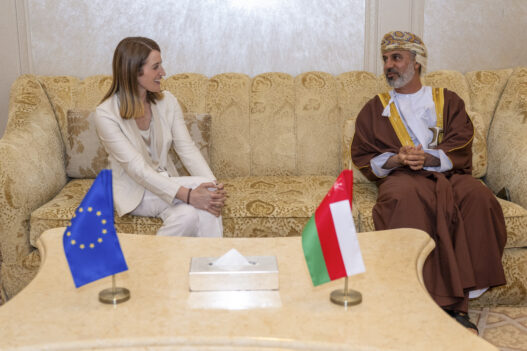
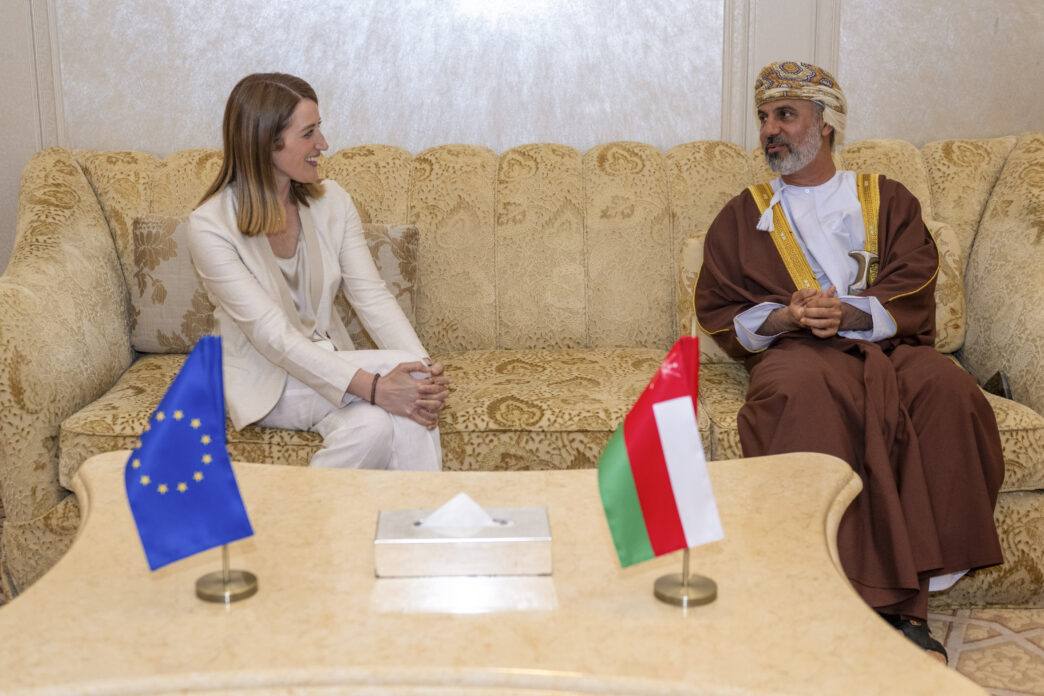
On 3 February 2026, the European Union (EU) and the Sultanate of Oman held their third bilateral human rights dialogue in Muscat. Officially presented as an “open and constructive” exchange centred on the sharing of good practices, the meeting – co‑chaired by Oman’s Ministry of Foreign Affairs and the European External Action Service – forms part of a process launched in 2022 and continued in Brussels in 2024. Discussions have focused on labour rights, gender equality, digital rights, civil society engagement, rule‑of‑law issues, and the death penalty, within a deliberately technical and non‑confrontational format.
This engagement unfolds within a broader multilateral framework. In January 2025, the EU Foreign Affairs Council adopted conclusions defining EU priorities in United Nations human rights fora for the year, guiding its action in Geneva and New York. These priorities include reaffirming the universality of human rights, ensuring accountability for serious violations, protecting human rights defenders, supporting the International Criminal Court, and addressing major crises such as Ukraine, the Middle East, and Myanmar. The key policy question is therefore one of coherence: how to reconcile an assertive normative agenda in multilateral settings with a pragmatic, low‑key approach in sensitive bilateral contexts.
Bilateral Dynamics and Structural Constraints
Within this framework, the EU seeks to develop a human rights diplomacy on the ground with key partners, including Oman, with the aim of gradually aligning bilateral agendas and multilateral action. Oman occupies a specific position in the Gulf political landscape. It is widely perceived as a relatively stable and diplomatically constructive actor, notably due to its mediation role and balanced regional posture. This perception shapes EU strategy: rather than prioritising pressure, the EU emphasises sustained engagement, continuity and trust‑building, viewing Oman as a potential interlocutor and regional relay.
Structural factors further encourage prudence. Unlike in enlargement or neighbourhood contexts, the EU lacks strong conditionality tools vis‑à‑vis Oman. Trade, aid and political cooperation do not provide sufficient leverage to sustain a coercive human rights strategy. A more confrontational posture could reduce diplomatic access without generating meaningful concessions, undermining the incremental channels through which limited progress might occur. Human rights are therefore compartmentalised within a broader partnership encompassing energy cooperation, maritime security, connectivity and regional stability – areas the EU is reluctant to jeopardise in a volatile regional environment.
At domestic level, civil and political rights in Oman remain constrained. The country is an absolute monarchy with significant restrictions on freedoms of expression, assembly and association, where criticism of state authorities can be criminalised and civil society organisations operate under strict legal and administrative controls. While Oman engages with international human rights mechanisms – including the Universal Periodic Review process and accession to the International Covenant on Civil and Political Rights in 2020 – implementation gaps persist, particularly regarding the situation of activists, journalists, migrant workers and women.
Policy Coherence and Implementation Prospects
The EU–Oman dialogue thus exemplifies a differentiated human rights diplomacy. In multilateral fora, the EU uses assertive language centred on accountability and universal standards; in bilateral formats with strategic partners such as Oman, it favours incrementalism and technical cooperation. The third EU–Oman dialogue appears as a test case for the EU’s ability to translate its UN priorities into concrete, monitorable commitments in a sensitive regional context.
The effectiveness of this approach will depend on follow‑up: integrating agreed themes – for example on labour standards, digital governance or anti‑trafficking measures – into measurable commitments and, where relevant, referencing them in future Human Rights Council or UN General Assembly debates would strengthen policy coherence and provide a clearer measure of the EU’s credibility as a global human rights actor.
Sources:
EEAS – Third EU‑Oman Human Rights Dialogue held in Muscat, 3 Feb 2026; EEAS – Second EU‑Oman Human Rights Dialogue held in Brussels, 19 Nov 2024; EEAS – EU Priorities for UN Human Rights Fora in 2025; Council of the EU – Council Conclusions on EU priorities in UN Human Rights Fora 2025 ; EP Fact Sheet – Human rights in EU external action; European Parliament; MENA Rights Group ; ECDHR ; Human Rights Watch