







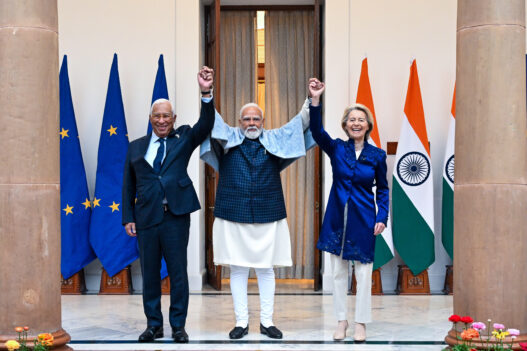
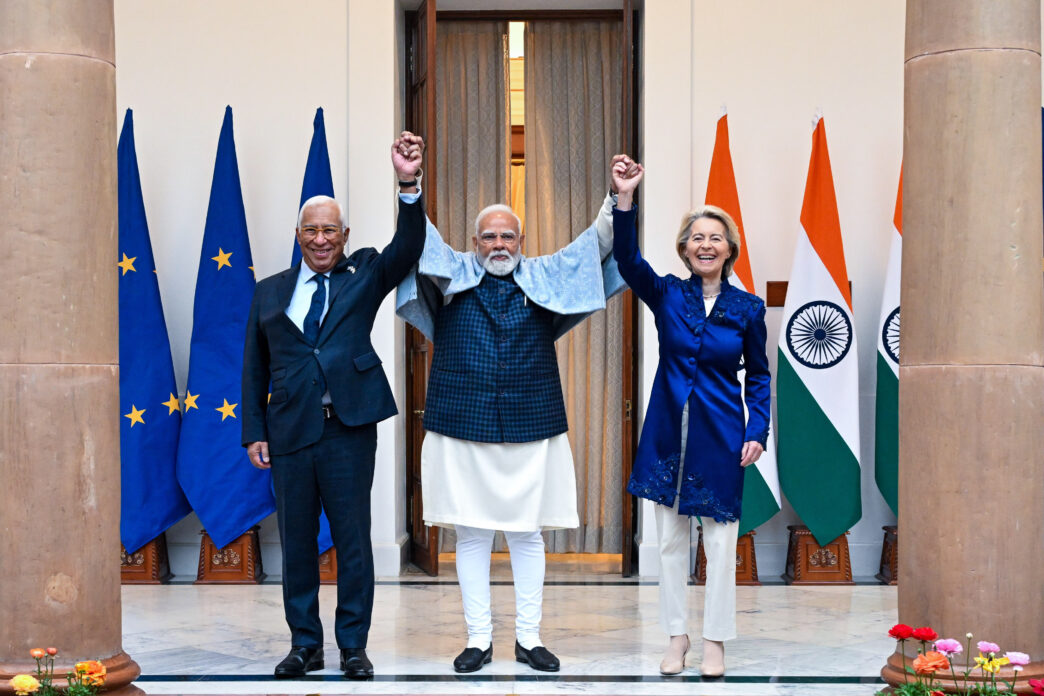
On 27 January 2026, the European Union and India signed a Security and Defence Partnership in New Delhi during the 16th EU–India Summit. The agreement was signed by EU High Representative/Vice-President Kaja Kallas and Indian External Affairs Minister S. Jaishankar, in the presence of Prime Minister Narendra Modi, European Council President António Costa, and Commission President Ursula von der Leyen.
The partnership establishes the first comprehensive framework for EU–India cooperation in security and defence. It structures cooperation across maritime security, defence industry and technology, cyber and hybrid threats, space, and counter-terrorism. It foresees an annual EU–India Security and Defence Dialogue and negotiations on a Security of Information Agreement, enabling the exchange of classified information.
The agreement reflects a shared ambition to deepen strategic cooperation amid growing geopolitical competition, particularly in the Indo-Pacific. For the EU, it strengthens its regional presence beyond traditional alliances; for India, it diversifies partnerships while preserving strategic autonomy. The partnership signals a shift towards power-to-power relations and positions India as a key security partner rather than only an economic one.
Context and origins of the partnership
Before 2026, EU–India security cooperation was fragmented, relying on sectoral dialogues (maritime, cyber, counter-terrorism, non-proliferation), capacity-building programmes such as ESIWA/ESIWA+, and operational coordination with EUNAVFOR Atalanta in the Indian Ocean. A Joint Communication published in September 2025 proposed consolidating these efforts into a single Security and Defence Partnership, in line with the EU’s Indo-Pacific strategy and Strategic Compass.
The January 2026 agreement operationalises this proposal in a context shaped by Russia’s war against Ukraine, intensifying EU–China rivalry, and uncertainty surrounding US global leadership. Institutionally, it reflects coordination between the Commission, the EEAS, the Council, and the European Parliament, while aligning with India’s Make in India and diversification strategy.
Achoring the EU in the Indo-Pacific
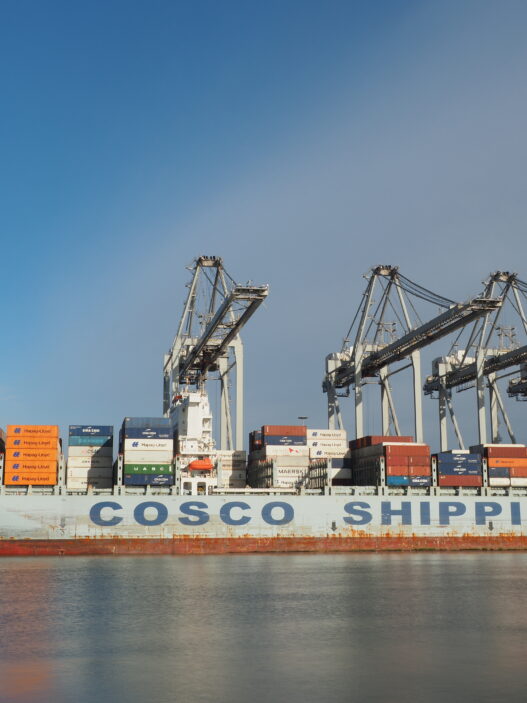
The partnership provides the EU with a structured anchor in the Indo-Pacific through cooperation on maritime security, sea-lane protection, and infrastructure resilience. It complements EU naval deployments and connectivity initiatives such as Global Gateway and the India–Middle East–Europe Economic Corridor (IMEC), which aims to secure trade routes and reduce logistical vulnerabilities for Europe.
More broadly, the agreement embodies a logic of co-strategic autonomy. Both sides seek to enhance capabilities without exclusive dependence on either the United States or China. For the EU, this supports diversification beyond the transatlantic security pillar; for India, it balances relations with Washington and Moscow through engagement with a partner perceived as less militarily intrusive but influential in standards, technology, and multilateral diplomacy.
Persistent divergences and implementation risks
The partnership remains cautious on divisive issues, notably Russia’s war on Ukraine and sanctions. India’s long-standing military dependence on Russia remains the main structural divergence and raises European concerns about potential technology leakage, even as France and the US deepen defence cooperation with New Delhi. Implementation – potential participation in selected EU defence initiatives – will test the partnership’s depth and credibility.
Strategic implication for the EU
Overall, the EU–India Security and Defence Partnership reflects a broader reconfiguration of multilateralism, with “middle powers” seeking stabilising coalitions to mitigate great-power rivalry. For the EU, India emerges as a central partner in shaping a more resilient and multipolar international order. Many analysts see this evolution as further illustrating the growing contestation of US normative leadership, including among long-standing allies.
Sources
EEAS; Ministry of External Affairs, Government of India; European Commission; European Parliament ; Carnegie; Le Monde