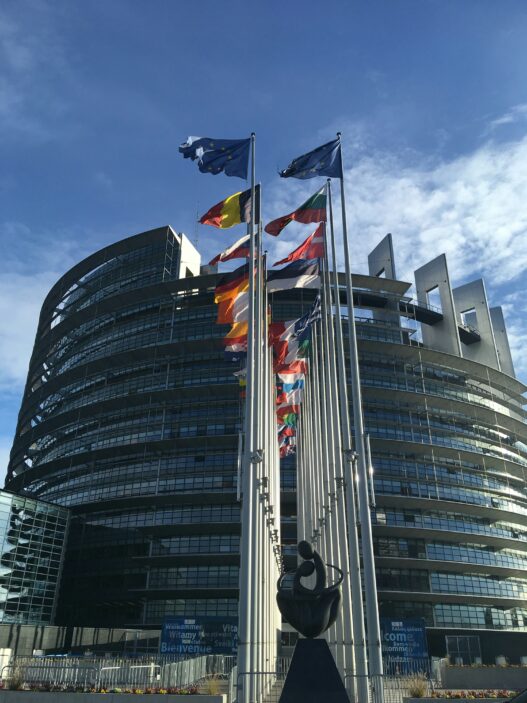










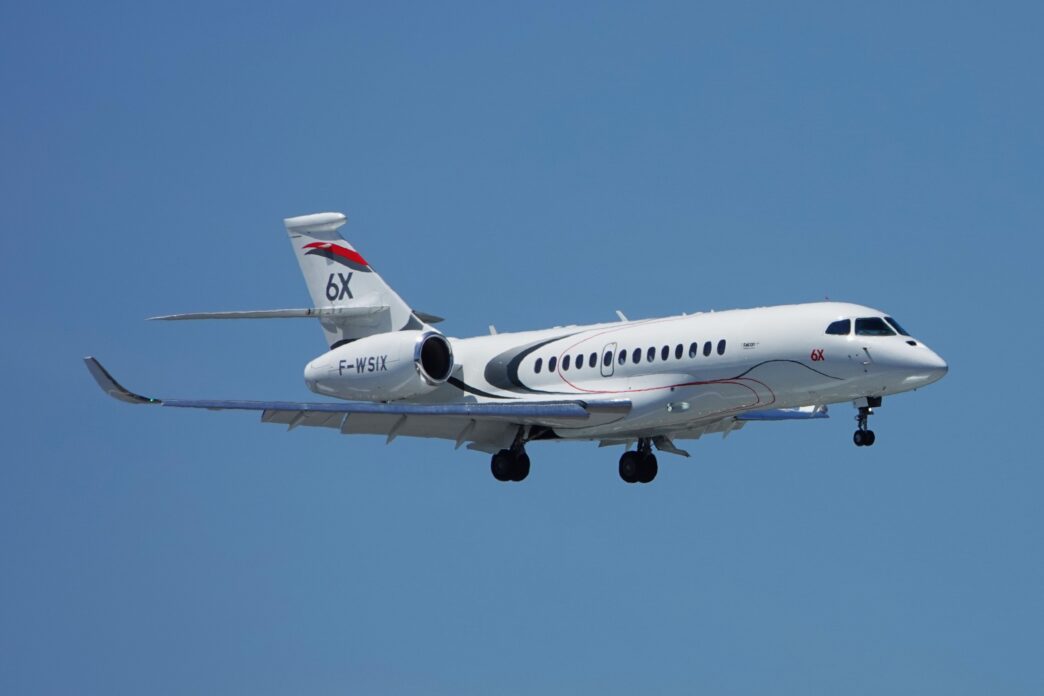
On June 24th, the EU General Court reopened a politically sensitive question inside Europe’s sustainable-finance architecture: can business-jet manufacturing ever be treated as part of the climate transition? In Dassault Aviation v Commission, the Court annulled the Commission’s exclusion of aircraft intended for private or commercial business aviation from the EU taxonomy’s “transitional” activities. The taxonomy is not a tax measure; it is a classification system that tells investors and companies which economic activities can be reported as environmentally sustainable. That makes this a case on the credibility of Europe’s green label.
A regulation from the European Commission created technical screening criteria for aircraft manufacturing but excluded business aviation from activities considered to contribute to climate-change mitigation. Dassault, which manufactures business jets, argued that this exclusion was unlawful. The Court agreed, finding that the exclusion affected how Dassault had to present its activities in sustainability reporting and could influence its access to funding.
The climate problem
The judgment is not a finding that private jets are green. However, the Court held that Brussels had relied on CO₂ emissions per passenger-kilometre compared with other transport modes. The Court said this metric was not provided for in the Taxonomy Regulation and, crucially, concerned aircraft operation rather than aircraft manufacturing. It also faulted the Commission for assuming that other transport modes were necessarily low-carbon alternatives, without properly assessing business aviation’s claimed specificities (flexibility, speed and connectivity) or the ability of aircraft to use sustainable aviation fuels.
That legal distinction cuts directly into the climate debate. Private aviation remains a high-symbolism, high-emissions sector. A study on 2023 estimated at least 15.6 Mt of direct CO₂ emissions from private aviation, an average of 3.6 t per flight, with emissions rising 46% between 2019 and 2023 and nearly half of flights shorter than 500 km. More broadly, aviation decarbonisation is structurally difficult because liquid fuels are hard to replace and non-CO₂ climate effects matter, as net-zero pathways rely not only on aircraft efficiency but also on demand changes, large volumes of sustainable aviation fuels and, potentially, carbon removals.
Why it matters
The ruling changes the necessary argument for innovation in private aviation from moral intuition to administrative proof. The Commission can still draw strict boundaries around what counts as “transition”, it just has to show, activity by activity, why the boundary fits the Taxonomy Regulation. For climate policy, that is both a constraint and a warning. If the EU wants to keep carbon-intensive prestige sectors outside sustainable finance, it needs more than the political appeal of exclusion. It needs legally robust, lifecycle-aware and sector-specific evidence. Otherwise, the green taxonomy risks being attacked not because its climate judgments are too blunt.
Sources
- https://curia.europa.eu/site/upload/docs/application/pdf/2026-06/cp260091en.pdf
- https://eur-lex.europa.eu/legal-content/EN/TXT/PDF/?uri=CELEX:32020R0852
- https://eur-lex.europa.eu/legal-content/EN/TXT/PDF/?uri=OJ:L_202302485&qid=1782732475536
- https://www.nature.com/articles/s43247-024-01775-z
- https://www.nature.com/articles/s41893-022-01046-9