






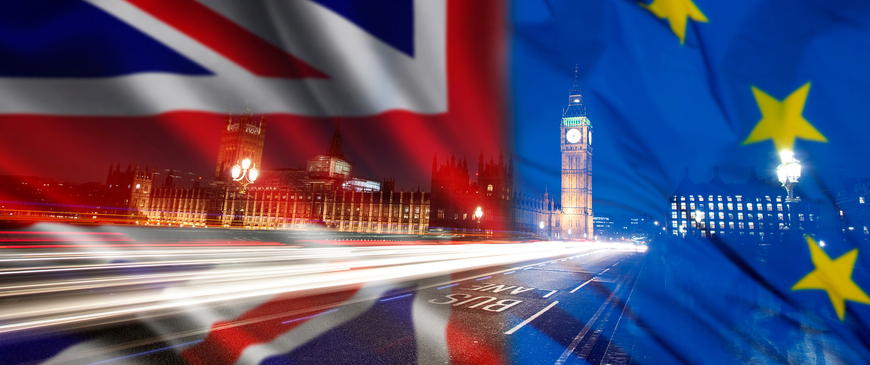
Since Brexit, relations between the United Kingdom and the European Union have remained a subject of political debate. In fact, Andy Burnham’s election as the UK’s Prime Minister has only stirred the topic, with talk of his political agenda bringing London into closer ties with Brussels.
Burnham’s Stance Before Taking Office
Although Burnham had initially placed domestic economic growth and devolution at the centre of his political agenda, with relations with the EU seemingly a lower priority, his stated priorities in July 2026 suggested potential opportunities for a different direction in post-Brexit relations. At the time, Burnham had not yet taken office, and his approach to EU relations remained prospective. Nevertheless, although he appeared less explicitly pro-European than Keir Starmer, his emphasis on economic security and defence cooperation suggested areas where closer cooperation with Brussels could be possible.
However, his proposed focus on security cooperation, reducing dependence on foreign suppliers, and developing domestic capabilities in strategic sectors such as AI, shipbuilding, and energy reflected priorities the EU also pursues under its strategic autonomy agenda. According to Joël Reland, these shared interests could create opportunities for cooperation in areas such as defence procurement, critical supply chains and digital infrastructure. This suggested that, under a potential Burnham premiership, closer UK–EU relations might develop through security and strategic economic cooperation rather than deeper economic integration.
Developments in the UK-EU Summit
On November 20, 2026, EU and UK leaders met for the second UK-EU summit. The meeting hosted discussions on advancing shared commitment to the strategic partnership and reaffirmed the bilateral priorities established at the first summit in London in May 2025.
Speaking at the summit, European Council President António Costa described the partnership as a “strategic investment in Europe’s security” and a shared investment in innovation, competitiveness and resilience.
The meeting placed particular importance on strengthening cooperation in peace, security and defence. The leaders identified several areas for closer coordination, including countering hybrid threats, maritime security and freedom of navigation, crisis management, defence industrial cooperation, military mobility, countering foreign information manipulation and interference, democratic resilience, peace mediation and conflict prevention.
As part of other areas of bilateral cooperation, the leaders welcomed the conclusion of negotiations on a youth experience scheme, the UK’s participation in Erasmus+ from 2027, closer cooperation on energy and emissions trading, and progress towards agreements on food and agricultural standards. They also announced plans to establish a dialogue on economic security and pursue a digital partnership covering areas such as artificial intelligence and critical technologies.
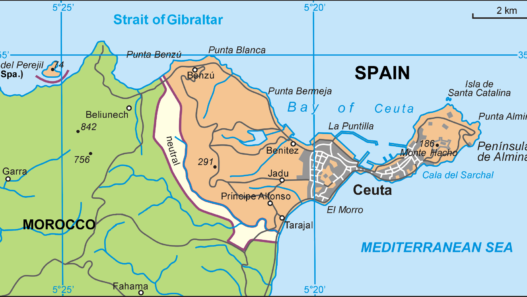
Last but not least, the sides signed an agreement on Gibraltar, marking progress on an issue that had remained unresolved following Brexit.
In their joint statement, the leaders reaffirmed their commitment to a dynamic partnership, stating: “Against the backdrop of deepening geopolitical and economic challenges, we reaffirm our support for an ambitious and dynamic relationship that delivers for our citizens.”
Burnham’s attempt to redefine the UK-EU relations
The November 20 summit also marked another political push by Burnham to bring the UK closer to the EU. In Brussels, the Prime Minister presented agreements on food standards, emissions trading and a new youth exchange scheme as measures that could deliver tangible economic and social benefits. He argued that closer cooperation with the EU could reduce food prices, lower electricity costs and contribute an estimated 0.5% to annual economic growth in the long term.
Beyond the economic arguments, Burnham tried to frame closer European ties as an opportunity to move beyond the political divisions of the 2016 Brexit referendum. In particular, he presented the proposed youth exchange scheme as a way of restoring opportunities for a generation whose mobility and choices had been affected by Brexit and the COVID-19 pandemic.
At the same time, some indications show that the political environment surrounding the Brexit debate has changed in the UK. A constituency-level survey published on the day of the summit suggested that voters in 274 of the 394 constituencies estimated to have supported Leave in 2016 would now favour rejoining the EU. However, the findings do not necessarily indicate a uniform shift in national public opinion.
Still, Burnham’s attempts to redefine UK-EU relations face domestic political opposition. Reform UK leader Nigel Farage and the Conservative Party have criticised the government’s closer cooperation with Brussels, arguing that it risks reopening the divisions surrounding Brexit. Burnham has responded by challenging his political rivals to oppose agreements that he claims could deliver significant economic benefits.
Ultimately, Burnham’s political approach could be seen as an attempt to redefine the UK’s relationship with the EU through practical economic cooperation, security partnerships, and renewed opportunities for citizens, rather than immediately reopening the question of EU membership. Whether this approach can deliver lasting closer ties will depend not only on implementing the agreements reached at the November summit but also on the government’s ability to maintain domestic political support for its European agenda.
News from European Relations:
ERA – Brejoin? Burnham Reopens Debate on Britain Rejoining the EU. 20 November 2026.