






Domestic Elections in the Netherlands: How the EU nervously eyed the “Cheese Empire”
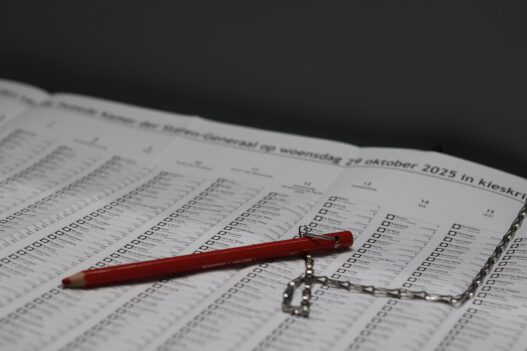
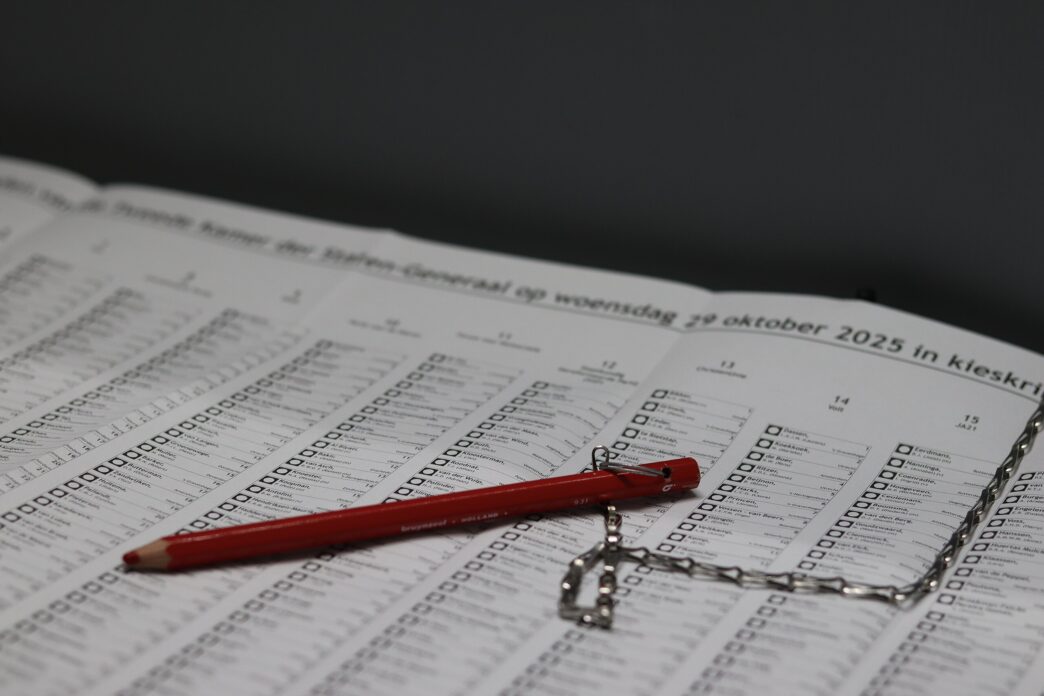
The Netherlands headed to the polls in a pivotal election on 29 October 2025 that could have cemented the far right as the country’s dominant political force. Still, it was unlikely to put its leader, Geert Wilders, in power. Despite leading in the polls, Wilders’ Party for Freedom (PVV) faced isolation, as most mainstream parties refused to govern with him because of his hardline stance on migration and his decision to resign from the previous coalition, which he criticised for being too weak on asylum policy.
Wilders, known for his anti-Islam and anti-migration rhetoric, had campaigned on a nationalist, populist message.
Dutch historian Nadia Bouras remarked: “He’s always been racist, but now he has nothing to lose.”
A record 27 parties competed for 150 parliamentary seats, setting the stage for another coalition process that could stretch for months. Key contenders included Frans Timmermans of the GreenLeft–Labour alliance, Rob Jetten of the centrist D66, and Henri Bontenbal of the Christian Democrats (CDA). The liberal VVD, once the country’s dominant party under former Prime Minister Mark Rutte, now NATO Secretary-General, had slipped to fifth place in the polls.
This year’s campaign had centred on housing, migration, healthcare, and defence spending, with climate change gaining attention in the final days following large demonstrations. Among these, housing had emerged as the most pressing issue. Economists blame state regulations and subsidies for discouraging public housing corporations from building new homes.
Economist Bas Jacobs of Vrije Universiteit Amsterdam observed: “We have the worst of the market and the worst of the state.”
Frans Timmermans, the former EU commissioner and seasoned political veteran, focused his campaign on freeing up billions of euros for public housing, positioning his newly merged GreenLeft–Labour alliance as a progressive alternative.
Meanwhile, Henri Bontenbal of the CDA branded himself an
“anti-populist” candidate who avoids personal attacks and appeals for stability, trust, and reliability. “The country is longing for a stable government,” he said. “Politics is not a theatre, not a circus.”
According to polls, the CDA was projected to finish second or third, while the social-liberal D66 was also gaining momentum. Its youthful leader, Rob Jetten, openly gay, pro-European, and known for his confident media presence, sought to challenge traditional parties and reclaim the Dutch flag, a symbol long monopolised by the far right. The previous Dutch government collapsed on 3 June 2025 after just 336 days in office, marking the third election in five years and underscoring the country’s chronic political instability.
With many voters still undecided, the outcome remained unpredictable. Regardless of the winner, the Netherlands appeared headed for another lengthy and complex coalition process, as parties struggled to bridge deep ideological divides and address an electorate increasingly sceptical of mainstream politics.
Further details on the elections in the Netherlands can be found in The Economist, AP News and Politico EU.
EU’s relief?
In a dramatic turn of events in the Netherlands’ general election, the spotlight fell on youthful optimism rather than populist backlash. The far-right Geert Wilders, leader of the Party for Freedom (PVV), saw his party’s support collapse, losing almost one-third of its parliamentary seats, in what appeared to be voter retribution for his role in the collapse of the previous governing coalition. His party secured 26 out of 150 seats in the House of Representatives. Wilders nevertheless vowed to remain active in politics until the age of 80, declaring that he will “never give up.”
Meanwhile, an unexpected victor emerged: the 38-year-old Rob Jetten, leader of the liberal-pro-EU Democrats 66 (D66). His party surged from just nine seats in the previous election to 26, marking its best-ever result in a general election. With mainstream parties uniting to rule out any partnership with Wilders’ PVV, Jetten appears poised to become the Netherlands’ youngest prime minister in Dutch history.
“This is a historic election result because we’ve shown not only to the Netherlands but also to the world that it’s possible to beat populist and extreme-right movements,” Jetten told his supporters. “I’m very eager to cooperate with other parties to start an ambitious coalition as soon as possible.”
The rivalry between Jetten’s D66 and Wilders’ PVV remains fierce, as the two parties stand in stark ideological opposition, underscoring the deep political polarisation shaping Dutch society. Each had repeatedly ruled out cooperation with the other, raising the stakes in the coming coalition talks.
Meanwhile, the centre-right VVD, the former party of longtime prime minister Mark Rutte, outperformed expectations. The party claimed 22 seats, securing third place behind Wilders’ PVV and losing only two seats from the previous election.
The Christian Democrats (CDA) also staged a notable comeback under the leadership of Henri Bontenbal. After languishing at just five seats in the last parliament, the party surged to 18 seats, re-establishing itself as a significant force in Dutch politics and signalling renewed appeal among moderate and Christian-democratic voters. Botenbal declared:
“The Netherlands is gasping for new politics. Respectful and on-topic.”
What about the former Commissioner?
For Frans Timmermans, the results were a bitter setback. His Green-Left Labour Alliance secured only 20 seats, a figure well below expectations. Pre-election polls had projected his alliance would finish second behind Geert Wilders’s PVV; instead, it fell short, losing five seats compared to the 2023 election. In the wake of this disappointing performance, Timmermans announced he will step down as leader of the alliance. He stated:
“It’s clear that I, for whatever reason, couldn’t convince people to vote for us,” Timmermans said. “It’s time that I take a step back and transfer the lead of our movement to the next generation.”
Looking ahead, the GreenLeft–Labour alliance appears a natural coalition partner for Jetten, given their shared positions on Europe, social policy, and climate action. A second likely partner is the centre-right VVD, which would anchor the coalition toward the political middle. Still, Jetten faces a formidable task. Bringing together parties that fiercely competed during the campaign, and span the pro-EU progressive left to the centre-right liberal tradition, will require careful negotiation and compromise, notably, as the VVD declared in its election campaign that it did not want to govern with the GreenLeft-Labour Alliance in a coalition. Jetten’s challenge will be to forge a stable government capable of bridging ideological divides while maintaining credibility with each party’s voter base.
Jetten’s pro-European stance is being hailed in Brussels as a welcome shift and a symbolic victory over the rising tide of right-wing Euroscepticism across the continent. Yet it remains uncertain whether this enthusiasm marks a durable political realignment or a temporary rebound. Should Jetten fail to deliver tangible progress, more Dutch voters could gravitate toward Eurosceptic forces. It must also be said that although Wilders’ party was punished, his previous voters turned to other Eurosceptic parties, and they could return to him. Geert Wilders, despite his electoral setback, is expected to remain a dominant voice on the right, poised to fiercely challenge the incoming government from the opposition benches and seize on any missteps. For now, Europe can breathe a sigh of relief, though few expect the calm to last long. Because
Wilders warned reporters: “Buckle up, we’re only getting started.”
Further details on the results and implications of the elections in the Netherlands can be found in Politico EU.