







In recent months, Ukrainian refugees living in the European Union have been feeling anxious about the news that the conditions of their temporary residence may worsen. Despite the extension of the Temporary Protection Directive for Ukrainians until March 4, 2027, more pressure has been put on them to change their residency status or to return to Ukraine, where a ceasefire is currently improbable. The fate of more than four million Ukrainians in Europe rests on another round of peace talks, which do not regard their problems as a top priority.
Housing problems in the Netherlands and discontent of local citizens
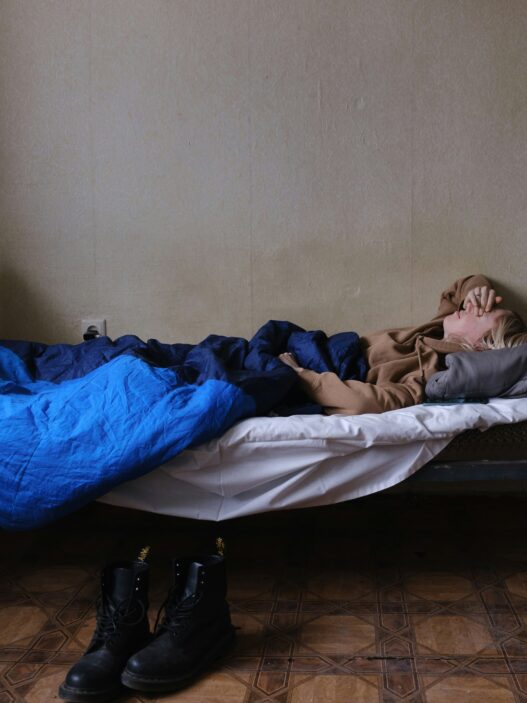
Initially, the Netherlands had some of the most comfortable and beneficial conditions for the reception and temporary stay of Ukrainians. Since then, serious problems with providing them with housing have emerged. The shortage of rooms for Ukrainians in Dutch municipal shelters became so acute that Ukrainian refugees started to appeal to the Red Cross, as they had to sleep on the streets or in cars. Ukrainians’ psychological and social problems in the EU have become the topic ofresearch by Dutch sociologists. The Research and Data Centre, Statistics Netherlands, and Erasmus University Rotterdam all note that the longer the war continues, the longer Ukrainians stay in municipal shelters, obligating the Dutch authorities to make efforts to further integrate them into society.
Meanwhile, plans for the construction of new shelters for refugees have been thwarted, often because of local disagreements on construction works. Among Dutch politicians, there is no consensus on how to fix the situation, as on the one hand, the Ministry of Asylum and Migration of the Netherlands suggests a relatively moderate approach of introducing certain rules obliging employed Ukrainians to seek housing themselves. On the other hand, the far-right threatened to send all Ukrainian men of legal age back to Ukraine if their party wins the election.
Polish and German politicians want to motivate Ukrainians to look for a job
Providing support to Ukrainians became one of the most important topics of the election debates in Poland. One of the candidates, Rafał Trzaskowski, called for the payment of benefit support only to those Ukrainians working and paying their taxes in Poland. His opponent, Karol Nawrocki, was even more adamant and announced an entire set of restrictive measures after his election win. As a result, a law was adopted in September that connects Ukrainian refugees’ social assistance with their employment and limits their access to some forms of healthcare. 
In August, Markus Söder, the leader of the German Christian Social Union, advocated for removing basic assistance to all Ukrainian refugees in Germany. Ukrainians currently have the right to get these benefits as soon as they arrive in the country. Söder believes that even well-educated Ukrainians prefer to be unemployed and get benefits rather than get a job, so cutting these benefits could motivate Ukrainian refugees to look for a job, at the benefit of the German economy.
Waiting for the change of temporary protected status
Further restrictions on Ukrainians across the EU may be constrained by the Council of the EU’s recommendation on reintegration, as well as a potential change to the official status of Ukrainians if the war ends. EU member states pledged to create favorable conditions for Ukrainians to either return to Ukraine or to get national residence permits in EU countries on the grounds of employment, education, or family reunification. Ukrainians who are eligible for such residence permits are not able to apply for the free housing and social benefits they received under the temporary protection status. Therefore, benefits will only apply to Ukrainians who participate in voluntary return programmes, the conditions of which will be developed by the EU member states in the future. EU information centers will likely be created, where Ukrainians who want to go back to Ukraine will be provided with all necessary information on exploratory visits to Ukraine to assess the state of their housing there and to learn about job opportunities.
Thus, Ukrainians will soon face a difficult choice, depending on the trajectory of the hostilities: begin to make their living via an EU residence permit or gradually start preparing to move back to Ukraine.
Ukrainians have no opportunity to decide their own fate
Ukrainian refugees often have no opportunity to decide their own fate and regularly become victims of new and unpleasant circumstances. This time, their position and reputation are impacted by European politicians tiring of the war in Ukraine and Zelenskyy’s uncertain stance on peace talks. Despite the attempts made to sign a peace deal, Ukraine has consistently refused proposed conditions of cessation of the hostilities, leading to more pauses in the peace talks. This deprives Ukrainians of the hope that their economic and everyday difficulties will be resolved.
Why can’t refugees count on the war to stop in the near future?
Attempts to peacefully end the war began shortly after U.S. President Trump’s proposal of a 28-point peace plan in December 2025. However, neither side has been able to reach an agreement yet. Some experts claim that Russia hinders the peace talks by demanding that the Armed Forces of Ukraine retreat from Donbas and also by preventing the Ukrainians from operating the Zaporizhzhia Nuclear Power Station. Other analyses claim that Russia is willing to continue the war because it is economically able to support this aim for another 3-5 years.
Zelenskyy’s hardline position on the peace talks was greatly criticized by both the Trump administration and some European officials. Ukraine refuses to reduce its army to 600,000 people and to cancel the restrictions on the use of the Russian language in the country. Furthermore, some officials fear this ceasefire deal would put the cost of maintaining peace on European nations.
Despite the righteousness of Ukrainian aspirations to defend its territories from Russia’s invasion, it is my opinion that Ukrainian officials play a key role in the worsening of Ukrainian refugees’ plight as a result of the continuing war. For example, the Ukrainian government canceled consular services in 2024 for men living abroad in order to make them return to Ukraine to fight. In 2025, a huge scandal exposed large-scale corruption in the energy sphere, which ended with the resignation of the Head of the Office of the President, Andriy Yermak, creating political instability at a delicate time.
Additionally, due to the strong reaction of the Ukrainian military elite to possible territorial concessions, Zelenskyy must raise his approval ratings and strengthen his authority in the coming months. This is due to the fact that Ukrainian soldiers enjoy great respect and authority in the Ukrainian society, and their reaction to the proposal may have a negative influence on Zelenskyy’s electorate. Judging by the Ukrainian army’s latest counterattacks in Kupyansk and Pokrovsk, Zelenskyy is interested in strengthening his rating through successes on the front line. While this is also necessary, of course, to slow down the advance of the Russian army. However, in my opinion, such operations of the Ukrainian Armed Forces don’t tend to change the situation on the front line much and are aimed at merely creating a positive impression of the military on Ukrainian society. Zelenskyy and the Ukrainian Army command report daily on the military’s successes so that Ukrainian society feels that the legal restrictions under martial law, losses in the military, and money spent on the army are not being done in vain. Thus, in such circumstances, a ceasefire seems improbable and continues to leave Ukrainian refugees in vulnerable circumstances.
Hope for a victory or dangerous recklessness?
The continuation of the war and the rising discontent of the European right is inevitably leading to a situation where Ukrainian refugees become the subjects of pejorative speculations every election cycle in EU countries. Unfortunately, neither the Ukrainian delegation during the peace talks with the Russians, nor Zelenskyy himself during his meetings with Trump were able to bring peace sooner. The last three years of the war have made some of the EU’s political forces tired, with requests for weapons for Ukraine coming in almost every single day. The far-right conservatives appear to be directing such negativity towards Ukrainian refugees now. Due to the worsening economic situation in Europe, refugees’ benefits will likely face restrictions, and shelters will experience evictions, as well as other declining conditions. Furthermore, not all Ukrainians will be able to change their status officially as proposed and integrate into European society. Not to mention those Ukrainians who wait for peace to go back home .As a result, the future of Ukrainians living abroad resembles the future of those who stayed in Ukraine. These citizens have been living in uncertainty for more than three years, are limited in their freedom of movement, do not have a voice in this war, and cannot affect the future of their children. The author believes that the responsibility for such a situation rests on the shoulders of the Ukrainian authorities, as they try to stay in power by keeping their spheres of influence and by maintaining financial assistance from Ukraine’s European allies. I believe that Kyiv’s officials’ behavior demonstrates that, between another chance for peace and continuing the war, they choose the second, despite the fact that this means more years of bloodshed and hundreds of thousands of Ukrainian victims.