






Greece, as a coastal country with countless islands that combines culture, history, gastronomy and natural beauty, is considered one of the best summer destinations, attracting millions of visitors every year. Tourism plays a major role in the country’s economy: in 2024 it contributed around 13% of the GDP, according to INSETE, the research institute of the Greek Tourism Confederation. During the peak summer season, tourism in the hellenic country directly and indirectly employed more than 700,000 people in 2024. Given that its total workforce is around 4.7 million, this means that almost one out of six people work in the tourism sector. Yet, not everything about this success is as bright as it seems.
The Problematic Numbers
Despite these impressive figures, Greece’s tourism hides a serious and dark paradox. While arrivals and overnight stays have reached record levels in recent years, the country’s revenues are not following the same path. According to the Bank of Greece, tourism revenues in 2024 reached around €21.6 billion. Yet, when compared to more than 32 million international arrivals, the average spending per visitor remains below €600, which is far less than in other typical mediterranean destinations like Spain or Italy. This imbalance highlights the sector’s dependence on quantity rather than quality, which may bring short-term gains but prevents sustainable, high-value growth.
In addition, tourism in Greece remains highly seasonal, especially on the islands. Nearly 70% of the country’s total tourism revenues are generated between June and September, creating instability for workers and small businesses that rely on it to survive the rest of the year. Each season, thousands of employees work long, low-paid shifts, and the government’s recent proposal to extend working hours to 13 per day only added more fuel. This sparked nationwide protests, as unions warned that workers were being pushed to their physical and mental limits.
At the same time, the rapid growth of short-term rentals such as Airbnb has made housing unaffordable for many locals and even native residents. In several cities and islands, people are being forced to move away from their neighborhoods, leaving behind communities that now exist only for tourists. Even public sectors workers, such as teachers and nurses, have publicly complained that they cannot afford to live on the islands where they are assigned. This shift is slowly erasing the local culture and national identity that once made these places unique.

The Environmental Challenge
Moreover, the environmental impact of tourism is becoming impossible to ignore. A massive amount of waste piles up in the streets, on beaches and even in the sea, while on certain islands there isn’t a proper waste management system. At the same time, the uncontrolled construction of luxury hotels, pools and other tourist facilities consumes enormous amounts of water, creating serious problems for islands with limited freshwater supplies. As a result, local communities and the quality of life in these islands are being degraded, ecosystems are being destroyed and the natural beauty is slowly being replaced by concrete .
Therefore, environmental degradation is not only a local issue but also undermines Greece’s global image as a pristine destination. According to the European Environment Agency, Europe’s coastal zones face significant pressures from climate change, pollution and over-exploitation.
The Illusion of Profit
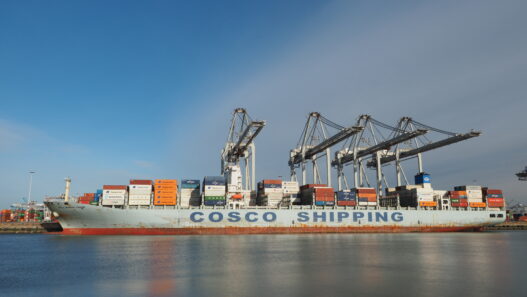
Another issue that often goes unnoticed is how much of the profit generated by tourism actually leaves the country. Major international tour operators, such as the German enterprise TUI, dominate a huge part of the market by controlling hotel packages, flights and even local excursions. Consequently, a large share of the money spent by visitors never reaches the Greek economy but instead ends up abroad.
Meanwhile, Greece is left to deal with the economic, environmental and social consequences, while earning only limited revenue from low-budget tourism. In the end, what remains in the country is mostly the income from food, souvenirs and cheap services, as if Greece is selling only gyros and sunsets while others take the real profit.
Like Penelope: Greece’s Endless Weaving of Tourism and Loss
Tourism in Greece is undeniably a major sector that offers many advantages. However, it is evident that Greek tourism is not following a sustainable path, neither for the people nor for the environment. This is reflected in the latest Eurostat report where Greece ranks first, with more than 46% of its population aged 16 or older unable to afford even a week-long vacation.
This situation is not only the result of inflation but a combination of all the problems mentioned above: economic dependence, social inequality and environmental degradation. If Greece does not change its governance and restructure its tourism model, it could soon face the same anger we’ve already seen in places like in the Canary Islands, where locals are protesting against mass tourism and its impact on housing and water.
All these issues are all linked, trapping Greece in a cycle that stops real growth. Like Penelope unweaving her own work, Greece keeps undoing its progress, building its future in the morning, only to tear it apart by night.