








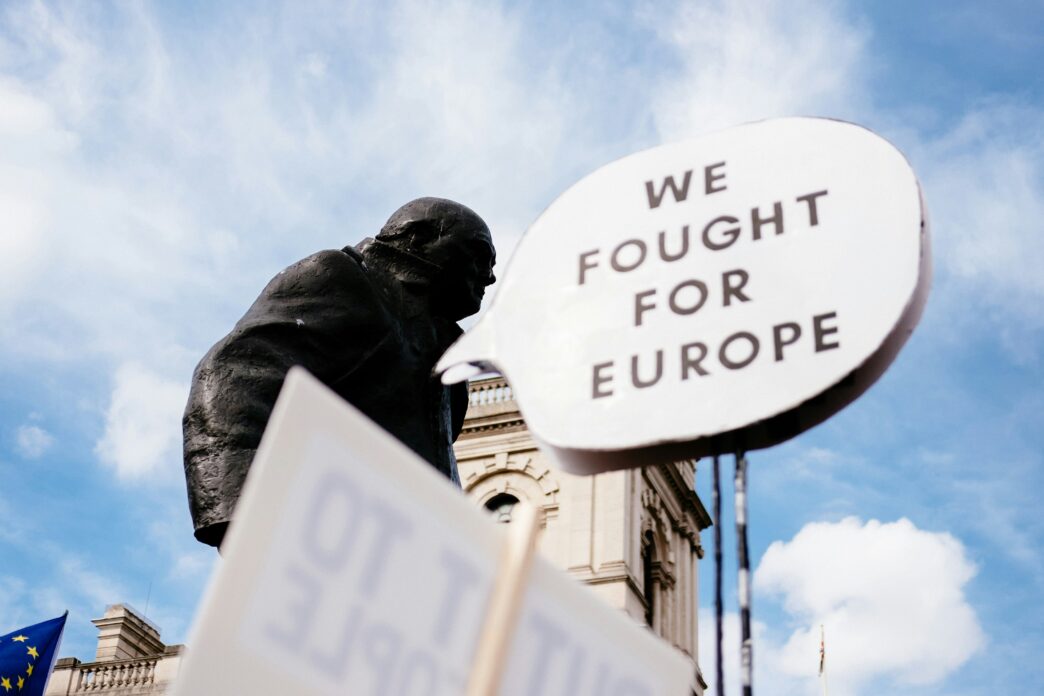
Imagine this: the year is 2029 and the Alternative für Deutschland (AfD) has won Germany’s federal election. In France, Marine Le Pen (or her protégé, Jordan Bardella) claimed the presidency back in 2027. The two major engines of European integration have veered off course simultaneously. Europe finds itself staring down a nightmare scenario. They say history doesn’t repeat itself, but sometimes it rhymes.
The Storm Before the Fall
This timeline is not speculative fiction; it is written in the political calendars of Europe. Barely six months after Friedrich Merz took office in Germany in 2025, the Alternative für Deutschland (AfD) surged past the Christlich Demokratische Union Deutschlands (CDU) in national polls with 26% support, an increase in support that would have been unthinkable a decade ago. While federal elections are not due until 2029, the signal is unmistakable. The picture in France is even more precarious. Governments fall with the regularity of autumn leaves, and each collapse fuels public frustration. The Rassemblement National, long dismissed as unelectable, now polls at 32%, placing Marine Le Pen and Jordan Bardella within striking distance of the Élysée. If Germany’s politics show a drift rightwards, then France shows a landslide. Together, the two trends foreshadow a storm that Europe pretends not to see.
What, then, would such political shifts mean for the European Union itself? Forget slogans like Gerxit or AdieuEU to announce their outright exit from the EU. After the bitter example of Brexit, these Eurosceptic parties are unlikely to make the same mistake of walking away. The new strategy is subtler: remain inside, enjoy the funds and market access, but hollow out the project from within. Viktor Orbán in Hungary has perfected this method. He rails against “Brussels elites” while banking EU subsidies that finance his domestic system. But Hungary is a small country that is a net receiver. Now imagine Germany or France applying the same playbook.
Internal Erosion: When the Core Turns Against Itself
The EU is not a nation state. It has no army to enforce its laws, no tax office to collect its revenues, and no single court police to ensure compliance. It works because its most powerful members have always chosen to make it work. Now imagine what could happen if France and Germany themselves decide to hollow the EU out. 
The rule of law would take the first hit. For decades, the primacy of EU law has been a bedrock principle: national courts apply them and governments respect the European Court of Justice even when judgments sting. But if Paris or Berlin begin openly questioning rulings, as Hungary already does, the effect would be seismic. Which smaller EU country could be expected to comply if the Union’s founders set the example of defiance?
From there, paralysis may spread. The Council, where ministers from all 27 member states meet, often relies on consensus or qualified majorities. A hostile France or Germany could obstruct almost every major file: budgets, enlargement, migration policy, climate legislation. Even when they do not have a direct veto, the weight of their opposition would affect others. The rhythm of integration, long powered by Franco-German compromise, would come to a halt.
The question of money would further deepen the pain. France and Germany are the biggest net contributors to the EU budget. If governments in Paris or Berlin decide to cut their commitments or attach domestic political strings, it is not only the institutions in Brussels that will suffer. It will also be the mayors in eastern Poland waiting for cohesion funds, the farmers in Spain relying on CAP payments, the innovation projects in the Baltic states. With the purse under threat, solidarity would shrink, and with it the sense of belonging to a shared European project.
External Shockwaves: Europe Without a Voice
Europe’s foreign policy is already fragile, operating on consensus and often reactive. With Paris and Berlin in nationalist hands, it would get worse.
Take Ukraine. The credibility of the EU’s collective response to Russia rests on France and Germany’s leadership. As the largest European contributors to Ukraine, they have been crucial in advancing sanctions, weapons deliveries, and financial assistance. Replace that with governments sceptical of ‘other people’s wars,’ and the common position collapses. Some states, like Poland and the Baltic countries, would continue to support Kyiv, but without Franco-German backing, Europe would appear divided and hesitant. Moscow would celebrate and draw the obvious conclusion: the EU no longer matters as a geopolitical actor.
The same dynamic would play out across Europe’s Southern Neighbourhood. Programs that stabilize migration flows, fund development in North Africa, or negotiate energy partnerships depend heavily on Franco-German financing and leadership. If those governments lose interest, the Union cannot simply outsource this financial leadership to smaller states. Gaps would open, competitors like China can then move in, and Europe’s influence fades.
Even the EU’s famed regulatory power, known as the “Brussels Effect”, would lose influence. Global corporations and foreign governments comply with European standards largely because they assume the EU can deliver stable, long-term rules. But with France and Germany undermining new legislation or dragging their feet on enforcement to protect their own national priorities, that credibility would erode as well. Why adapt to EU standards if the Union itself seems unwilling to uphold them?
Not a Manifesto for Despair
Despite the gloomy outlook, this is not a manifesto for despair. Europe has seen crises before: the empty-chair crisis of the 1960s, the oil shocks of the 1970s, the Yugoslav wars of the 1990s, the Eurozone crisis in the 2000s, Brexit in the 2010s, and the COVID-19 pandemic in the 2020s. Each time, the prediction of collapse was loud, and each time, the Union stumbled forward, often improvising but rarely reversing. That resilience is real, and it should not be forgotten.
But resilience is not destiny. The optimism of the decades post-WW2, when integration seemed both inevitable and irreversible, has long gone. Today, Europe’s institutions face not only external pressures but internal member states ready to undermine them deliberately. That is a new reality. If Germany or France were to also turn against the project, the Union could not count on inertia or habit to carry it forward.
So, what is required to avoid a political rupture? First, honesty. European leaders need to move beyond reassuring speeches and confront the sense of disillusion that runs deep among their citizens. The rise of AfD in Germany and RN in France show that cultural pessimism, resentment, and fear of decline are powerful political forces. They cannot be dismissed as fringe grievances.
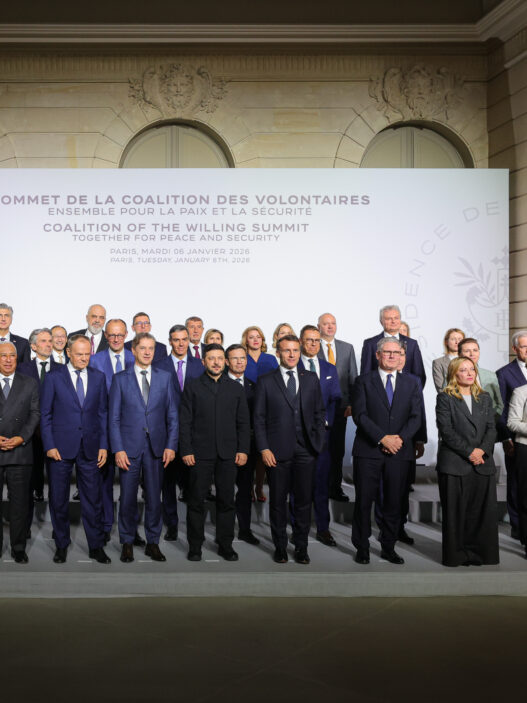
Second, determination. One of the EU’s founding fathers, Jean Monnet, famously said: “I’m not optimistic, I’m determined.” That should be the guiding principle for the EU now. Determination means preparing institutional safeguards for moments when one or more member states refuse to play by the rules. It means investing in coalitions of the willing, so that if the core wavers, the rest can still act. Finally, determination means remembering why integration happened in the first place: to prevent the return of nationalism as the dominant language of European politics. The success of the past seventy years was never “normal;” it was a historical exception. If we wish to preserve that exception, we need to fight for it with realism, not the complacent belief that Europe will simply endure because it always has.
This article is not optimistic. It is not meant to be. But it is meant to remind us that Europe has not yet exhausted its capacity to adapt. EU leaders must recognize that the golden run of automatic progress is over, and the age of determined defense must begin.