









At a Glance
In this legislative brief, I explain the European Commission’s proposal to modify the language and scope of the European Social Fund+ in order to face the EU’s strategic challenges (namely the invasion of Ukraine and climate change) more accurately. I do this by contextualising and outlining the proposal’s legislative lifetime and path through the European Parliament, and then describing its political implications.
Introduction
In April 2025, the European Commission published a proposal that aimed to reinforce the European Social Fund+ programme’s ability to respond to strategic challenges by enabling Member States to fund training, education, and cohesion policies that contribute to heightened security and decarbonisation. The Parliament analysed the proposal as procedure no. 2025/0085(COD), adopting it at First Reading and forwarding it to the Council after several significant amendments.
All of the information sourced for this article can be found at the European Parliament Legislative Observatory page for this legislative act, along with all its relevant documentation.
Deconstructing “COM (2025)0164”
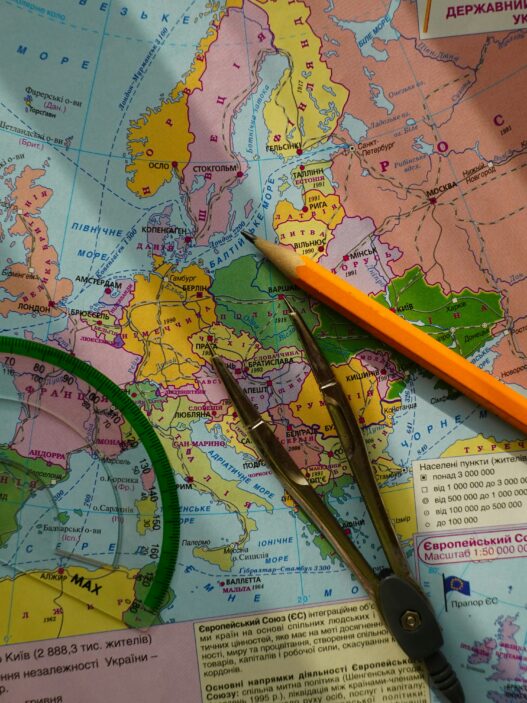
At its core, the Commission’s proposal aims to amend Regulation (EU) 2021/1057, which establishes the ESF+. These amendments involve co-financing rehabilitation and professional education programmes by up to 4.5% of the ESF+’s current budget as a one-off payment. NUTS2 regions, specifically on the borders with Russia, Belarus and Ukraine, are expected to receive up to 9.5% as a one-off payment. Regions are only eligible for this funding if at least 10% of the ESF+’s budget has been allocated for programmes covered by Regulation Articles 12a (STEP/net-zero skills), 12c (defence & cybersecurity skills), and 12d (decarbonisation adaptation). Co-financing can reach 95% depending on the type of priorities in NUTS2 border regions, and the Commission can retract or cut funding if the sustainability of the Union budget is compromised. 
The purpose of this extra funding is to reinforce social cohesion in the EU through promoting the learning of skills relevant to current strategic challenges. This is why skills related to the fields of defence, cybersecurity, and decarbonisation are highlighted by the proposal, as the Commission has deemed expertise in these fields to be increasingly necessary to maintain social cohesion and security.
As per the Committee’s report summary:
“Member States may decide to programme support for the development of skills in the defence industry and cybersecurity under dedicated priorities, prioritising dual use capabilities related to civil defence and preparedness, provided that micro, small- and medium-sized enterprises have priority access to the support.”
If the proposal is approved, Member States may amend their ESF+ programmes to match the new legislation’s objectives, while maintaining all labour rights obligations owed to programme beneficiaries.
Legislative Procedure and Major Amendments
On the 1st April 2025, a Legislative Proposal (ref. COM (2025)0164) looking to amend Regulation no. 2021/1057, which establishes the European Social Fund+, was published by the European Commission for the Parliament’s and the Council’s review.
Dutch MEP Marit Maij of the Socialists & Democrats was appointed Head Rapporteur of the committee responsible for the European Social Fund+, i.e., the Employment and Social Affairs Committee (“EMPL”). In the European Parliament, Committees are tasked with analysing proposals; the specific Committee depends on the theme the proposal deals with. They are constituted of MEPs who elect a Head Rapporteur, who is the person responsible for heading the legislative analysis of Commission proposals.
After the works over the Summer, the Parliament voted to adopt the proposal upon its First Reading on 10th September. Several amendments to the phrasing and content of the proposal were made. Through an institutional agreement made with the Council of the EU via a letter (see ‘Next Steps’), the proposal was adopted immediately by both Institutions.
Amendments included text committing the ESF+ to social cohesion and solidarity. Amendment no. 17 notably reduces the minimum threshold for ESF+ allocated budget set by the Commission so that its exceptional 4.5% aid can be activated (from 15% to 10%). Amendment no. 18 reduces the share of ESF+ funds that NUTS2 regions bordering Russia, Belarus and Ukraine must allocate in order to qualify for the higher 9.5% pre-financing. Additionally, it changes the general 15% threshold to 5% for such border regions.
Amendment no. 21 includes a provision in protection of current beneficiary rights (workers’ protections, legal rights, etc.) after alterations to the ESF+ programmes, and Amendment no. 26 specifies that small and medium enterprises shall have priority when it comes to programme support for cybersecurity and defence learning, while also emphasising young audiences and rural regions as a target of the programme. Amendment no. 28 makes similar specifications and alterations to the text.
Overall, Parliament adjusted the text to be more specific in its intended purpose and to solidify the social cohesion component of the ESF+. A clear example of this philosophy is the addition of small and medium enterprises as priority targets of the new programme initiatives in Amendment no. 26.
Context: what challenges?
On 5th March 2025, the “Union of Skills” Communication from the Commission set out an action plan to reduce the skill shortage with regard to “defence and the defence industry.” This communiqué showed the Commission’s desire to provide a specific framework in which that issue could be addressed. Similarly, regarding decarbonisation, another Communication titled “Clean Industrial Deal” produced on 26th February 2025 proposed a roadmap for maintaining competitiveness during the process of decarbonisation (“Green Transition”).
These Communications, paired with the EU’s main strategic threat (the Russian invasion of Ukraine), led to a perceived need to readjust the ESF+’s objectives and provide emergency measures.
Notably, the proposal’s motives imply that social cohesion is a pillar of European security:
“(…) it is of utmost importance to continue to invest in the social objectives of the Union through the ESF+, as social cohesion is a cornerstone of the Union’s democratic and societal resilience, which is essential for the purpose of facing threats of aggression.”
And also defends that readjusting ESF+ resources to match a new strategic framework must not come at the cost of the Fund’s social purpose. Although the proposal aims to provide one-off emergency support to increase capabilities in skills development, it holds that emergency measures cannot “obstruct the objectives of cohesion policy.”
Another driver of the proposal is to maintain competitiveness and innovation during the Green Transition, as the process of increasing the share of renewable energies and decarbonising industry could lead to productivity decreases if conducted carelessly.
Political implications
With this proposal, the European Commission aimed to strengthen the EU’s future in defence and security by allocating additional pre-financing into education programmes and initiatives in those fields, together with the Green Transition. This comes as a direct measure against the Russian threat, especially given that sensitive border regions are expected to obtain increased funds in comparison to other regions. The investment in programmes that help accelerate the Green Transition also suggests that the Commission wishes to accelerate the EU towards a future where it does not depend on fossil fuels, of which Russia is its largest supplier.
In this regard, Amendment no. 6 mentions the “White paper for European Defence – Readiness 2030” and explicitly states that this proposal sets a clear aim to expand and sharpen Europeans’ defence and defence industry-related skills. The Parliament’s proposed amendment of this clause makes clear that within the current ESF+ framework, it is already possible to support the development of skills in these fields, and rather focuses on the ESF+’s social justice component.
Such rhetoric stressing labour protections, social cohesion, and more forgiving thresholds for critical regions can perhaps be linked to the political leanings of the parliamentary group leading legislative works (the S&D), as it is known for its defence of the aforementioned focus points. Another example of this can be seen in Amendment no. 7, where the Parliament’s addition to the text states:
“Particular consideration should be given to the specific needs and circumstances of less developed regions and rural areas, which should benefit from the Green Transition and to ensure their integration into the Union’s broader economic, social and environmental development.”
Other committees’ opinions also stress the need not to compromise the ESF+’s social cohesion purpose. Notably, the Court of Auditors is wary that making use of emergency situations might erode the original point of the ESF+. The European Economic and Social Committee is favourable to a change of priorities given current challenges, but also agrees with the position that emergencies cannot change the ESF+’s aim of social cohesion.
Next Steps
On 23rd July, the European Council stated in a letter to the Parliament that it would approve the amended text of COM (2025)0164 at its First Reading in case the Parliament did so as well, in order to approve the proposal as swiftly as possible, signifying intent for an interinstitutional agreement. The Final Act was signed and published in the European Union’s Official Journal on 19th September, signifying its entry into practice. However, the Commission (which first published its proposal in April of this year) will only provide the planned funds if member-states manage to reprogramme their ESF+ projects until 31st December 2025.
The proposal reflects the EU’s shift toward integrating social and strategic priorities, with Parliament working to ensure that cohesion objectives remain central. Only time will tell whether this push holds practical results or not. However, one final remark must be made: whereas even the simplest EU legislative works may take years to be implemented, this relatively large-scale initiative took “only” six months from start to finish, which shows the EU does not always need to be the sluggish bureaucratic monster it is known as.