






Tizian Stocker: As Moldova heads into parliamentary elections this September under mounting pressure from Russia, how is the EU advancing its accession process? Is a 2030 membership realistic given Moldova’s current ability to meet the Copenhagen Criteria?
Raimar Wagner: The European Union has moved with unprecedented speed to advance Moldova’s accession since the country applied in March 2022. Moldova was granted EU candidate status in June 2022, and by December 2023, the EU decided to open membership negotiations. The first negotiating chapters were formally launched in June 2024. In fact, this year the EU approved a €1.9 billion Growth Plan – the largest aid package for Moldova since independence – aimed at accelerating reforms, strengthening institutions, and even doubling Moldova’s economy within a decade. Concrete integration steps are unfolding: for example, Moldova has disconnected from the Russian electricity grid and synchronised with Europe’s system via Romania, and from 2026, Moldovans will enjoy EU-wide free roaming and access to the EU’s SEPA payments zone.
EU leaders now speak of 2030 as a “realistic” horizon for a new wave of enlargement – including Moldova – provided reforms stay on track. I would call it possible but challenging. Moldova must fully satisfy the Copenhagen Criteria, which essentially means solidifying itself as a stable democracy and market economy under the rule of law. Here, progress is real but uneven. An independent monitoring launched this week by Expert-Grup shows that Moldova has implemented many EU-recommended reforms, scoring on average about 3.8 out of 5 in meeting initial commitments. Areas like public finance management and justice reform earned high marks (around 4 to 4.7/5), indicating genuine improvements in governance. However, the toughest reforms – fighting entrenched corruption and De-oligarchisation – still lag (only ~3.3/5). In other words, Moldova is strengthening its institutions but hasn’t yet eradicated the old networks of oligarchic influence. The European Commission’s latest assessments likewise praise Moldova’s “steady progress” despite Russia’s war-related disruptions, yet flag persistent deficits in the judiciary, public administration, and anti-corruption efforts. Freedom House still rates Moldova as only “Partly Free” (61/100) in its 2024 index – essentially a hybrid democracy. Clearly, the rule of law reforms must be seen through for EU membership to be realistic by 2030.
Tizian Stocker: What significant challenges remain, especially regarding governance, the rule of law, and the unresolved conflict in Transnistria? And to what extent does public support for EU integration make this election a defining moment for Moldova’s European future?
Raimar Wagner: First, governance and the justice system need deep, irreversible reform. Chişinău has embarked on vetting judges, overhauling anti-corruption agencies, and aligning laws with EU standards, often with the support of Romanian experts, but results take time. Oligarchic meddling in politics and the economy – exemplified by fugitive magnates like Ilan Șor and Vladimir Plahotniuc (now arrested in Greece) – is still a concern regarding the next parliamentary elections in September this year, even as authorities crack down on their networks. The Venice Commission recommendations on judicial independence must be fully enacted, and high-profile corruption cases must translate into convictions to convince EU partners.
Second, the unresolved conflict in Transnistria looms large. As you know, a breakaway region of Moldova remains under the control of pro-Russian separatists, with Russian troops still stationed there. Moscow has even used energy blackmail via Transnistria – cutting gas supplies in early 2025 to provoke crises. No EU candidate in recent memory has had a frozen conflict on its soil, so this is uncharted territory. The situation is somewhat analogous to Cyprus (which joined the EU with a territorial dispute), but Transnistria’s presence is a serious obstacle both politically and in terms of security. European leaders will need to be creative – perhaps insisting on a settlement, or carving out arrangements – but it undeniably complicates Moldova’s path. Third, Russia’s hybrid war against Moldova is ongoing: massive disinformation campaigns, cyber-attacks, and even alleged coup attempts have aimed to destabilise the pro-European government. The Kremlin openly seeks to sow doubt that “Europe will ever actually admit Moldova.” Indeed, pro-Russian media relentlessly claim the EU is stringing Moldova along. To counter this, the government in Chișinău has made EU-oriented reforms visible – cleaning up the judiciary, fighting propaganda – to show citizens that European integration brings concrete benefits. It’s a race against time to build resilience. The EU is helping here too, launching a new anti-disinformation hub for Moldova and Ukraine and deploying an EU mission in Chișinău to bolster security and governance.
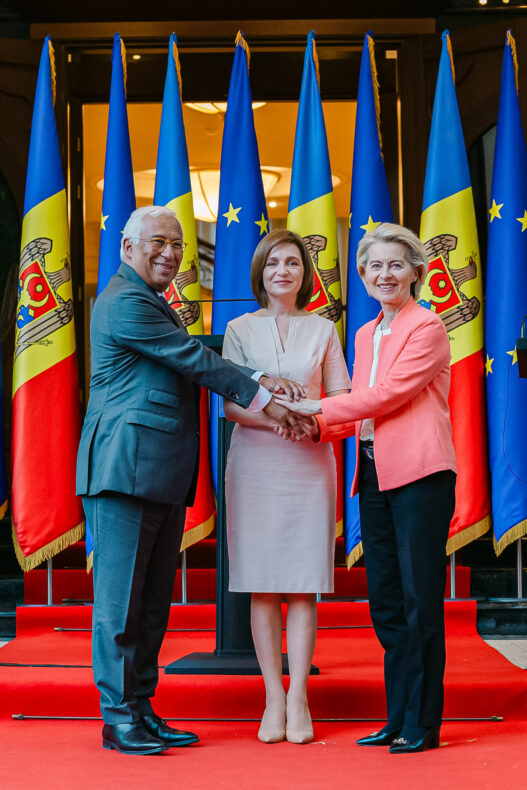
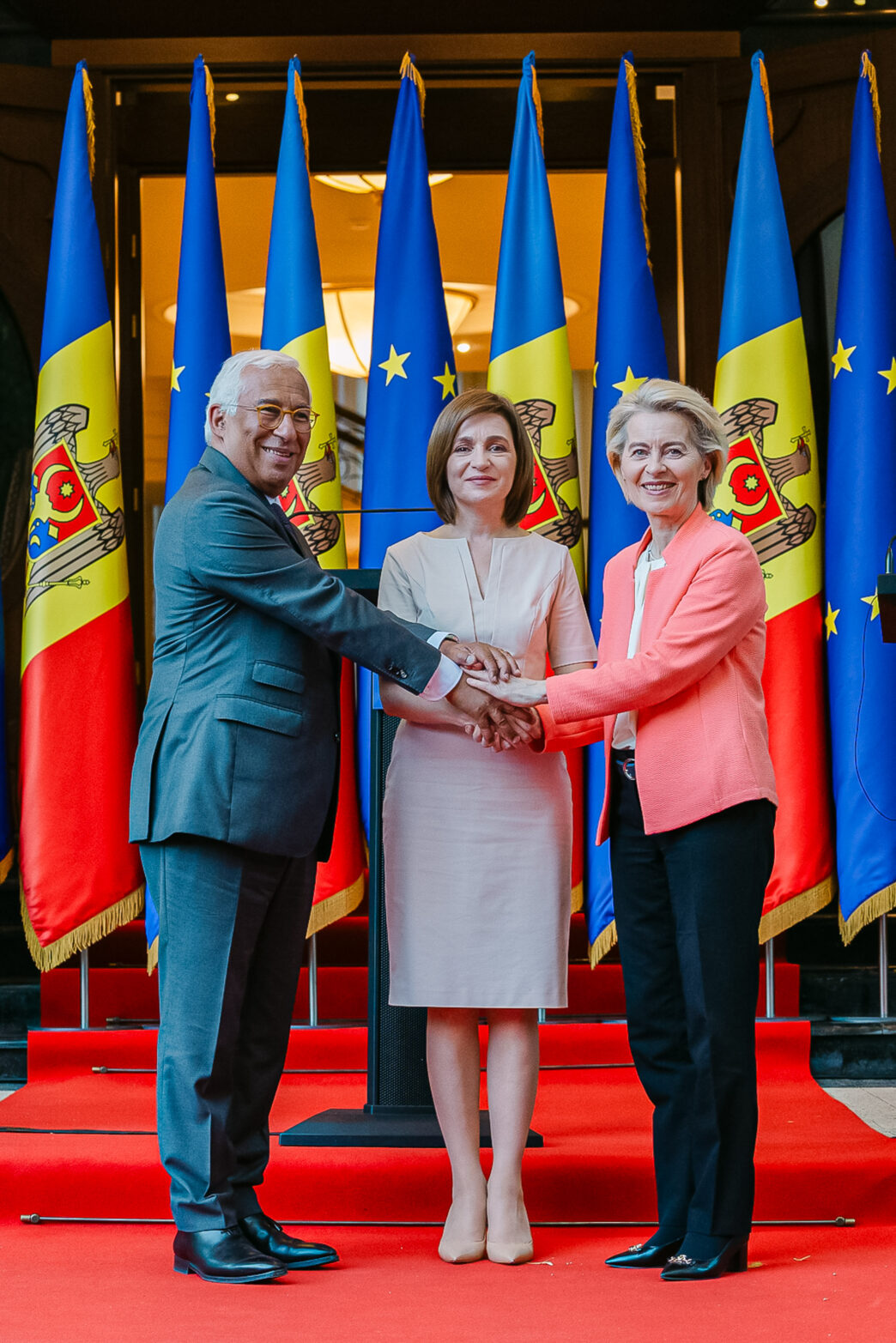
Finally, let’s talk about public support and why this election is truly a defining moment. Despite all the turmoil, the Moldovan public’s backing for EU membership has actually grown. Polls consistently show a solid majority favouring EU integration – roughly 60–63% in recent surveys – which is historic for a country that once appeared evenly split. Last year, in October 2024, Moldovans even voted in a national referendum to enshrine the “European path” in their constitution. It just passed by a razor-thin margin (about 50.7% in favour) amid intense Russian meddling. And though narrow, that outcome, along with a similarly tight pro-EU victory in the 2024 presidential race, showed that voters will brave propaganda and pressure to keep Moldova’s future in Europe. This upcoming parliamentary election on 28 September could lock in that choice – or jeopardise it. On one side, we have President Maia Sandu’s Party of Action and Solidarity (PAS), which has led the pro-EU reform push; on the other, a fragmented opposition largely composed of pro-Russian or populist forces. If the pro-European camp wins again, it will cement a mandate to press forward with EU accession reforms at full speed, potentially making the 2030 timeline attainable. Conversely, if pro-Moscow parties or those ambivalent about the EU gain power, Moldova’s European future would become uncertain. Given the stakes, Brussels is watching closely: EU leaders even held a special summit in Chișinău in July to signal strong support ahead of the vote. In sum, public sentiment is now mostly aligned behind the EU course – but it’s this election that will decide whether that popular will translates into political power to carry the project through. This is why September’s vote is a make-or-break moment for Moldova’s European destiny.
Summary by Raimar Wagner:
In short, Moldova is closer to the EU than ever – but whether it arrives by 2030 depends on the outcome of these elections and the resilience of its reforms. The EU has moved decisively since Moldova applied for membership in 2022. Candidate status was granted the same year, accession talks opened in December 2023, and the first chapters launched by mid-2024. A landmark €1.9 billion Growth Plan was adopted in 2025 to strengthen institutions and support Moldova’s transition toward the EU single market. Key reforms have already delivered tangible results: Moldova is synchronised with Europe’s electricity grid, will join SEPA and EU roaming zones in 2026, and benefits from EU missions on security and disinformation.
A 2030 accession is ambitious but not impossible. Moldova shows political will and administrative progress, yet major structural reforms remain unfinished. According to the July 2025 Expert-Grup Shadow Report, Moldova scores around 3.8/5 for implementing EU commitments. Justice and public finance reforms are advancing, with scores nearing 4.7/5. However, De-oligarchisation and anti-corruption reforms remain sluggish (around 3.3/5). The European Commission confirms “steady progress” but warns of institutional fragility and politicisation risks. Freedom House still labels Moldova “Partly Free” – a sign that a hybrid democracy and that democratic consolidation are far from complete.
Three core challenges persist. First, ensuring judicial independence and enforcing high-level anti-corruption measures remain critical. Moldova has begun vetting magistrates and reforming agencies, often with support from Romanian experts. Still, convictions are rare, and networks tied to oligarchs like Ilan Șor and Vladimir Plahotniuc remain a threat. Second, Transnistria – a Russian-controlled breakaway region – complicates Moldova’s accession path. No EU candidate has ever joined with an unresolved military presence on its territory. And third, Moldova is under active hybrid attack: disinformation, cyber sabotage, and destabilisation attempts continue, particularly in the run-up to elections.
Despite these challenges, public support for EU integration is remarkably resilient. Over 60% of Moldovans now favour EU membership. In 2024, citizens voted to enshrine the country’s “European path constitutionally.” Though the margin was narrow, it confirmed that the majority backs reforms despite Russian pressure. The upcoming parliamentary elections on 28 September 2025 are thus decisive. A renewed mandate for President Maia Sandu’s PAS would anchor the EU path institutionally. A pro-Russian or fragmented government could slow or derail the process.
Since 2020, Raimar Wagner has been Project Director for Romania and Moldova. He studied German and French and holds a master’s degree in Translation Studies from Lucian Blaga University in Sibiu. Between 2008 and 2014, he served as a local councillor in Sibiu representing the German minority. He is the co-founder of the Association for the Beautification of the City of Sibiu and the Sibiu County Tourism Association, and he is also a member of the board of directors of the Blue Cross of Romania. Since 2000, he has worked as a journalist for the Allgemeine Deutsche Zeitung. In 2007, he entered the tourism sector as an independent entrepreneur. Between 2009 and 2014, he developed social projects for the German community. Starting in 2014, he served as Project Coordinator for Romania within the Friedrich Naumann Foundation for Freedom.