








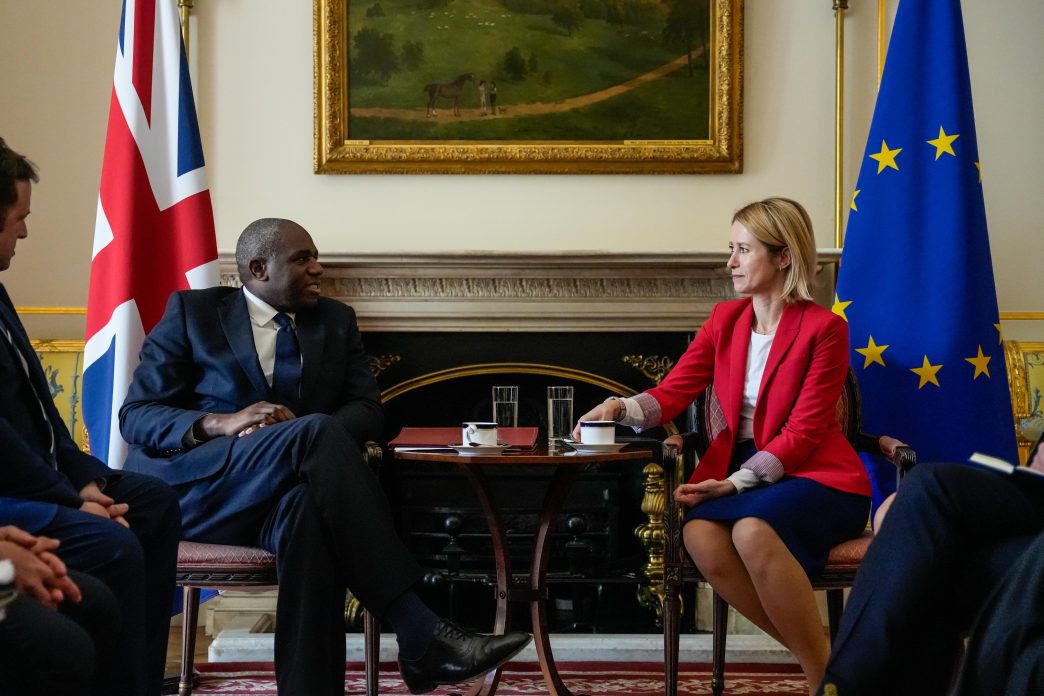
When Keir Starmer hosted the European Political Community summit at the Blenheim Palace in July 2024, the symbolism was apparent. The same venue where Winston Churchill was born, a leader synonymous with British resistance to continental domination, welcomed European leaders in a spirit of cooperation rather than confrontation. The contrast with Starmer’s predecessors could not have been starker: where Boris Johnson threatened to override international agreements, Liz Truss further strained relations, and Rishi Sunak remained cautious, Starmer adopted a friendly approach to Europe within months of taking office.
This diplomatic shift represents the future of relations between the United Kingdom and the European Union. It reflects a recognition of a reality that previous Conservative governments had ignored: the UK and the EU remain linked, each diminished by the other’s absence from meaningful cooperation. While Brexit determined the legal framework of this relationship, it could not dissolve the economic, security, and geopolitical interdependence that leaves both stronger together than apart.
The question facing us today is not whether Starmer has improved the tone of UK-EU relations but rather how effectively his strategy addresses this interdependence in the post-Brexit era.
The post-Brexit Inheritance
To understand Labour’s approach towards the relationship between the UK and the EU, one must first look at the depth of the damage that was done to UK-EU relations during the Brexit process and its aftermath. The relationship that the Labour government inherited was characterised by legal disputes and a pervasive sense that the UK had chosen confrontation over cooperation as its approach to continental Europe. 
The Brexit negotiations themselves had been bitter, but the post-departure period proved even more damaging to long-term relations. Two major agreements dominated this landscape: the Trade and Cooperation Agreement (TCA) and the Northern Ireland Protocol (NIP). The TCA created new trade barriers and regulatory divergences that made business relationships complex, and it reduced economic integration of the UK in the European market. Meanwhile, the Northern Ireland Protocol’s existence resulted in constitutional and political conflicts, with Boris Johnson’s government threatening to trigger Article 16, creating uncertainty about the UK’s commitment to its own agreements.
Johnson’s government then introduced the Internal Market Bill (IMB), legislation designed to establish principles for the UK’s internal market for goods and services across England, Scotland, Wales, and Northern Ireland after the Brexit transition period. The political turmoil that followed was rapid: Brandon Lewis, the Secretary of State for Northern Ireland, admitted in the House of Commons that the legislation would break international law. Also, former Prime Ministers John Major and Tony Blair publicly criticised the implementation of the IMB. (For more information, read this briefing by the European Parliament).
The Liz Truss premiership, though limited in duration, occurred during a period when mutual trust between the UK and the EU was already fragile. Her government’s approach did not offer the clarity or stability that many European leaders were hoping for. Instead, it seemed to confirm the growing sense in Brussels and other capitals that the UK’s direction could change sharply from one administration to the next. This uncertainty made cooperation harder.
Rishi Sunak’s premiership, though more stable than Truss’s, maintained a cautious distance from the EU. His government’s negotiation of the Windsor Framework helped address specific questions about the NIP. However, this action was more about solving an urgent problem than starting a broader reset in the overall relationship.
Together, these three Conservative governments left behind a fractured relationship shaped by reactionary decisions and political instability. The Labour government inherited not a clean slate, but a landscape defined by broken trust and instability, making the task of rebuilding both urgent and fragile.
Labour’s Vision of Europe
After years of tense relations between the EU and the UK, the first year of the Labour government under Keir Starmer’s premiership has brought a meaningful shift in approach. Starmer has not promised a dramatic change, and he has not tried to undo Brexit either. Instead, he chose to improve the relations with dialogue over distance. From the outset, his government has signalled an intent to rebuild trust and explore areas of shared interest.
The European Political Community summit at Blenheim Palace could be seen as a clear example of this new approach. By choosing to host this gathering of European leaders at such a historically significant location, the new government sent a message that Britain remains European in its orientation, even outside formal EU membership.
Beyond symbolism, the Labour government has also taken steps toward improving cooperation with the EU. At the EU-UK Summit held in May 2025, both sides focused on areas of mutual interest such as energy, climate, migration, and digital regulation, and this showed a shared willingness to move beyond the Brexit narrative. One development that drew particular attention was the UK’s decision to rejoin the Erasmus+ programme, a move that not only restored educational ties but also reflected a broader commitment to fostering direct cultural and societal connections between citizens.
To fully understand Keir Starmer’s approach to Europe, it is helpful to examine the last Labour governments under Tony Blair and Gordon Brown. In many ways, Starmer seems to combine elements of both. He shares Blair’s political instincts and commitment to cooperation, yet approaches European diplomacy with a level of caution, resembling Brown. This blend is shaped by context: Starmer operates outside the EU framework, with fewer mechanisms at his disposal.
Tony Blair’s vision for Europe was defined by ambition and selectivity. His government embraced European initiatives such as the Social Chapter and the Charter of Fundamental Rights. But on matters such as justice, home affairs, and eurozone membership, caution often prevailed. One of the most visible internal agreements arose over the euro. Blair supported joining the single currency as a political goal, but Brown, then Chancellor, introduced the idea of five economic tests and blocked the euro move on financial grounds.
During the Blair and Brown years, Britain’s immigration policy stood apart from the prevailing European approach. The 2004 enlargement of the EU, which allowed labourers from Central and Eastern Europe to access the UK labour market without transitional restrictions, is often seen as an example of Blair’s open stance. But this openness was based on economic calculation. The policy aimed to address labour shortages and sustain growth rather than promote migration on social or humanitarian grounds. While many European social democratic parties framed migration in terms of social inclusion and humanitarian values, Labour’s rhetoric, especially after the 9/11 attacks, became increasingly focused on control and security issues. Manifestos from the 2000s reflect this shift: migration was discussed in technical or security-related terms. These choices illustrate that even under pro-European leadership, Britain’s approach was shaped as much by domestic pressures as by European ideals.
Gordon Brown governed with a more cautious hand. He signed the Lisbon Treaty and worked closely with European partners during the 2008 financial crisis. But his language in Britain reflected increasing political pressure. His use of the phrase “British jobs for British workers” marked a rhetorical break from the EU’s principle of free movement, even if it was not accompanied by concrete policy changes. This difference between public messaging and European commitments hinted at some of the deeper tensions that would later fuel the Brexit frenzy.
Both leaders operated within the EU structures, which allowed them to influence policy from within. Starmer, on the other hand, must find ways to shape those policies from the outside. His task is difficult: to remain engaged without EU membership and to rebuild credibility. But his approach shows an understanding that sovereignty is not about standing apart but being heard on the issues that cross borders.
Starmer’s strategy appears to accept these circumstances and work with the pre-existing frameworks. Rather than pushing for a re-entry into EU structures, he is focused on rebuilding influence through summits and consistent dialogue. It is not a rapid process, but it suggests a long-term vision grounded in realism and national interests rather than nostalgia.
Why Do Both Sides Need Each Other?
Starmer’s approach is rooted in a simple but often overlooked truth: the EU and the UK remain deeply interdependent, whether politicians choose to acknowledge it or not. Unlike the rhetoric of past years, which often made the Brexit process look like a question of sovereignty and control, the current government seems more willing to engage with the truth that no side benefits from isolation from each other. This interdependence can be seen across several dimensions, from trade and finance to security and diplomacy.
From the UK’s perspective, cooperation with the EU is above all an economic necessity. As of 2024, the EU remains the UK’s largest trading partner with over half of the UK’s trade in goods. Moreover, the UK is the EU’s third-biggest trading partner, after the United States and China, accounting for 10.1% of the EU’s external trade.
These figures highlight a key truth: such deep interdependence is rarely found in relationships that have been severely damaged. They reflect a connection that continues to exist despite institutional upheaval. In practice, the UK may have left the EU, but it has not left Europe. Even outside the structures of membership, it remains an important part of the economic machinery that links the continent together. Also, geography may place the UK off the mainland, but its markets and services are deeply linked to the European system.
While economic ties alone demonstrate the links of post-Brexit, they are only part of a broader picture. Security cooperation has also emerged as a central point, particularly for matters where neither the UK nor the EU can act alone. At the EU-UK Summit in May 2025, both sides agreed to establish a Security and Defence Partnership. This partnership introduced regular high-level consultations, annual dialogues, and working-level coordination on issues such as cybersecurity, counterterrorism, and arms control. The agreement focuses on joint priorities including Russia, the Western Balkans, and hybrid threats, and allows for mutual participation in key security forums like the Schuman Security and Defence Forum. More than a gesture of goodwill, this partnership responds to shared vulnerabilities that neither side can address alone. It reflects a recognition that effective security in today’s Europe depends not on institutional membership, but on sustained, structured cooperation.
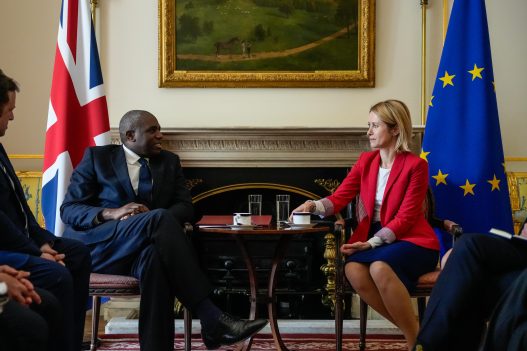
Diplomatic engagement has also been a significant feature of Starmer’s approach to Europe. While the European Political Community summit at Blenheim Palace symbolised a shift in tone, it was followed by steady efforts to strengthen political connections. Starmer has met with key European figures such as Ursula von der Leyen and António Costa, demonstrating a commitment to dialogue that goes beyond summit diplomacy. These meetings reflect a recognition that maintaining close political ties with the EU is crucial to the UK’s strategic relevance. What makes Starmer’s government different from its (post-Brexit) predecessors is its great effort to ensure that the UK’s European presence is continuous rather than occasional.
Altogether, these developments point to a deeper reality that the UK and the EU, despite Brexit, remain connected across many dimensions. This connection is not merely a legacy of past membership, but an ongoing necessity shaped by shared interest and global pressures. The Starmer government has pursued a more pragmatic path that accepts the limits of separation and focuses on rebuilding influence through cooperation. It is not a comprehensive reset but a recognition on both sides that complete detachment is neither realistic nor desirable.
Conclusion: Where do Things Stand?
Even though it is still too early to define the full direction of Labour’s European strategy, the steps taken so far reflect an effort to rebuild trust and functionality in UK-EU relations. Concrete actions, such as rejoining the Erasmus+ programme and launching the Security and Defence Partnership, demonstrate the Labour government’s determination to build a stable and functional relationship with the EU. At a time when the EU itself is navigating internal uncertainty, the UK’s engagement could position it as a meaningful partner rather than a distant observer. The summit held at Blenheim and Starmer’s ongoing dialogue with European figures have helped re-establish a visible and continuous diplomatic presence.
Still, the future of the engagement remains connected to domestic dynamics. So far, Starmer’s government has struggled to build the same momentum at home as it has abroad. Without stronger public support and political stability, its European approach may lack the durability for a long-term partnership. The rise of the far-right, both within the UK and across the EU, adds further pressure to an already fragile political environment. However, this shared vulnerability may also create a space for a different kind of relationship that is more grounded in political realities. If the Labour government can consolidate its domestic standing, its European policy may evolve into a more confident and enduring strategy. Though the journey is not straightforward, continued engagement could redefine UK–EU relations on more developed and durable terms.