










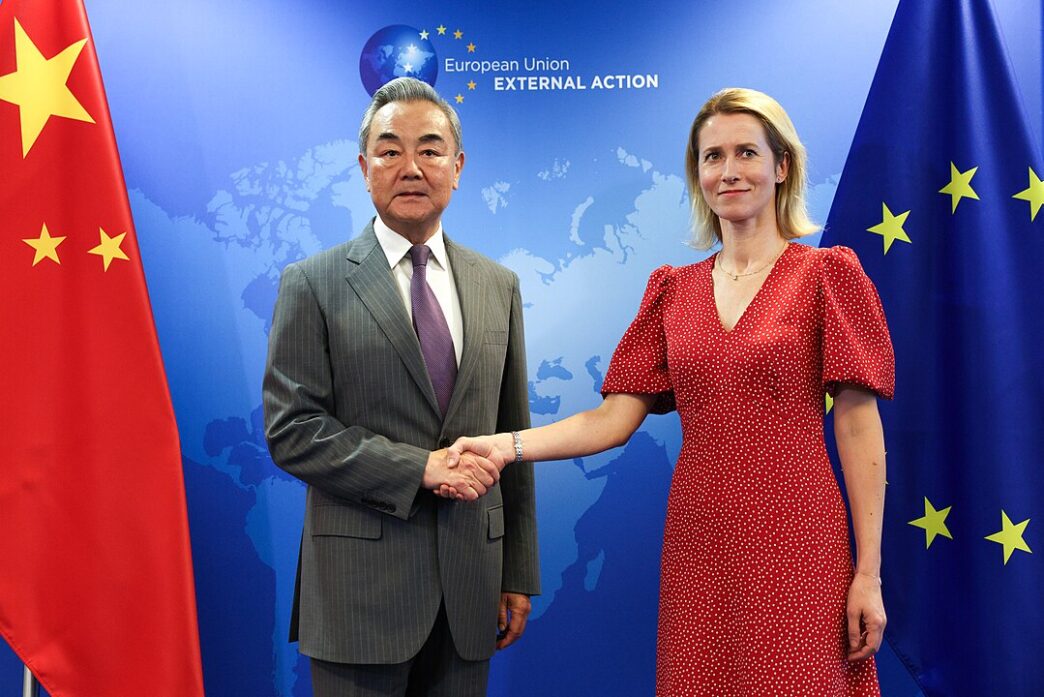
Introduction: Why Europe Cares About the Indo-Pacific
“The Indo-Pacific is not just a region; it is the crossroads of global power and prosperity.” This insight explains why the European Union (EU) has shifted its strategic focus towards a region that accounts for roughly 60% of global GDP and nearly 70% of worldwide trade flows, as outlined in the EU Strategy for Cooperation in the Indo-Pacific. Stretching from the eastern coasts of Africa to the Americas, the Indo-Pacific region encompasses major economies such as China, Japan, South Korea, and the diverse ASEAN bloc, together playing a pivotal role in shaping the future of global security and trade. Traditionally Atlantic-centric, the EU has begun to embrace this dynamic region through its 2021 Strategy for Cooperation in the Indo-Pacific, signalling a growing awareness of the Indo-Pacific not only as an economic hub but also as a geopolitical arena where rules and values are contested. In the following explainer, we detail how the EU’s Indo-Pacific strategy is a pragmatic, values-driven pivot that prioritises sustainable partnerships while addressing institutional fragmentation and limited capacity for power projection.
The EU’s Indo-Pacific Strategy: Pillars and Pragmatism
The EU’s 2021 EEAS Strategy for Cooperation in the Indo-Pacific outlines a multifaceted approach centred on three core pillars: sustainability, connectivity, and maritime security. Sustainability focuses on climate action and biodiversity preservation to address environmental vulnerabilities in the region. Connectivity aims to develop digital and physical infrastructure to facilitate seamless trade and information flows. Maritime security concentrates on safeguarding freedom of navigation in sea lanes, which are vital to global commerce, most notably the contested South China Sea.
Between 2021 and mid‑2025, the EU launched over 30 green and digital initiatives worth billions of euros under frameworks such as Global Gateway—highlighted by a €4.7 billion investment package for South Africa in March 2025 and a €1.2 billion Africa‑wide commitment announced in June—demonstrating its commitment to offering sustainable alternatives to China’s Belt and Road Initiative. Unlike the United States’ predominantly military-led Indo-Pacific strategy or China’s assertive combination of infrastructure investment and territorial claims, the EU champions a partnership-based model. This approach emphasises multilateral cooperation, transparency, and respect for international law, positioning the EU as a normative power rather than a “hard power” competitor.
Institutional Architecture and Member State Roles
EU engagement in the Indo-Pacific operates through a complex interplay of supranational institutions and member states, reflecting both coordination and fragmentation. The European Commission leads trade and digital policy initiatives, exemplified by the EU-Japan Economic Partnership Agreement (EPA), one of the bloc’s most comprehensive bilateral trade agreements. The European External Action Service (EEAS) manages diplomatic outreach, facilitating dialogue with ASEAN members and participating in wider regional security forums, including engagements with “the Quad” (Australia, India, Japan, and the United States). 
At the member state level, distinct roles reflect each country’s strategic capabilities and historical connections. France bolsters the EU’s presence with a modest projection of hard power, leveraging its military assets and naval bases in overseas territories like Réunion and New Caledonia. Germany prioritises economic diplomacy, focusing on trade and investment links, while the Netherlands leverages its port economy expertise to advocate for maritime law enforcement and freedom of navigation.
Despite these contributions, institutional fragmentation remains a persistent challenge. Around 65% of Indo-Pacific initiatives are driven by the European Commission, with a focus on trade and development, while the remaining 35% are bilateral efforts led by individual member states, often with overlapping mandates or diverging priorities, as outlined in a 2022 ECFR report. This division complicates the EU’s ability to present a unified strategic posture, especially in managing sensitive relations with China.
Engagement with Regional Partners: Achievements and Tensions
The EU’s relations with Indo-Pacific partners reveal both significant progress and persistent complexities. With Japan and South Korea, the EU has forged deep digital and economic partnerships. For instance, EU–Japan cooperation on semiconductor supply chains intensified from 2022 to help address global chip shortages and bolster technological sovereignty. Trade volumes underscore this strength: Since the EU–Japan Economic Partnership Agreement came into force in February 2019, total trade in goods has surged by approximately 20%, reaching around €141 billion in 2022. Thus, Japan is now the EU’s seventh-largest trading partner, accounting for roughly 2.7% of the EU’s total external trade.
China remains the EU’s largest trading partner, with bilateral trade valued at €586 billion in 2023. However, the relationship remains fraught with tension. Since 2019, when the EU formally characterised China as a “systemic rival,” Brussels has struggled to reconcile its deep economic ties with growing concerns over human rights, unfair trade practices, and Beijing’s assertive behaviour in the South China Sea. This includes coercive actions against Southeast Asian claimants and threats to maritime freedoms, as highlighted in recent reports. The stalled Comprehensive Agreement on Investment (CAI) continues to reflect the uneasy balance in EU–China relations.
ASEAN presents both opportunities and challenges. The bloc’s significant trade with the EU (valued at €272 billion in 2023) illustrates its economic importance. Yet, ASEAN’s internal diversity and divergent responses to South China Sea disputes complicate cohesive EU engagement. The EU’s strategic partnership with ASEAN prioritises capacity-building in maritime security and climate resilience, but it must carefully navigate intra-ASEAN sensitivities.
Strategic Limitations: Military Capacity and Political Divergence
Despite these contributions, political disunity continues to undermine coherence. A 2022 survey by the ECFR revealed a roughly 40% alignment deficit among EU member states on China policy, with some prioritising economic engagement while others adopt more cautious or confrontational stances. This divergence is particularly pronounced in areas such as human rights, investment screening, and diplomatic strategy. While France contributes limited military capacity, the EU still lacks a unified maritime security doctrine or a permanent Indo-Pacific naval presence.
Political disunity continues to hinder a coherent EU approach towards China. A 2023 survey conducted by the ECFR revealed that 43% of member state representatives view China primarily as “a necessary partner,” while 24% see it as “a rival” and 11% label it “an adversary.” This fragmentation reflects deeper strategic divergences, complicating efforts to present a unified stance on issues ranging from human rights to economic competition, and ultimately undermining the EU’s capacity to respond effectively to regional and global challenges.
Moreover, the Indo-Pacific is a crowded strategic arena. Security arrangements, such as the AUKUS pact and the Quad, have strengthened US-led frameworks, sidelining the EU’s normative, partnership-focused approach. Without leveraging its unique strengths in economic diplomacy and sustainability, the EU risks marginalisation.
Prospects and Challenges: Navigating the Future
Despite the challenges, significant opportunities remain for the EU to strengthen its presence in the Indo-Pacific, especially through economic initiatives and the green transition. The Global Gateway initiative aims to mobilise up to €300 billion in investments between 2021 and 2027, targeting sustainable infrastructure, digital connectivity, and climate resilience across the region. This ambitious commitment highlights the EU’s resolve to foster long-term partnerships and promote sustainable development in the Indo-Pacific.
However, escalating US-China tensions pose risks to EU neutrality, with potential spillovers affecting trade routes, investment flows, and regional security. The EU must navigate these risks carefully, avoiding entanglement while defending its strategic autonomy.
Institutional cohesion is essential for the EU’s engagement in the Indo-Pacific. The EU’s Strategy for Cooperation in the Indo-Pacific highlights the importance of strengthening policy coordination among member states to ensure a unified approach to trade, security, and human rights in the region. This strategy seeks to deepen cooperation with Indo-Pacific partners, underscoring the EU’s commitment to a rules-based international order and the collective management of global challenges. Successfully achieving this cohesion would significantly enhance the EU’s diplomatic influence and credibility as a reliable partner in the Indo-Pacific.
Conclusion: Establishing a Distinct and Measurable European Role in the Indo-Pacific
Europe’s Indo-Pacific approach offers a measured, rules-based alternative to both the US military strategy and China’s assertive model. By prioritising sustainable partnerships, connectivity, and maritime security, the EU positions itself as a normative power championing multilateralism and a stable international order. However, its success depends on translating strategic ambitions into concrete results. The EU underscores the timely delivery of its initiatives as central to its broader Indo-Pacific Strategy, focusing on cooperation, resilience, and sustainability. Ultimately, the EU’s influence will depend on overcoming internal divisions, protecting strategic autonomy, and achieving measurable impact amid a complex geopolitical landscape.