







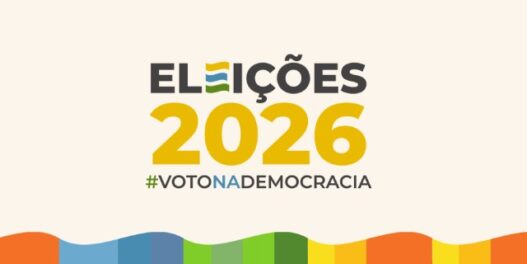
Brazil’s presidential election is heading to a runoff that could reshape Latin America’s political balance and the country’s relations with Europe, the United States and China. In the first round on 4 October, Senator Flávio Bolsonaro of the Partido Liberal (PL) won 47.03% of valid votes, ahead of President Luiz Inácio Lula da Silva of the Partido dos Trabalhadores (PT), who secured 45.16%. With neither candidate reaching an absolute majority, they will face each other again on 25 October.
The result underscores Bolsonarism’s resilience despite its founder’s absence from the ballot. Jair Bolsonaro, Flávio’s father, is serving his sentence under house arrest for plotting a coup after losing the 2022 election. His party also made significant gains in Congress: the PL won 19 of the 54 Senate seats contested and is expected to hold 28 of the chamber’s 81 seats from 2027, making it the largest party delegation. Whoever wins the presidency will have to negotiate congressional support. For Lula, re-election would not guarantee a majority willing to advance his programme.
The candidates
Flávio Bolsonaro, 45, has represented Rio de Janeiro in the Senate since 2019. The former president’s eldest son has put public security and the cost of living at the centre of his campaign, pairing tougher measures against organised crime with promises of lower taxes and restrained spending.
His candidacy has also faced controversy. The rachadinha case concerned allegations that staff returned part of their salaries during his time in Rio’s legislative assembly. The court dismissed it in 2022 after procedural rulings and the invalidation of evidence, without determining guilt or innocence. More recently, Intercept Brasil reported that Flávio sought funding from banker Daniel Vorcaro for a film about his father, with requests continuing during Banco Master’s mounting financial and regulatory difficulties. Flávio has denied wrongdoing.
Lula, 80, is seeking a fourth presidential term. He is campaigning on economic growth, historically low unemployment and a sharp decline in Amazon deforestation. Those achievements, however, were not enough to secure a first-round lead. Sovereignty and democracy also sit at the centre of his campaign. Opening the general debate of the UN General Assembly’s 81st session on 22 September, Lula declared that Brazil “is nobody’s backyard” and presented the election as a choice between democracy and denialism.
Flávio enters the runoff with a narrow advantage, but the contest remains open. Both candidates will seek to mobilise abstainers and attract voters who supported other candidates, together accounting for approximately 7.81% of valid votes. Endorsements may influence those choices, but do not guarantee a transfer of support.
Foreign interference allegations
Accusations of foreign interference have added another layer of tension to the campaign. The evidence requires distinguishing documented diplomatic and economic pressure, allegations of covert activity, and any effect on the vote.
In July 2025, the Trump administration announced tariffs of up to 50% on Brazilian goods, with significant exemptions, explicitly linking the measures to Jair Bolsonaro’s prosecution. Washington also imposed financial sanctions on Supreme Court Justice Alexandre de Moraes, who oversaw the case. The measures drew criticism within the United States. On 24 September, 31 members of Congress wrote to Secretary of State Marco Rubio, questioning actions that they argued could undermine Brazilian democracy. They also asked Washington to commit to recognising the certified election result.
Brazil had already denied visas to two US officials in July. Brazilian officials told Reuters they believed the planned visit was intended to undermine confidence in the electoral system. The State Department rejected that allegation and described the visit as routine.
Separately, Brazil’s attorney general requested an investigation into alleged US funding for groups opposing the Supreme Court. On 7 October, Federal Police closed the preliminary review after finding insufficient grounds to open a formal inquiry.
Brazilian intelligence also briefed French and German officials on alleged US and Russian interference, without providing details about the alleged Russian involvement. Washington had previously denied electoral interference and did not respond to Reuters’ request for comment on that report. These accounts do not establish that any alleged covert activity affected the first-round result.
What is at stake for Europe
Brazil and the European Union established a strategic partnership in 2007. The EU is Brazil’s second-largest trading partner and a leading foreign investor, while Brazil supplies agricultural products and minerals important to European industry. For Brussels, the runoff matters chiefly on two fronts: trade and climate policy.
The EU–Mercosur interim trade agreement has applied provisionally since 1 May 2026. The European Parliament is awaiting the Court of Justice’s opinion before deciding whether to grant consent. A Flávio Bolsonaro presidency, more closely aligned with Trump, could redirect Brasília’s diplomatic priorities and strengthen arguments among European opponents of the agreement. That would not necessarily disrupt economic ties with the EU.
Environmental policy presents a second test. The agreement includes commitments to tackle deforestation and permits suspension in the event of a serious breach of the Paris Agreement or withdrawal from it. In 2021, under Jair Bolsonaro, deforestation in Brazil’s Legal Amazon reached its highest annual level since 2006.
Even a Lula victory would not remove the uncertainty. The right’s increased strength in the Senate could constrain his environmental agenda, making congressional alliances as important to Brussels as the identity of Brazil’s next president.
Sources:
- https://resultados.tse.jus.br/oficial/app/index.html#/eleicao/6257/uf/br/cargo/1/vis/nominal/resultados
- https://www.reuters.com/world/americas/brazils-bolsonaro-remain-under-house-arrest-2026-07-03/
- https://llyc.global/wp-content/uploads/2026/10/BRAZIL-ELECTIONS-ENG.pdf
- https://www.tse.jus.br/eleicoes/eleicoes-2026-content/propostas-de-governo-dos-candidatos-ao-cargo-de-presidente-da-republica-eleicoes-2026/flavio-bolsonaro
- https://www.aljazeera.com/features/longform/2026/10/2/how-the-banco-master-scandal-injected-chaos-into-brazils-presidential-race
- https://www.intercept.com.br/2026/05/13/audio-flavio-negociou-vorcaro-milhoes/
- https://www.reuters.com/world/americas/brazil-needs-cooperation-not-intervention-fight-crime-lula-says-2026-09-22/
- https://www.tse.jus.br/eleicoes/eleicoes-2026-content/propostas-de-governo-dos-candidatos-ao-cargo-de-presidente-da-republica-eleicoes-2026/lula-propostas-de-governo
- https://www.reuters.com/world/americas/trump-hits-brazil-with-tariffs-sanctions-key-sectors-excluded-2025-07-30/
- https://www.reuters.com/world/americas/us-aimed-send-envoys-brazil-question-its-electoral-system-sources-2026-07-25/
- https://www.usnews.com/news/world/articles/2026-09-30/brazil-briefed-french-german-officials-on-alleged-us-russian-election-interference
- https://www.bbc.com/portuguese/brasil-63232593
- https://eur-lex.europa.eu/legal-content/EN/TXT/HTML/?uri=CELEX:52007DC0281&from=EN
- https://commission.europa.eu/topics/trade/eu-mercosur-trade-agreement_en