











Executive Summary
France is working to build a domestic drone-production industrial base through partnerships between defense firms and its automotive manufacturing sector. These efforts demonstrate the response Europe is making to the growing recognition of drones’ importance to security.
Like much of Europe and the wider world, France is drawing lessons from the Russia-Ukraine war about the importance of drones for the future of security. In an effort to bolster domestic drone production, France has enlisted its automotive manufacturing industry to produce drones and is moving toward industrial-scale production as partnerships between automakers, automotive suppliers, and defense firms take shape. Since the beginning of 2026, at least six defense-industry partnerships involving the automotive sector have been announced. The government of French President Emmanuel Macron seeks to combine the scale, automation, and cost discipline of France’s automotive sector with drone production, which is increasingly viewed as essential to future military capabilities.
This approach is consistent with the broader prioritization of drones across Europe at both the multilateral and national levels. The projects currently underway indicate that France is developing an industrial base potentially capable of producing tens of thousands of drones annually, a scale that would be difficult for defense start-ups to achieve independently. The objective is to enable France to produce drones rapidly and scale up production if required. France currently lacks substantial domestic drone-production capacity, and a July report by the French Senate’s defense committee found that the country’s existing stock of a few thousand drones was “insufficient to achieve a critical mass.”
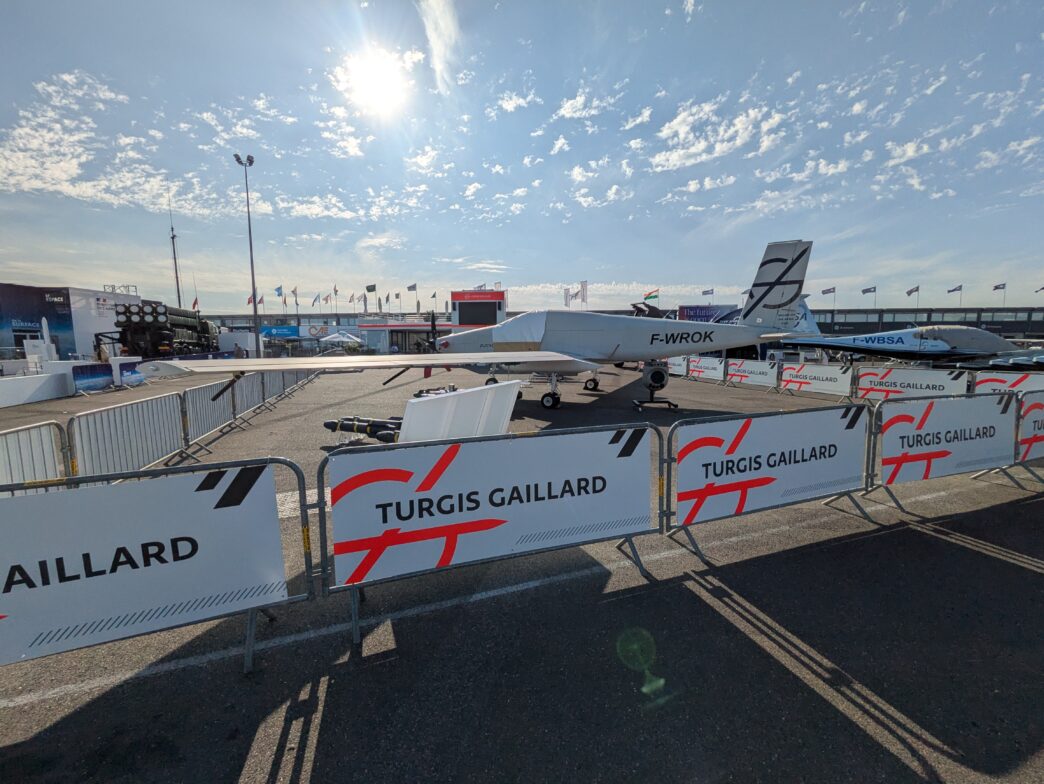
To address this capability gap, France has been encouraging partnerships between defense firms and its automotive manufacturing sector. Forvia, a major French automotive technology supplier, recently unveiled a partnership with a European defense company specializing in AI-powered counter-drone systems with plans to have an initial production of around 500 interceptor drones per month and an objective of increasing capacity to 1,000 per month. Renault, which is already working with Turgis and Gaillard to develop a long-range drone, also announced a partnership with Thales on June 16 to industrialize production of the Toutatis drone, with a target of up to 1,000 units per month from 2027.
This is the second defense partnership between the two companies, which are also working together on a military vehicle. The focus of the new partnership is loitering munitions, drones that hover over a target area before striking. Loitering munitions have played a major role in the Russia-Ukraine war. Thales currently produces around 100 Toutatis drones per year, but its partnership with Renault is expected to increase output by replacing 3D printing with large-scale plastic injection molding and adapting the drone’s design for higher-volume production. These changes include a 20 percent reduction in parts and 40 percent reduction in the fasteners.
Info box provided by Laksmitha Anindyanari:
Loitering munitions are weapons that combine the features of a drone and a missile. They can fly over or “loiter” around a target area for a period of time, allowing operators to identify and select a target before the weapon strikes it and is destroyed. Unlike conventional drones, which can often return after completing a mission, loitering munitions are designed as one-way weapons and have played a significant role in the Russia-Ukraine war.
Renault’s Chorus program with Turgis and Gaillard to develop long-range drones is expected to produce a first demonstrator by the end of the year, with projected production of 600 units per month at Renault’s Le Mans plant thereafter. Renault is also working with Belgian group John Cockerill on a ground drone. While Renault stresses that automotive manufacturing remains its core business, it also stated in February that it had been asked by France’s Ministry of the Armed Forces to strengthen the defense sector.
French drone manufacturer Delair also partnered with German automotive supplier Schaeffler in June to establish a production line capable of producing approximately 100 drones per day by November. If all these plans come to fruition, it has been estimated that the various collaborations could eventually provide France with capacity for up to 60,000 drones annually, significantly exceeding its current production capabilities.
While these plans would substantially increase domestic drone production in France, even producing 60,000 units annually would fall far short of what could be required in a high-intensity conflict similar to the Russia-Ukraine war. Ukraine currently produces an estimated 10 million drones per year and aims to produce 20 million annually. Ukraine has more than 160 companies producing FPV drones, alongside a broader ecosystem of manufacturers producing other unmanned systems, and is reportedly producing more drones than the Ukrainian military can purchase, prompting the government to cautiously allow manufacturers to export excess production.
While increasing drone production is difficult in itself, the greater challenge is creating the capacity to rapidly scale production without building stockpiles that could quickly become obsolete. This problem can be seen with how the US excalibur artillery stopped being used in Ukraine after Russian jamming reduced their hit rate from 55% in January 2023 to 6% by August. Hence, a major obstacle is finding the right balance between procurement and production, a difficult line to maintain given the long-term demand that defense firms typically require to incentivize investment in production capacity.
Impact on Europe
These developments in France are significant for Europe because France is one of the EU’s major military powers. Closing gaps in the domestic production of critical weapon systems, such as drones, will be essential to future European security. If France’s cooperation between automakers and drone manufacturers succeeds, it could also provide a template for other European countries to follow as Europe seeks greater strategic autonomy amid a reduced US security role. How the next decade unfolds will be crucial to determining Europe’s security in the future as this securitization effort and others play out across Europe.
Info box provided by Laksmitha Anindyanari:
Strategic autonomy refers to a country or region’s ability to make and implement decisions about its security and other strategic interests without being overly dependent on external powers. In Europe, the term commonly refers to strengthening the EU’s capacity to defend itself and develop critical capabilities, including military equipment and technology, while reducing reliance on partners such as the United States. It does not necessarily mean acting independently of allies, but having enough capabilities to act when necessary.
What to Look For
- Renault-Turgis and Gaillard drone demonstration: Whether the first demonstrator is delivered by the end of 2026 as expected.
- French drone production rates: Whether the announced production targets are reached in 2027.
- European manufacturing partnerships: Whether similar partnerships between automotive manufacturers and defense-technology companies emerge elsewhere in Europe.
AI Disclaimer: This briefing was edited and fact checked with the assistance of AI.
Sources: Breaking Defense, Defense News, Euro-Security, National Security and Defense Council of Ukraine, Kyiv Post Reuters, Renault Group.