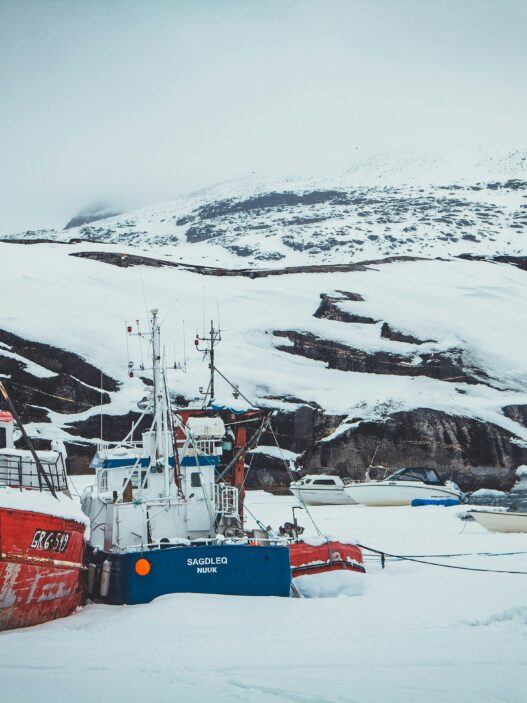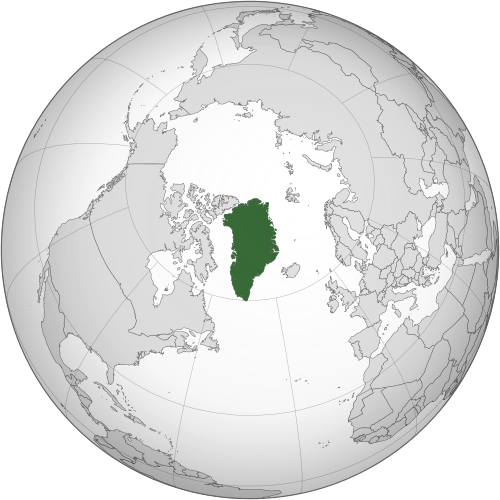




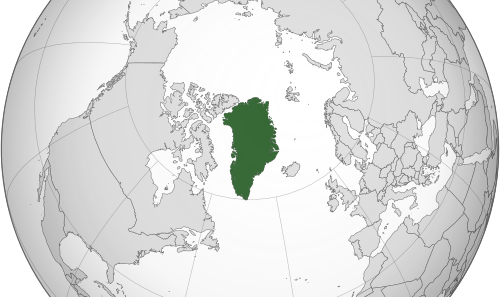




The Arctic is a region in which great powers are geopolitically more interested than ever before. The effects of climate change, such as rising temperatures and melting sea ice, are making the region more accessible than ever for scientific, commercial, and military purposes. In recognition of its growing importance, the Arctic Council (AC) was founded by the 1996 Ottawa Declaration. It is composed of the eight Arctic states – the United States of America, Canada, Iceland, Denmark (by way of Greenland), Norway, Sweden, Finland, and Russia – and its primary task is to facilitate cooperation between these nations on Arctic matters at high political levels. For Europe, and particularly for the EU member states involved in Arctic affairs, this cooperation is closely connected to questions of climate policy, environmental protection, research, and regional stability.
In international relations, the Arctic had long been regarded as a region of peaceful cooperation, low tensions, and governance insulated from broader geopolitics. Although debatable, this notion of Arctic exceptionalism has certainly changed in the 21st century, taking a turn towards militarisation and rising distrust between Arctic states. Following Russia’s 2014 annexation of Crimea and the commencement of hostilities in the Donbas, Russia-West relations became increasingly tense. Russia’s membership in the G8 was suspended, sanctions were introduced, and diplomatic relations worsened. Yet, the Arctic Council’s work continued.
The aim of this analysis is to explain how the Arctic Council could survive between 2014 and 2022 despite the rising tensions among its members, and how it sustained cooperation between Russia and Western states, including the European Arctic countries. A brief overview of the Arctic Council itself will first be provided, as it is necessary to understand the institution in order to understand how it could survive. This will be followed by an analysis of the 2014 crisis’s impacts on Arctic relations, before exploring in detail the events between 2014 and 2022.
The Arctic Council
To understand how cooperation could continue until 2022, an introduction to the functioning of the Arctic Council is necessary. The organisation developed from the Arctic Environmental Protection Strategy (AEPS) and the related Rovaniemi process. The start of this cooperation was facilitated by the Murmansk Declaration, in which the Secretary-General of the Soviet Union, Mikhail Gorbachev, called the Arctic a “zone of peace”. After negotiations lasting into 1995, US President Bill Clinton and Canadian Prime Minister Jean Chrétien agreed to support the establishment of an international organisation for Arctic cooperation. The Ottawa Declaration was subsequently signed in 1996 by all eight Arctic states. 
Uniquely for an international organisation, six indigenous groups represent the indigenous populations of the Arctic in the Council: the Aleut, the Athabaskan, the Gwich’in, the Inuit, the Saami and the Russian Indigenous Peoples’ organisations. The AC also has numerous observer states without voting rights, including European countries such as the United Kingdom and Germany, as well as Japan and China. Although applying several times, the EU has not yet been granted observer status, initially because of Canadian and later Russian objections (the former due to a dispute over an EU ban on seal products, the latter due to a general worsening of diplomatic relations after the 2014 Crimea crisis) Nevertheless, the EU remains relevant to Arctic affairs through its member states, policies and broader interests in environmental and scientific cooperation, and it participates as a de facto observer in the AC.
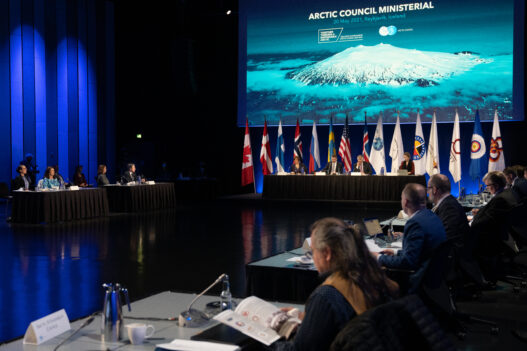
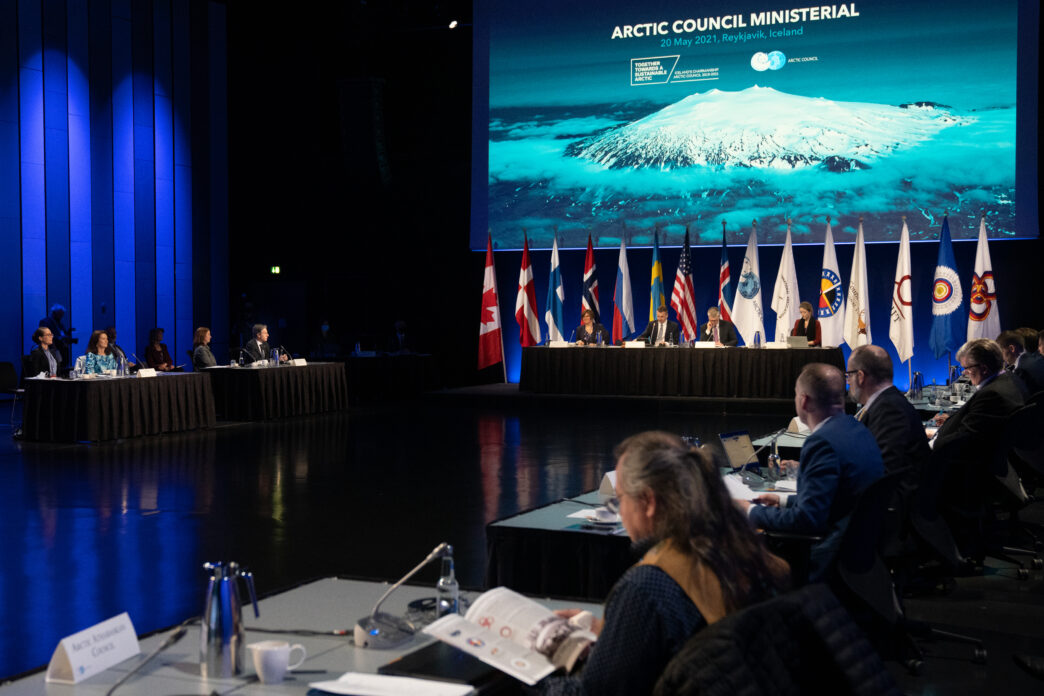
The most important political forum of the Arctic Council is the ministerial meeting, where the foreign ministers of the eight member states meet every two years at the end of each chairmanship. Ministers make decisions regarding proposed projects and initiatives and evaluate ongoing ones. Deputy ministerial meetings and Senior Arctic Officials (SAOs) provide coordination between ministerial meetings and prepare cooperation at the political level.
The Arctic Council is divided into six thematic working groups and other task forces responsible for implementing projects. These groups largely focus on technical and scientific issues. The Council operates by consensus: an initiative can move forward only if all members agree, with agreement required at working-group, SAO and ministerial levels. Because the AC was designed around depoliticised and technical cooperation, consensus has traditionally been easier to achieve than in more politically integrated organisations such as the European Union. Environmental management, search-and-rescue capabilities and scientific research generally serve the interests of all eight members.
The institutions of the Arctic Council therefore facilitate cooperation mainly by lowering transaction costs and providing a platform for information exchange. They also allow Arctic states, including the European members, to address common regional problems without requiring agreement on broader political questions.
The Impact of the 2014 Crisis on Arctic Relations
In early 2014, Russia occupied and annexed Crimea from Ukraine and commenced hostilities in the Donbas region. A broad political rupture followed between Russia and Western countries, including EU member states, which supported Ukraine and the rules-based international order. Apart from numerous sanctions, Russia’s participation in the G8 was terminated, and trust between the sides deteriorated significantly.
Because of increasing militarisation and politicisation in the Arctic, many expected regional cooperation to suffer as well. Russian President Vladimir Putin has placed growing emphasis on the Arctic since the mid-2000s in Russian national security strategy, identifying the region as important for national security and power projection. After the annexation of Crimea, some even feared that an attack against the European Union in Finland might follow, further worsening expectations for regional cooperation.
Yet, the Arctic Council continued its work largely unabated. Russia was neither removed nor sanctioned within the organisation. Working groups continued operating, and ministerial meetings were held as planned. Western states generally avoided directly linking events in Ukraine to Arctic cooperation. Devyatkin describes this period through the notion of “environmental détente”: cooperation on environmental and other technical matters enabled the Arctic Council to continue despite wider political and military tensions. This was particularly important from a European perspective, since environmental and scientific cooperation remained among the areas where practical contact with Russia was still possible. Understandably, this is the area that was perhaps the most impacted after 2022: without Russian data, European scientists simply do not have the whole Arctic picture anymore.
Cooperation in the Arctic Council from 2014
The first explanation for the continuation of cooperation is the institutional structure of the Arctic Council itself. Its decision-making procedure requires consensus from all member states, which encourages cooperation because environmental problems, scientific research and other shared challenges cannot be easily addressed unilaterally. The consensus requirement also discouraged individual members from politicising issues if doing so threatened agreement.
Another factor is the Council’s bottom-up structure. Unanimity is required not only at the ministerial level, but all the way throughout the decision-making process. Working groups and Senior Arctic Officials are largely composed of experts dealing with environmental, scientific and technical matters. Since initiatives often begin at the working-group level, they tend to have a narrow and relatively apolitical focus. Ministerial meetings generally build on work already agreed at lower levels rather than developing entirely new initiatives themselves. This structure helped European Arctic states maintain practical cooperation with Russia even while political relations were deteriorating elsewhere.
The rotating chairmanship also encouraged continuity. With only eight members and two-year chairmanships, each state could anticipate its opportunity to influence the Council’s agenda. Even after the 2022 crisis, this principle contributed to preserving the institution. Russia held the chairmanship when it launched its full-scale invasion of Ukraine. Although the Council’s work was subsequently suspended, the other member states did not abandon the organisation entirely, and when Norway took over the chairmanship in 2023, some activities were resumed.
The nature of Arctic Council projects provides another explanation. Many are long-term and require continuous monitoring and data collection. Russia plays a particularly important role because its coastline represents 53% of the Arctic seaside and its Arctic population of approximately 2.5 million makes up well over half of the roughly 4 million people living above the Arctic Circle. This gave Russia an incentive to participate while also making cooperation with it important for the other seven states. For European countries and the EU more broadly, Russian participation was therefore particularly relevant to obtaining comprehensive environmental and scientific information about the Arctic – which, as mentioned above, is not possible after 2022.
The inclusion of indigenous peoples also contributed to continuity, because these groups are directly connected to many Arctic projects and tend to focus on practical regional concerns rather than broader geopolitical disputes. Their participation therefore strengthened the Council’s concentration on Arctic issues.
Arctic cooperation did not stop in 2014, as demonstrated by the numerous initiatives launched during the following years. In 2014, the Arctic Economic Council was established to facilitate business cooperation and communication. In 2015, the Council addressed mental health and adopted the Marine Strategic Plan 2015-2025, establishing a framework for protecting marine and coastal habitats. In 2017, under US chairmanship, the Snow, Water, Ice and Permafrost in the Arctic (SWIPA) report examined the effects of climate change. The Agreement on Enhancing International Arctic Scientific Cooperation was also signed, while new observers, including Switzerland, were admitted. Under Finnish leadership, previous findings on Arctic climate change were brought together in a comprehensive report in 2019, while under Icelandic supervision a strategy to address microplastics was developed in 2020. Indeed, these environmental and scientific priorities also correspond closely to areas in which European states and the EU have strong interests. This both explains why the European Arctic states were very much invested in keeping the AC alive, but it also sheds light on the organisation’s importance for Europe.
These examples demonstrate that cooperation remained relatively healthy. Significantly, the major initiatives maintained a narrow and largely apolitical focus on science and the environment. Arctic exceptionalism therefore survived the immediate post-2014 crisis. The Council benefited from the fact that security questions remained outside its formal mandate.
Nevertheless, tensions became more visible after the start of the first Trump administration. President Trump increasingly framed the Arctic as an arena of great-power competition, particularly with Russia and China, and this approach began to affect the otherwise largely technical work of the Arctic Council. A clear example was US Secretary of State Mike Pompeo’s speech at the 2019 ministerial meeting in Rovaniemi, where he criticised Russian militarisation and warned against growing Chinese influence, asking whether the Arctic Ocean should become a new South China Sea.
Increasing militarisation by both Russia and Western NATO states further complicated cooperation. Russia increasingly viewed cooperation as insufficient to protect its regional interests, while the United States placed greater emphasis on geopolitical competition. These developments contributed to a decline in cooperation between 2019 and 2022. Notably, the Rovaniemi ministerial meeting in 2019 was the first in the Arctic Council’s history to end without a common declaration.
Although cooperation improved somewhat after the Biden administration took office, it did not fully return to its earlier level. The decisive breaking point came in 2022, when Russia’s full-scale invasion of Ukraine transformed relations between Russia and Western states. The other seven Arctic nations suspended their participation in the Council’s meetings. Russia was not formally expelled; instead, the so-called Arctic Seven refused to continue normal cooperation with it. Because the Council requires unanimity, progress even at the working-group level largely halted. With the transition from Russian to Norwegian chairmanship, activities were partially resumed without Russia, raising the question of whether the Arctic Council can function effectively as seven rather than eight.
Conclusion
The Arctic Council facilitated Russia-West cooperation after 2014 primarily because it focused on narrow, technical, and positive-sum issues such as science and environmental protection. Its bottom-up and consensus-based institutional design supported communication, while the participation of indigenous peoples helped maintain attention on practical Arctic concerns. This enabled European Arctic states to preserve meaningful cooperation with Russia even while political relations between Russia and the wider West, including the EU, deteriorated.
At the same time, this cooperation was fragile. Political tensions became increasingly visible from 2019 onwards, while militarisation and geopolitical competition weakened the idea of Arctic exceptionalism. The full-scale invasion of Ukraine in 2022 demonstrated the limits of the Council’s institutional insulation: a major external crisis was sufficient to halt cooperation almost completely. Since the second Trump administration entered office in 2025, the focus of Arctic politics has further shifted towards power politics, resource extraction, and a scaling back of climate change-related research, which complicates the already problematic functioning of the Arctic Council.
From a European and EU perspective, this breakdown is particularly important because environmental and scientific challenges in the Arctic cannot be addressed comprehensively without Russian participation. Russia controls a very large part of the Arctic and possesses information and territory necessary for many regional projects. Cooperation without Russia therefore makes research, environmental monitoring, and broader Arctic governance considerably more difficult.
In conclusion, the Arctic Council sustained meaningful cooperation between Russia and Western states after the 2014 crisis largely because of its apolitical, technical, and consensus-based structure. However, once the broader geopolitical environment changed decisively in 2022, this institutional insulation proved insufficient. It remains to be seen whether the Council can reform itself, whether political conditions will eventually allow cooperation with Russia to resume, or whether the current confrontation marks the end of Arctic exceptionalism.