








Key takeaways
The Evian G7 summit (15–17 June 2026) produced nine thematic joint declarations covering geopolitical crises (Ukraine, the Middle East, Lebanon), macroeconomic imbalances, digital and AI governance, critical minerals, health, and illicit trafficking. Leaders projected strong political unity, notably through reinforced military and economic support for Ukraine and a shared commitment to freedom of navigation in the Strait of Hormuz, while avoiding open public disagreements between Washington and its European partners. For the European Union (EU), the summit both reinforced its profile as a regulatory power (AI, migration, anti-trafficking) and highlighted persistent vulnerabilities, notably its dependence on Chinese markets and technologies and its exposure to increasingly protectionist US trade and industrial policies.
A united front masking strategic constraints
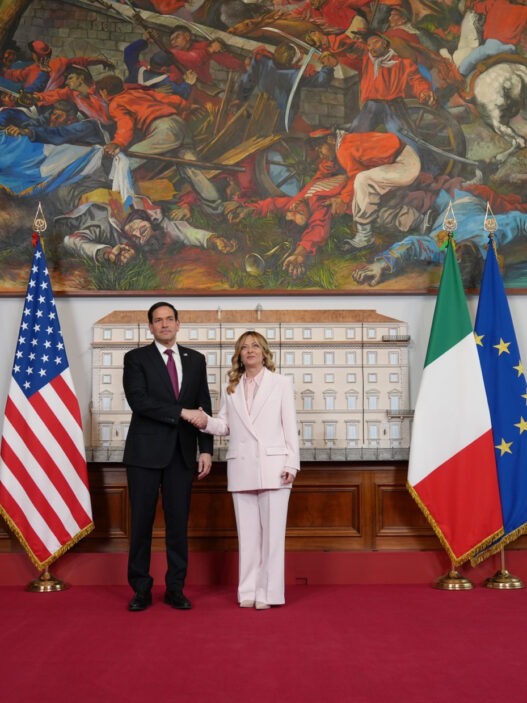
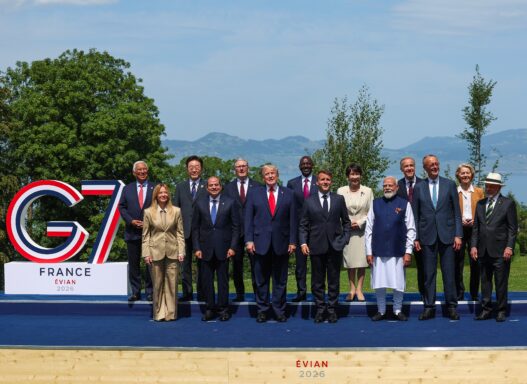
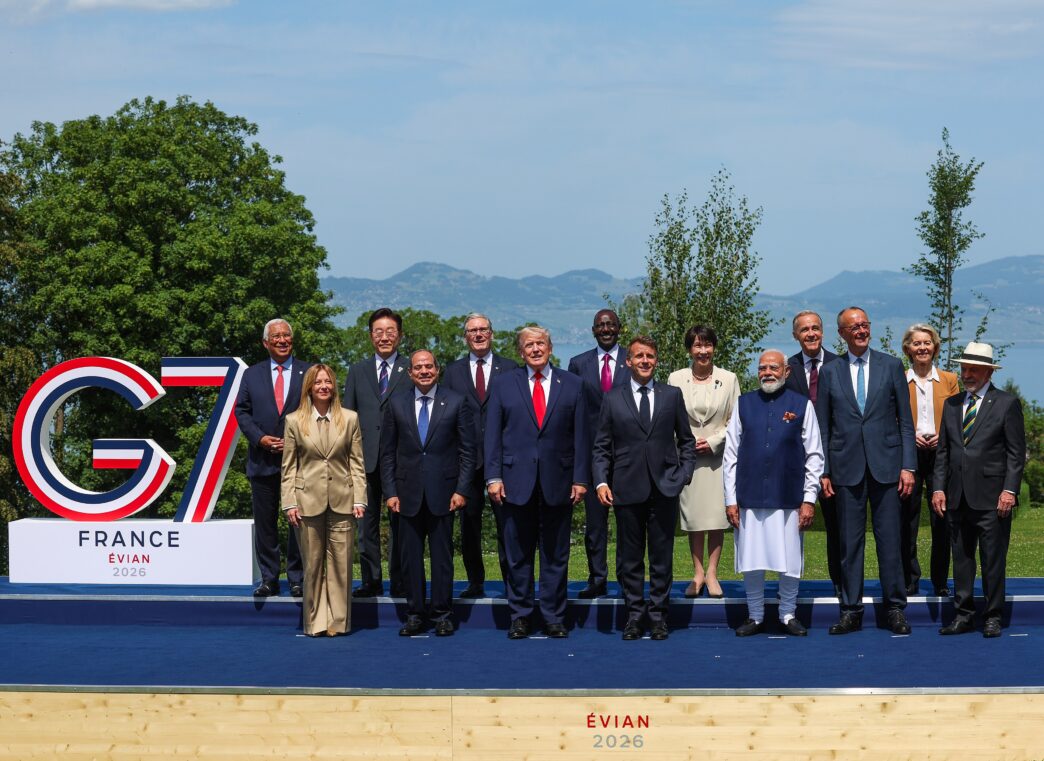
The EU was represented by the Presidents of the European Council and the European Commission, alongside France (host), Germany and Italy. Although European actors formed a majority around the table, they remained politically and economically constrained by US leverage over security guarantees, market access and technology ecosystems.
Under the French presidency, the agenda focused on macroeconomic imbalances, resilient supply chains—particularly for critical minerals—and AI governance. This approach sought to balance US calls for a tougher stance on China with the EU’s interest in preserving export markets and investment flows. Media analyses nevertheless pointed to managed tensions over trade, energy, automotive policies and the green transition. France’s decision to remove climate from the core joint declarations to avoid direct confrontation with Washington has been widely interpreted as a revealing compromise for European climate leadership.
Strategic signals for the European Union
The decision to adopt multiple thematic declarations instead of a single communiqué reflects an effort to project operational unity despite deeper divisions over trade and China. While the emphasis on macroeconomic coordination and the IMF places the EU within a familiar multilateral framework, it does little to address Europe’s limited strategic autonomy in the face of persistent US industrial and trade protectionism.
The focus on critical minerals, AI and illicit trafficking further consolidates the EU’s role as a regulatory power, while exposing a transatlantic divide. US policymakers often view European regulation both as a constraint on innovation and as a geo-economic instrument. This matters for partners such as Japan and Canada, which see the EU as both a regulatory benchmark and a key market, while remaining concerned about diverging transatlantic standards.
Most significantly, the removal of climate from the summit’s central agenda sends a challenging signal for the EU’s Green Deal diplomacy. It suggests that the Union will increasingly rely on other forums—such as internal EU processes, the UN climate regime and the G20—to advance its climate agenda.
The Evian G7 therefore matters less for the formal outcomes and more for what it reveals: an EU that remains central to Western coalition‑building on Ukraine and economic governance, but whose room for manoeuvre on trade, China and climate continues to be shaped by US preferences and Europe’s own structural dependencies.