










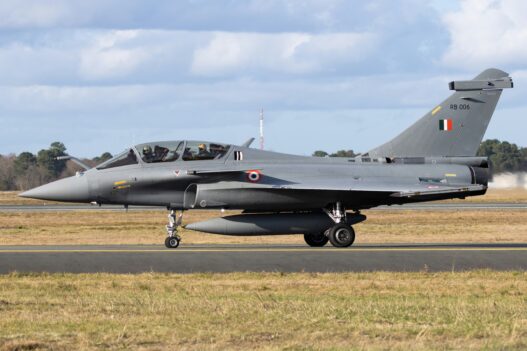
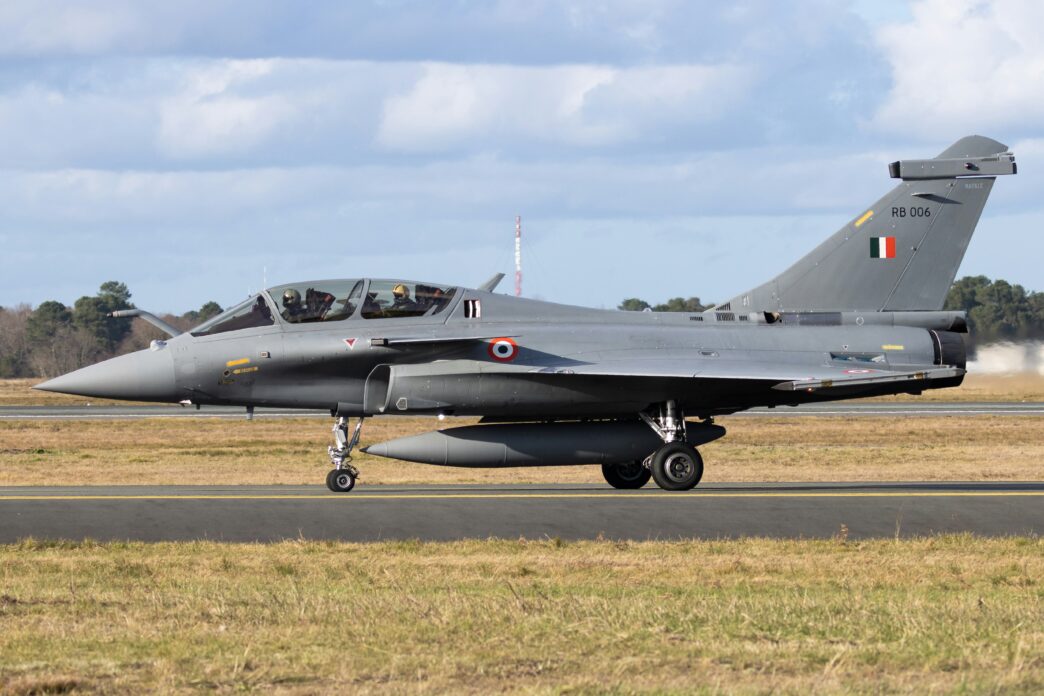
Earlier this week, France and Germany reluctantly decided to scrap the fighter jet component of the Future Combat Air System (FCAS) project due to disagreements between the two principal contractors, Dassault Aviation and Airbus. Originally launched in 2017 by then-German Chancellor Angela Merkel and French President Emmanuel Macron, the project aimed to develop a next-generation fighter aircraft to replace the Eurofighter Typhoon and Rafale fleets currently in European service by around 2040. At the heart of the program was the “Next Generation Weapon System” (NGWS), a new fighter jet designed to operate alongside drones and be connected through a digital combat cloud. The concept sought to integrate stealth technology, electronic warfare capabilities, and long-range strike systems into a single battlefield architecture. Under the original arrangement, Dassault would lead development of the aircraft, while Airbus would oversee the accompanying drone systems. Valued at approximately €100 billion, FCAS was widely regarded as the most ambitious defense project ever undertaken in Europe. Its cancellation represents a major setback for efforts to strengthen European defense cooperation and present a united front amid continued Russian aggression and increasingly strained transatlantic relations.
Disagreements between Dassault and Airbus emerged shortly after the project began, primarily over control of the program. These disputes centered on access to sensitive technologies and ownership of intellectual property rights. According to German public broadcaster ZDF, Dassault CEO Éric Trappier was reluctant to share sensitive data and patents with Airbus. The companies also clashed over leadership of the project, with Dassault maintaining that, as the prime contractor, it should retain overall authority, while Airbus resisted a subordinate role. Even the aircraft’s intended capabilities became a point of contention. France wanted the fighter to be capable of carrying nuclear weapons and operating from aircraft carriers, reflecting the requirements of its armed forces, while Germany saw little need for either capability.
As these disputes increasingly threatened the project’s viability, both President Macron and current German Chancellor Friedrich Merz publicly reaffirmed their commitment to its success. Merz went so far as to state that he would “do everything in my power, and fight until the very last moment, to get joint European projects off the ground here, and above all German-French projects.” Efforts to salvage FCAS included a last-minute attempt in March to broker an agreement between Dassault and Airbus. Two mediators, one French and one German, were tasked with finding a path forward. However, the effort ultimately failed, and Dassault’s leadership continued to insist that the company could go it alone and opposed any form of “co-management.”
The cancellation of FCAS underscores the challenges of defense cooperation within Europe’s fragmented security and industrial landscape. Even with strong political backing and substantial funding, the program failed to overcome corporate rivalries. Despite abandoning plans for the fighter aircraft itself, German officials indicated that other elements of FCAS would continue. As one official noted, “The actual core of FCAS is to be continued as a European system.” France and Germany are now focusing on developing a Combat Cloud capable of linking aircraft, drones, and sensors into a unified network.
Sources: