













Artificial intelligence (AI) is often portrayed as a neutral and objective tool, capable of improving decision-making while eliminating human bias. From recruitment platforms to financial services and public administration, algorithmic systems are increasingly embedded in processes that shape access to opportunities. The underlying assumption is simple: machines do not lie.
Yet this assumption is increasingly difficult to sustain. According to the European Institute for Gender Equality (EIGE), AI systems can reproduce and even amplify existing social inequalities, particularly along gender lines. Rather than removing bias, artificial intelligence often reflects the conditions in which it is developed.
AI does not eliminate bias. Instead, it can amplify existing inequalities. This raises a question for European policymakers: are current regulatory frameworks equipped to address the gender biases embedded in these systems? As the European Union (EU) positions itself as a global leader in digital governance, understanding these limitations is becoming increasingly important.
The myth of neutrality: how bias enters AI systems
The idea that artificial intelligence can deliver neutral outcomes rests on a fundamental misconception. AI systems are not independent actors; they are socio-technical constructs shaped by human decisions, historical data, and institutional contexts. 
One major source of bias lies in training data. Machine learning models rely on large datasets that often reflect historical patterns of inequality. When these datasets encode gendered divisions, such as occupational segregation or unequal access to economic resources, the systems trained on them are likely to reproduce these patterns, according to the World Economic Forum.
Bias is also introduced through design choices. The technology sector remains significantly imbalanced in terms of gender representation, which can influence what problems are prioritised and how solutions are developed. The study The Gender Gap in AI argues that greater diversity among AI developers is essential to reducing bias in algorithmic systems. As a result, systems are often built without fully accounting for the diversity of experiences they are meant to serve.
Manifestations of gender bias in AI systems
Gender bias in artificial intelligence is not only theoretical, but it also manifests in everyday technologies as well as in high-stakes decision-making systems. These examples refer to both traditional machine learning systems and, increasingly, generative AI applications. One commonly cited example is machine translation, where algorithms have been shown to reproduce gender stereotypes by associating certain professions or characteristics with men or women. Even neutral sentences can be translated into gendered outputs that reflect stereotypical roles, subtly reinforcing biased assumptions, as shown in research on gender bias in machine translation.
More concerning, however, are cases where bias directly affects access to opportunities. In recruitment, algorithmic tools trained on historical hiring data have been found to penalise CVs associated with women, replicating existing gender imbalances in certain sectors, as reported by Reuters in its coverage of Amazon’s experimental recruitment system. While designed to improve efficiency, these systems risk embedding discrimination into automated processes. Some studies also suggest that these biases can be compounded by race and ethnicity, disproportionately affecting women of colour in hiring processes.
Bias also appears in financial technologies, where algorithmic credit scoring can disadvantage individuals with non-linear career paths or limited formal financial histories, characteristics that disproportionately affect women. A well-known example occurred in 2019, when the Apple Card faced allegations that women were receiving significantly lower credit limits than men with similar financial profiles. Although subsequent investigations did not conclude that the algorithm intentionally discriminated, the controversy illustrated how opaque credit-scoring systems can generate outcomes perceived as unfair and difficult to explain. This case illustrates how biases embedded in historical and behavioural data can lead to unequal outcomes, even when no explicit discriminatory intent is present in the system’s design.
Even lower-risk systems, such as digital assistants, have raised concerns for reinforcing gendered norms. Feminised voices and submissive interaction patterns have been criticised for normalising certain expectations about gender roles in human–machine interactions, as highlighted in a UNESCO report on gender and AI assistants.
From individual bias to structural inequality
Individually, these examples may appear limited in scope. However, their significance lies in their scale and systemic nature. AI systems are increasingly deployed across sectors where decisions have wide-reaching consequences, from employment to finance and public services, as reflected in the OECD Principles on Artificial Intelligence.
At this scale, bias is no longer an isolated issue but a structural one. When automated systems consistently produce outcomes that disadvantage certain groups, they contribute to the reproduction of inequality in ways that are less visible but more difficult to challenge. In this sense, AI does not simply reflect social inequalities; it can reinforce and normalise them, as recognised by the European Parliament in its 2024 resolution on AI and fundamental rights.
Another challenge is the opacity of many algorithmic systems. Limited transparency makes it difficult to identify where bias occurs and who is responsible, reducing accountability and limiting the ability of affected individuals to seek redress, as also acknowledged in the European Commission’s approach to trustworthy AI.
The European response: ambition and constraints
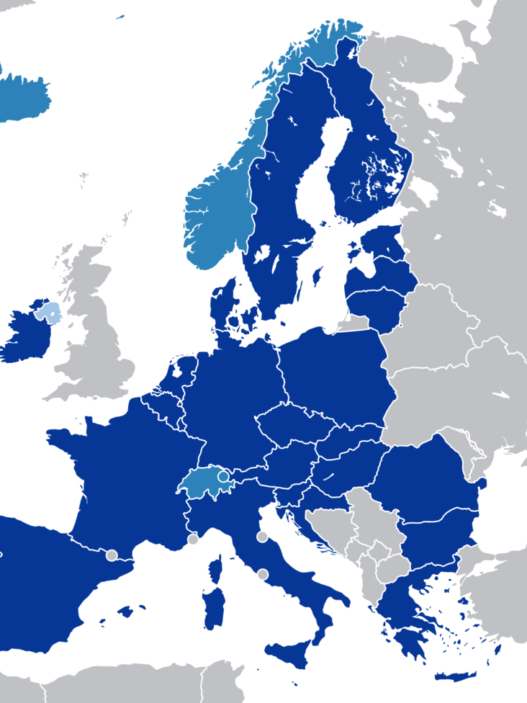
The European Union has taken a proactive approach to regulating artificial intelligence, most notably through the EU AI Act, which categorises systems according to their potential risk level and introduces requirements for high-risk applications.
Alongside this, existing legislation, such as the General Data Protection Regulation (GDPR), provides tools to address certain aspects of algorithmic decision-making, particularly regarding transparency and fairness.
These initiatives position the EU as a global actor in digital governance. However, important limitations remain. While the regulatory framework acknowledges the risks of bias, it does not systematically address gender as a structural dimension of inequality. For example, an AI recruitment system could satisfy documentation and risk management requirements while continuing to disadvantage women because historical hiring patterns embedded in the training data are not fully addressed by compliance obligations alone.
A reactive framework?
Despite its ambitions, the European approach remains largely reactive. According to the OECD, regulation tends to follow technological developments rather than anticipate them, creating a gap between the emergence of risks and the implementation of safeguards.
In addition, the effectiveness of regulation depends heavily on implementation. As regulatory frameworks are translated into practice across different sectors and institutions, their impact can become diluted, creating challenges for consistent enforcement and meaningful oversight, as noted in the European Court of Auditors’ Annual Activity Report 2022.
At the same time, private actors continue to play a central role, with large technology companies shaping the development and deployment of AI systems, raising questions about the balance between innovation, accountability, and the public interest. Without stronger alignment between regulatory objectives and industry practices, existing measures may struggle to address the root causes of bias. For instance, the European Commission’s Ethics Guidelines for Trustworthy AI, developed in collaboration with industry stakeholders, set out principles such as fairness and accountability, yet their voluntary nature means adoption varies significantly across companies and Member States.
Conclusion
The perception of artificial intelligence as a neutral tool is increasingly at odds with its real-world impact. Far from eliminating bias, AI systems can reproduce and scale existing inequalities, particularly in relation to gender.
The European Union has taken important steps to regulate these technologies, positioning itself as a leader in the field. However, its current approach may not yet be sufficient to address the structural nature of algorithmic bias. By focusing primarily on risk management and compliance, existing frameworks risk overlooking the deeper social dynamics that shape technological systems.
Addressing gender bias in AI, therefore, requires more than technical adjustments or regulatory oversight. It calls for a broader recognition that technology is not separate from society, but deeply embedded within it. Without this shift, artificial intelligence risks becoming not a solution to inequality, but one of its most efficient amplifiers.