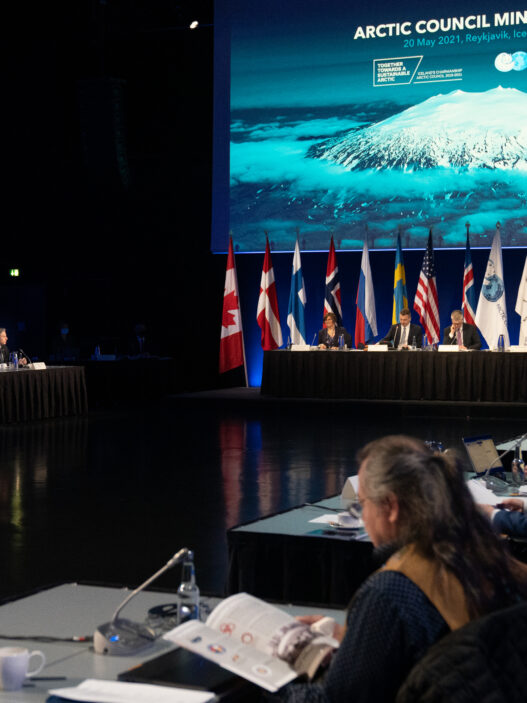








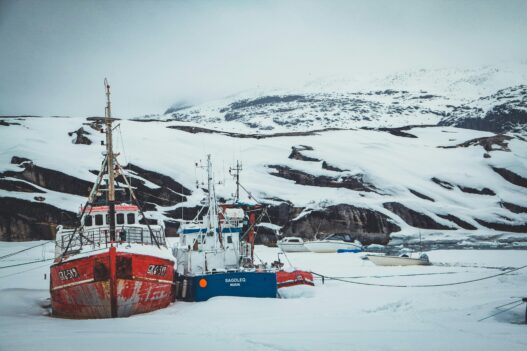
The Arctic is perhaps the most rapidly changing region on the planet, its growing importance driven by raw materials and new shipping routes. It is also inherently European. The European Arctic is by far the most developed, most populous, and most influential part of the High North. The European Union is present in this region through Finland and Sweden. Greenland left the European Communities in 1985 after obtaining home rule. Iceland is reconsidering joining the European Union with a referendum scheduled for August, while Norway is also inching closer. However, the EU’s influence is rather limited in the Arctic, which is mostly related to economic matters. Brussels is able to use its regulatory power in the region, but that might not be enough in a geopolitically ever more important Arctic. In 2026, the EU is releasing a new Arctic strategy, which is an excellent chance to correct the shortcomings of the previous one.
The EU’s last Arctic strategy was released in 2021 in a Joint Communication, issued by the European Commission and the High Representative of the Union for Foreign and Security Policy. The strategy is broadly based on three pillars: tackling the effects of climate change and protecting the environment, fostering sustainable development for the Arctic communities, and strengthening international cooperation. The strategy almost completely disregards geopolitical and hard security issues. Russia is mentioned 13 times (almost every time regarding cooperation), China and the United States 3 times each, “geopolitics” 9 times, and “military” 4 times. As opposed to this, “climate change” is mentioned 53 times, “development” 38 times, “sustainability” 44 times, and “indigenous people” 18 times. The focus is thus clear – and in 2021, it fits both the Member States’ viewpoints and the political reality perfectly.
But that reality changed rather abruptly when Russia launched its full-scale invasion against Ukraine in February 2022, only months after the publication of the strategy. The Arctic region was greatly affected by the outbreak of the war in Ukraine, and the EU’s strategy also became obsolete. The issues of climate change and sustainable development were put behind security and defence questions by all actors, including the EU Member States – in fact, Finland and Sweden joined NATO in 2023 and 2024, respectively, illustrating their focus on security issues. It took the EU more than 3 years to begin drafting a new strategy, which is due to be released in 2026. It needs to be better adapted to the new political reality of the Arctic region.
The most important domain that needs to be better elaborated is security and defence policy. Although Brussels is not a traditional hard security actor, it has been rapidly expanding its capabilities since 2022 – proof that it can, in fact, adjust rather swiftly to new and unexpected situations. ReArm Europe and SAFE (Security Action for Europe) are some of the programs that stand as a testament to this. The Arctic must follow. Russia has been militarising the region at a rapid pace since the mid-2000s, and the United States and Canada seem to be following. Although the individual European states may have recognised the need for geopolitical thinking in the Arctic even before 2022, or at least immediately after, they should be supported by the EU and other Member States. Security in the Arctic means security for Europe as a whole, as any possible Russian aggression would almost certainly occur in this region, or in the adjacent Baltic region. The Arctic may seem far away for most European states, but it is crucial that they too recognise the region for what it is: the primary geopolitical arena of the 21st century, where all major powers are present. Europe simply cannot afford to lag behind, and the individual states are too small to effectively resist Russia, China, or even the United States. The EU must emerge as a strong and unified Arctic actor, and the new strategy is an excellent opportunity to solidify this. 
The public discourse on the new Arctic strategy thus far shows optimistic signs. The related websites all mention geopolitical confrontation and security and defence policy among the primary questions in the Arctic. European leaders are recognising the issue too, including at the highest levels. European Commission President Ursula von der Leyen remarked on a visit to Greenland in 2024: “With the ice melting, a new reality is emerging. States like Russia and China are increasingly assertive in the region”, and she spoke of the Arctic as “our shared region”. A year later, von der Leyen stated: “Nowhere are the forces of nature and geopolitics clashing with more intensity than in the Arctic”. Finland and Sweden play a key role in shaping the new strategy, but they have also made it clear that it needs to better align with the changing geopolitical context of the Arctic.
Focusing on security and defence matters does not mean that every other issue should be completely disregarded. Climate change, sustainable development, and indigenous rights – these are all areas in which the EU is traditionally strong, and thus it should build on its strengths and experience in the Arctic too. But what Europe needs to understand, not just in the Arctic, but elsewhere too, is that in the emerging new world order of the 21st century, hard security must come before these issues. The reason is clear, and the examples are numerous. There can be no sustainable development in Finland if the country is weak and constantly threatened by Russia, or perhaps even invaded directly. The harmful effects of climate change cannot be mitigated in the Arctic waters if they are militarised by hostile submarines. These goals, and every other related aim, can only be effectively achieved if the European Arctic is strong, able to credibly deter any potential attack, and in the worst-case scenario, capable of being defended. To achieve that, the EU needs to emerge as a decisive actor that takes into account the interests of the affected states, and behind which all Member States are united. And most importantly, it needs a strong strategy: a solid basis to act on.
The European Union is undoubtedly at a decisive moment in its Arctic identity-seeking. If it can produce an adequate strategy, it has the potential to become a powerful actor. If it fails, it could lose its role in the global political competition in the region, the fate of which would then be decided by strategic competitors, mostly hostile to Europe. The 2021 strategy reflected a different era, one where cooperation was the defining norm, and social and economic issues took centre stage. That era is over. The geopolitical rupture triggered by the Russian invasion of Ukraine has fundamentally changed Europe’s security landscape, including the Arctic. The United States, and even non-Arctic nations, such as China or the United Arab Emirates, act ever more decisively to further their Arctic interests. The Arctic is the primary arena of great power competition, and Europe cannot afford to be left out, especially because it is directly affected. The forthcoming 2026 strategy, therefore, cannot merely update its predecessor; it must redefine the Union as a capable and credible geopolitical actor in the High North. Climate change, sustainability, and indigenous rights should not disappear, but they must be integrated into geopolitical questions. The EU must also seek further integration with Iceland and Norway, especially because these nations currently also seem interested. The EU’s ability to act decisively – and most importantly, collectively – in the Arctic will go beyond determining its influence in the region. It will serve as a test of its capacity to find its place in a new and increasingly conflict-ridden international order.