












China’s expanding footprint across the Middle East and key European maritime gateways – from port acquisitions to logistics infrastructure – has shifted from primarily economic engagement toward a structural form of influence built on transport and logistics networks, digital infrastructure, and dual‑use capabilities. At the same time, Beijing leverages its non‑interventionist narrative and growing maritime, technological, and diplomatic role in the region to strengthen long‑term strategic dependencies. Against this backdrop, this analysis asks how China combines economic, technological, and political instruments to build durable leverage in the Middle East and at European maritime nodes, and what practical strategies remain for Western actors to reduce resulting dependencies without resorting to counterproductive over‑securitization. Evidence from connectivity projects and technology partnerships, particularly in the Middle Eastern and beyond, shows how these engagements translate into tangible influence over supply chains, data ecosystems, and critical infrastructure.
China’s ambitions in the Middle East
China’s Middle East strategy rests on a tightening energy-payments nexus: over half of China’s crude imports come from the region, shaping efforts to reduce dollar exposure through renminbi (RMB)-based settlement. Yet authoritative assessments find structural limits, energy exporters struggle to recycle yuan, and meaningful “petro‑yuan” adoption may take decades. Still, Beijing is expanding swap lines and cross-border RMB channels to incrementally erode dollar dominance. A growing dual‑use logistical posture in the western Indian Ocean complements this monetary push. The People’s Liberation Army (PLA) Support Base in Djibouti, China’s first overseas military facility, underpins logistics, intelligence support, and far‑seas sustainment along the Bab‑el‑Mandeb, Suez corridor. Coupled with Chinese‑operated facilities such as the Doraleh port and surrounding free‑trade zones, this network provides assured port access, maintenance capacity, and political‑economic leverage during maritime disruptions. Regular joint training with Djiboutian forces strengthens China’s ability to sustain expeditionary operations. China’s engagement in the Middle East is therefore best understood as a layered strategy: energy‑monetary integration, dual‑use logistical positioning, and digital ecosystem penetration. These elements reinforce each other and gradually expand Beijing’s influence without requiring formal alliances or security guarantees.
Digital ecosystem penetration is advanced primarily through the Digital Silk Road (DSR), embedding 5G cores, sovereign cloud regions, and Artificial Intelligence (AI) surveillance systems across Gulf economies. Defense One and The Diplomat document how Chinese vendors offer turnkey digital ecosystems aligned with Gulf modernization agendas. Western security assessments highlight severe risks: supply‑chain vulnerabilities, counter‑intelligence exposure, and lawful‑access asymmetries. The North Atlantic Treaty Organization (NATO) workstreams warn that such lock‑ins undermine allied defense‑intel interoperability and complicate future multivendor migration.
Diplomatically, China’s influence has expanded but remains risk‑averse. The 2023 Iran-Saudi rapprochement demonstrated convening capacity, yet subsequent conflicts, Gaza, and the 2025 Iran-Israel war elicited cautious calls for restraint rather than security guarantees. Analysts emphasize China’s preference for “quasi‑mediation” aimed at preserving stability without assuming costly commitment. Finally, China’s arms presence remains opportunistic: Unmanned Aerial Vehicle (UAV) exports in (CH‑4, Wing Loong) benefit from permissive policies, while localization efforts, such as the earlier cooperation between the China Aerospace Science and Technology Corporation (CASC) and the Saudi Technology Development and Investment Company (TAQNIA), signal a shift toward deeper industrial entanglement in Gulf defense architectures. 
Country relationships in brief
Iran remains a critical energy partner but not a security client. China continues to import Iranian crude, often through indirect channels, while avoiding over‑commitment that could jeopardize relations with Gulf monarchies. During the 2025 Iran-Israel war, Beijing called for de‑escalation but refrained from military aid, revealing limited leverage and a preference for risk‑averse diplomacy.
At the same time, Saudi Arabia has become a multidimensional partner: beyond hydrocarbons, cooperation now spans chemicals, electric‑vehicle and battery supply chains, green hydrogen, and especially digital infrastructure. Huawei’s establishment of a Riyadh‑based cloud region and parallel 5G expansion underscores deepening technological integration aligned with Vision 2030 priorities. Despite interest in renminbi settlement, structural constraints hinder broad adoption, as recent analyses of RMB internationalization have assessed. Defense ties include Unmanned Combat Aerial Vehicle (UCAV) acquisitions and localization initiatives, including Chinese-Saudi joint ventures, such as earlier cooperation involving the China Electronics Technology Group Corporation (CETC) and the CASC-TAQNIA partnership, which signal a shift toward embedded defense‑industrial connectivity.
The United Arab Emirates (UAE) hosts China’s densest digital footprint in the Gulf: Huawei‑linked 5G cores, sovereign cloud services, and AI‑enabled security systems are now embedded across national infrastructure. While efficient and customizable, these systems risk locking Western allies into proprietary technologies that complicate defense interoperability, a concern increasingly reflected in NATO’s 5G security discussions. These developments underscore that technological integration is the primary vector through which China expands long‑term leverage in the Gulf.
Along the Red Sea corridor, China’s dual‑use model is evident. The PLA Support Base in Djibouti anchors far‑seas sustainment and sits within a network of Chinese‑linked ports and industrial zones stretching toward Egypt’s Suez Canal Economic Zone, reflecting a holistic blend of economic and military reach. This architecture affords situational awareness and political leverage along a waterway essential to European trade, an importance underscored by recent maritime disruptions.
In Israel/Gaza, China practices “biased neutrality,” combining criticism of Israeli operations and rhetorical support for Palestinian positions with continued economic pragmatism. Beijing’s 2024 diplomatic initiatives lost traction as regional mediation shifted to Qatar, Egypt, and the United States. Israeli skepticism toward Chinese technology in sensitive infrastructure has intensified, driven by concerns over surveillance and strategic vulnerability.
Risks to Western states
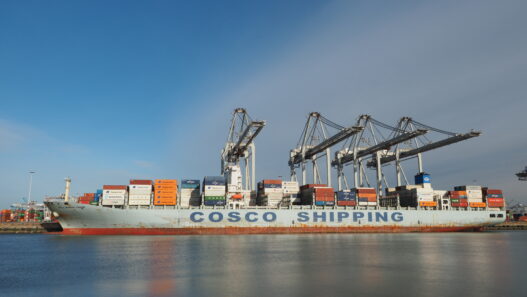
The exposure of critical infrastructure in Europe’s ports is structural. COSCO’s majority stake in Piraeus has transformed a distressed terminal into a leading Mediterranean hub and a symbol of China’s growing foothold in Europe. Yet despite its commercial success, the project continues to raise concerns over governance, sovereignty, and IT control, particularly regarding the enforceability of broader investment commitments once traffic volumes increase. The United States and European partners have responded by backing nearby alternative port developments, reflecting awareness that maritime chokepoints function as influence nodes as much as logistics assets. Hamburg offers a contrasting approach. Authorities limited Chinese involvement to a stake below governance thresholds, added IT ring‑fencing and open‑access requirements, and anchored the decision within EU competition and subsidy rules that constrain state‑backed distortions. The comparison shows a pragmatic path: managing exposure rather than excluding it outright, preserving economic benefits while curbing strategic control.
Digital ecosystems across the Gulf pose a second set of risks. Integrated 5G‑core, sovereign‑cloud, and surveillance architectures offer speed and data‑localization advantages, yet they create opaque supply chains, unequal lawful‑access arrangements, and gaps in forensic visibility. For Western security partners, these systems complicate defense‑intelligence interoperability and widen counter‑intelligence exposure at a time when cooperation on missile defense, maritime awareness, and counter‑Unmanned Aircraft System (counter-UAS) operations is expanding. The longer such tightly coupled stacks remain in place, the higher the switching costs become, and the more leverage vendors gain over updates, security patches, and the pace of standards adoption.
Chinese UAV proliferation and emerging local assembly lines are reshaping the tactical balance. Affordable Chinese UCAVs have lowered the barrier for cash‑constrained states to field persistent Intelligence, Surveillance, and Reconnaissance (ISR) and precision‑strike capabilities. When local assembly and sustainment take root, as early CASC–TAQNIA cooperation in Saudi Arabia indicated, they enable higher sortie rates, greater maintenance autonomy, and more reliable access to munitions. This translates into a faster operational tempo and greater combat capacity resilience. For Western militaries and their partners, this raises the demand for stronger layered counter‑UAS systems, electronic‑warfare options, and Global Navigation Satellite Systems (GNSS)‑resilient navigation. It is particularly challenging when adversary platforms use backup navigation modes and can overwhelm defenses through sheer numbers.
The energy payments shift is slow but consequential. Even limited yuan or e‑CNY settlement in oil trade weakens dollar exclusivity and offers sanctioned actors alternative channels that reduce transparency and complicate enforcement. The risk accumulates over time: expanding swaps, local‑currency routes, and non‑Society for Worldwide Interbank Financial Telecommunication (non-SWIFT) messaging can gradually dilute the impact of financial pressure and narrow Western leverage in crises. A practical response is resilience rather than alarmism, broader foreign exchange (FX)‑swap access among trusted partners, Central Bank Digital Currency (CBDC)‑interoperability pilots, stronger maritime‑sanctions forensics on shadow fleets and ship‑to‑ship transfers, and insurance‑based compliance controls.
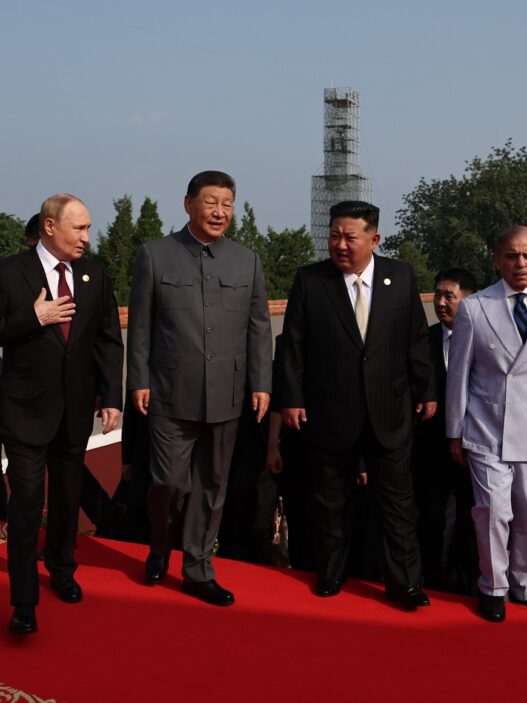
Finally, China–Iran security links add volatility to an emerging axis of coordination among Russia, China, Iran, and North Korea, as highlighted by authoritative analysis. Even if Beijing calibrates visible support, selective transfers (air defense, loitering munitions) and dual‑use tech access can thicken Iran’s resilience and diffuse to proxies via learning or material pathways. For planners, the implication is a higher probability of simultaneous challenge sets, where assistance from one node of the axis prolongs an adversary’s endurance in another theatre, shrinking the space for Western escalation management.
Taken together, these risks highlight a shift from transactional exposure to systemic dependency. Western governments, therefore, face a structural challenge that requires sustained, multi‑domain policy responses rather than isolated technical fixes.
Policy recommendations
Western strategy should treat China’s regional footprint as a systems‑engineering challenge, not an ideological contest. In Europe, this means embedding structured de‑risking into port and logistics governance: ownership caps, IT‑sovereignty requirements, and performance‑bonded investment rules, implemented through EU‑level instruments that target distortive subsidies rather than specific countries. Structured solutions, such as the approach used in Hamburg, preserve efficiency gains while limiting undue strategic influence, avoiding blunt vetoes that deter investment without improving security.
In the Gulf’s digital sphere, effective competition requires credible technological alternatives, not normative appeals. More specifically, this includes deployable options to single‑vendor 5G cores and sovereign cloud architectures – e.g., Open Radio Access Network (Open RAN) trials, auditable “clean‑cloud” standards, and robust lawful‑access frameworks paired with operational value‑adds such as coastal ISR data fusion or counter‑UAS integration unavailable in current Chinese stacks. A cooperative digital‑security compact with Gulf Cooperation Council (GCC) partners, focused on resilience, observability, and multi‑vendor flexibility, can reduce locking without forcing binary choices.
With UCAVs proliferating across state and non‑state arsenals, allies can no longer treat counter‑UAS and electronic warfare (EW) as niche procurement issues but must elevate them into a coordinated program. Shared test ranges in the Mediterranean and Gulf, harmonized tactics, techniques, and procedures (TTPs) for layered kinetic and non‑kinetic defense, GNSS hardening, and targeted export controls on dual‑use avionics and AI models would help restore advantage. Where Chinese‑linked UAV assembly lines emerge, discreet technical engagement rather than public confrontation can manage re‑export risks while preserving strategic relationships.
On payments, resilience matters more than rhetoric. Strengthening FX‑swap networks among trusted partners, testing CBDC‑interoperability mechanisms that preserve compliance, and improving sanctions‑forensics for maritime flows will better counter gradual erosion than warnings about “petro‑yuan threats.” The priority is maintaining enforcement visibility even as diversification accelerates.
On China–Iran, Western governments should combine clear red lines on transfers that would alter air or maritime balances with open channels that explain the costs such transfers impose on China’s Gulf and European ties. Coordinated, intelligence‑led signaling, paired with practical cooperation on maritime safety and Red Sea stability, can raise Beijing’s opportunity cost of closer alignment with Tehran while preserving space for selective problem solving.
Conclusion
China’s rise in the Middle East and at Europe’s gateways reflects not a grand design but a set of functional bets across energy, logistics, digital systems, and selective security presence. These create redundancy, optionality, and standard‑setting power that translate into leverage during crises. The Western challenge is less the fear of sudden displacement than the accumulation of structural dependencies in ports, digital cores, UAV sustainment, and payment channels, exposures that cannot be unwound quickly. An effective strategy requires functional superiority, not blanket exclusion. In Europe, rules‑based conditioning can preserve commercial flows while constraining strategic control. In the Gulf, partners respond to credible digital alternatives and operational value, but not geopolitical appeals. On UAVs, coalition‑level counter‑UAS and EW coordination is essential. In payments and resilience, swap networks, CBDC interoperability, and effective sanctions forensics outweigh rhetorical appeals in practice. And with China–Iran, deterrence must pair with dialogue to raise the costs of defense‑enabling behavior while preserving space for cooperation. Success should be measured not in geopolitical posturing but in quietly reduced vulnerabilities, improved standards, and practical problem-solving that outcompetes China where partners need it most. The goal is not to roll back but to neutralize exposures and preserve Western freedom of action in an increasingly multipolar environment.