











This past weekend, Viktor Orbán was defeated in Hungary’s national election by Péter Magyar, bringing an end to his 16-year rule. Despite evidence from international observers that the election was held “from systemic advantages,” the Tisza Party, led by Magyar, secured an overwhelming majority, winning 138 seats compared to Fidesz’s 55.
This victory represents a significant development for both the European Union and Ukraine, as Orbán has consistently undermined the bloc’s efforts to address the war. His actions included delaying a €90 billion loan package and opposing further sanctions on Russia. The outcome also marks an important moment for democracy in Hungary, where Orbán’s model of “illiberal democracy” had taken hold. Its effects were still visible in this election, which was characterized by an “extensive misuse of public office and resources, government messaging, a clear bias in monitored media and news coverage in favour of the ruling party, and serious shortcomings in the regulation of campaign finance,” all of which undermined equal opportunities among contestants.
Magyar’s rise to power signals potentially significant changes for both Hungary and Europe. Under Orbán, concerns over democratic backsliding, including disregard for the rule of law, failure to address corruption, and restrictions on media freedom, led the European Commission to suspend billions of euros in funding for Hungary, which could now potentially be unlocked. Orbán also maintained close ties with Russia; Hungary remained one of the few European countries to continue purchasing Russian oil and gas after the invasion of Ukraine, alongside reports suggesting that Budapest shared confidential information with the Kremlin.
Magyar has already indicated a willingness to pursue reforms. He has publicly committed to shutting down state-run television and radio programs used to disseminate Fidesz “propaganda,” signaling an intent to dismantle elements of the previous system. He has also acknowledged Russia as a strategic threat to Hungary and Europe, stating: “We know the Russians—and I’m not talking about the Russian people or culture; they are fantastic people—but the Russian bear and its role in Hungarian history.”
Magyar has further signaled that Hungary may drop its opposition to the €90 billion EU loan to Ukraine, which Orbán had initially agreed to, only to reverse his position amid a dispute over the Druzhba pipeline. Relations between Hungary and Ukraine could improve further, particularly following statements from President Volodymyr Zelenskyy that the pipeline would be repaired in the spring. However, Magyar’s position on the war remains partially aligned with Orbán’s, as he continues to oppose sending weapons to Ukraine and fast-tracking EU membership for Ukraine.
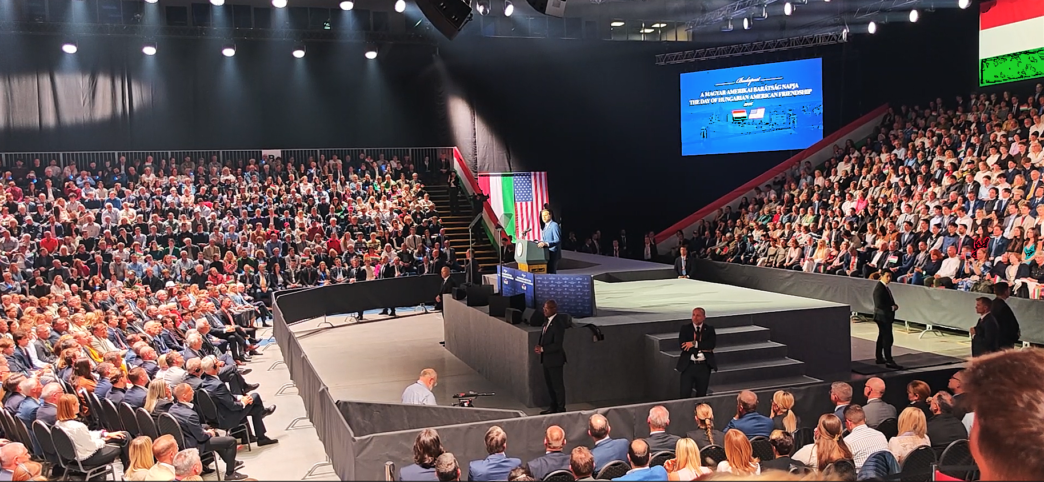
The election outcome also carries implications for the far right in Europe. Orbán has long been a prominent advocate of traditional Christian values, making him a symbolic figure among far-right constituencies. In response to Orban’s loss, the leader of Spain’s far-right Vox party, Santiago Abascal, stated that “Hungary was the only European nation that was safe from the Islamist invasion,” he wrote on X on Sunday night. “The defeat of Victor Orbán puts that in danger. Orbán leaves a Hungary that is much better than the one he inherited. And he leaves a deep mark on all the patriotic forces of Europe.” Trump and his administration also publicly supported Orban, leading up to the election, with JD Vance visiting during the campaign period. Given Orban’s overwhelming loss, some in the European right have started to consider whether a Trump endorsement is more of a bane than a boon. Belgium’s Defence Minister Theo Francken described Vance’s visit to Hungary as “a really dumb campaign move”, and also said, “I’m a rightwing politician, and I think the far right is being really stupid. And that the Magas should really stop campaigning internationally because everyone and everything they support loses the elections. Lead instead of gold. Best advertisement for the left. Crazy.”
Sources