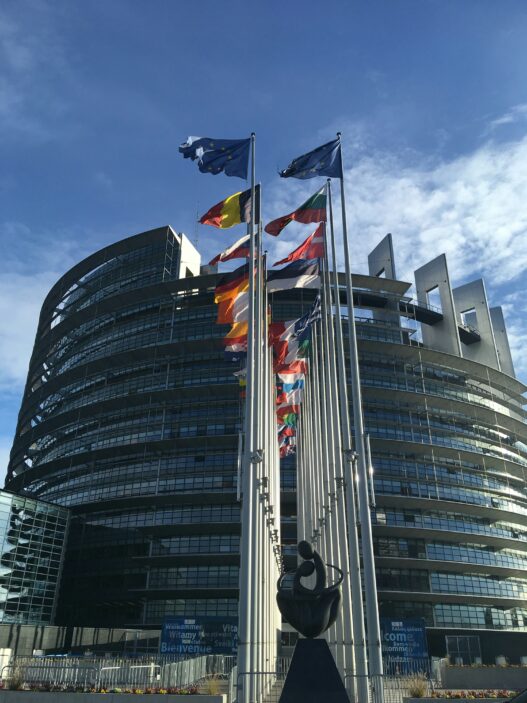








The energy price crisis following the outbreak of the war in Iran has increased tensions regarding the European Union Emissions Trading System (ETS). With a rise in energy prices stemming from the closure of the Strait of Hormuz, where roughly one-fifth of the world’s oil and gas transits, the President of the European Commission, Ursula von der Leyen, announced on Monday, 16 May, in a letter addressed to Member States, that, as part of the Commission’s potential strategy to stabilise energy prices, it plans to “set out a more realistic decarbonisation trajectory beyond 2030” regarding the ETS revision planned for this summer.
This has opened a discussion on the immediate future of the system. EU countries that rely largely on fossil fuels are looking to reduce carbon costs as gas prices rise. Italy’s Prime Minister, Giorgia Meloni, urged the suspension of the ETS, while German Chancellor Friedrich Merz last month also questioned it. Other countries from the bloc called on 18 March for more free carbon permits for some industries to reduce ETS costs, which currently account for 11 per cent of energy costs.
Other countries, such as Spain, support the continuation of the system. Under left-wing Prime Minister Pedro Sánchez, renewable energy has reached 57 per cent of Spain’s electricity mix, meaning the country is less affected by rising gas prices. Portugal and Scandinavian countries joined Spain in a joint letter supporting the current ETS.
The ETS functions under a “cap and trade” system. The “cap” is the maximum amount of greenhouse gas emissions that can be emitted, and this amount is reduced annually to reach the EU’s environmental target. Companies can exceed the limit by purchasing allowances, as each allowance permits the emission of one tonne of CO₂ equivalent. The system has reduced emissions from European power and industrial plants by around 47 per cent by 2023 compared with 2005 levels.
This is not the first time the ETS has been challenged, as the war in Ukraine previously raised the possibility of reforming it in order to alleviate the cut in Russian gas supplies to Europe. This situation once again highlights in the European debate that stable and diversified energy partnerships are essential not only to ensure Europe’s security but also to guarantee the success of the energy transition.