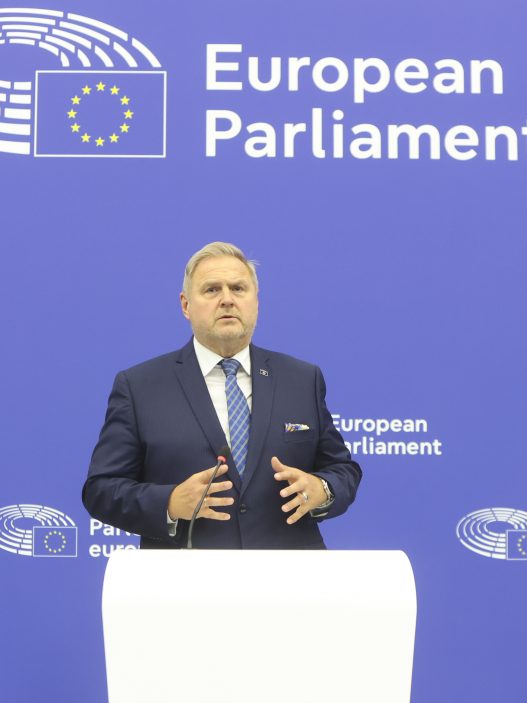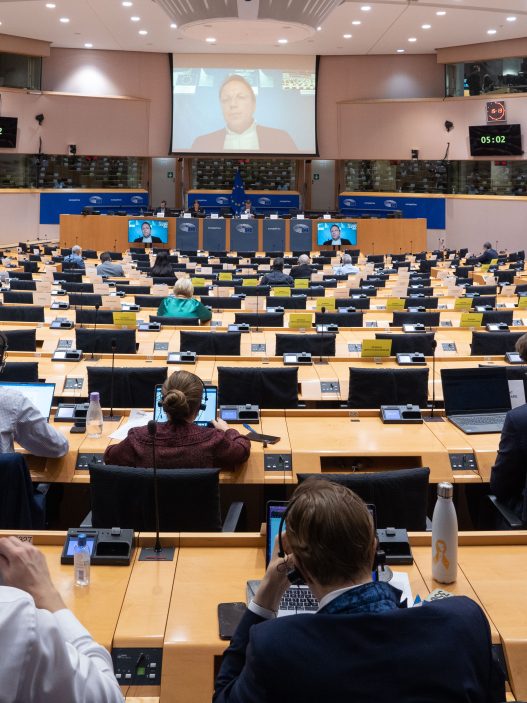











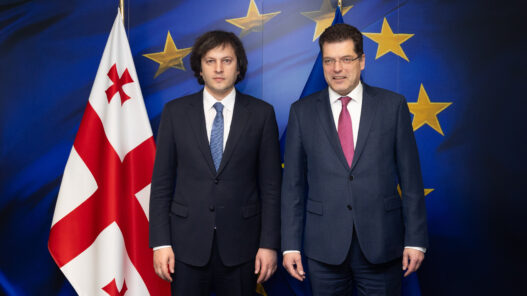
On February 10, the EU Parliament adopted changes to the EU Asylum Procedure Regulations. Most notably, a majority of Members of the European Parliament (408 votes in favor) endorsed the creation of a new EU-wide list of “safe countries of origin.” Lawmakers also approved changes related to the “third country concept” within the asylum framework.
What is a “safe country of origin” and what does it mean for asylum seekers?
A “safe country of origin” is a legal term in migration law referring to a country where, on the basis of the legal situation, political persecution is deemed absent, human rights are considered to be respected, and people are not seen as facing a real risk.
The newly approved EU list is intended to fast-track asylum procedures for nationals of designated countries. The list includes Egypt, India, Bangladesh, Colombia, Kosovo, Morocco and Tunisia, as well as EU candidate states such as Georgia.
In practical terms, inclusion on the list significantly complicates asylum prospects for citizens of these countries. Applications are fast-tracked and more likely to be rejected unless the applicant can demonstrate that their individual circumstances warrant protection. Under the new framework, the burden shifts more heavily onto applicants to prove a well-founded fear of persecution or a real risk of serious harm in their country of origin.
Under the agreement, the European Commission will oversee the monitoring of countries designated as safe, including EU candidate countries. If conditions in any of these states worsen, the Commission may temporarily remove it from the list, informing the European Parliament of the decision.
Georgia’s EU candidate status “in name only” amid democratic decline
After a long-sought EU membership journey, Georgia was granted EU candidate status on December 14, 2023, following the recognition of a “European perspective” in June 2022. However, candidate status was made conditional on the implementation of specific reforms aimed at strengthening democratic institutions and the rule of law. In contrast to this, critics argue that Georgia’s ruling party has accelerated democratic backsliding.
Following its victory in the disputed 2024 parliamentary elections, Prime Minister Irakli Kobakhidze announced the suspension of Georgia’s EU accession efforts until 2028. The Georgian Parliament also adopted a controversial “foreign agent” law requiring NGOs and individuals receiving foreign funding to register. The legislation was widely compared to similar laws in Russia and raised concerns over restrictions on civil society. The decisions triggered ongoing demonstrations and political unrest.
In addition, Opposition parties have accused the government of suppressing dissent and undermining media freedom. At the end of 2024, Transparency International Georgia, a non-governmental organization, released a report highlighting nearly 200 cases of violence against media representatives, almost five times more than the year before. Around 80% of the recorded cases took place during anti-government protests. This and many other alarming reports by civil society show that journalists and activists increasingly face intimidation, obstruction, and violence while carrying out their work under the ruling Georgian Dream party.
In 2025, the European Commission’s enlargement report on Georgia described “serious democratic backsliding marked by a rapid erosion of rule of law” in the country.
“The Georgian authorities have imposed repressive measures against civil society, media representatives and opposition leaders that severely undermine democratic processes and effectively abolished civic participation and the system of checks and balances,” the Commission wrote.
Even though Georgia’s long-sought aspirations to join the EU came to materialize to an extent, the following years have pushed some EU observers to describe Georgia as “a candidate country in name only.” Georgia expert Wojciech Wojtasiewicz has described the country on a “fast track to authoritarianism,” comparing its current political situation to the processes that took place in Belarus and even Russia, 25 years ago.
“The systemic repressive actions of the authorities, including legislation curtailing civic space and fundamental rights, the functioning of independent media and targeting LGBTIQ persons, excessive use of force in full impunity by the law enforcement authorities and hostile rhetoric against the EU, are in stark contrast with EU values and the actions expected from an EU candidate country,” the Commission wrote in their EU enlargement report.
Debating Georgia’s inclusion in the “safe country of origin” list
According to official statistics, in 2024, the overall asylum recognition rate for Georgians stood at 4%, providing a basis to be included in the “Safe Country of Origin” list. However, the decision has been debated among several members of the European Parliament.
“We are debating Georgia’s anti-democratic turn, while the EU at the same time declares Georgia a safe country of origin,” said Social Democrat MEP Cecilia Strada during a European Parliament debate in December.
She stressed that in 2025 Georgia experienced widespread repression of dissent, marked by violence against peaceful demonstrators and pressure on media freedom. According to her, these developments call into question whether the country can be considered safe for opposition members and independent journalists.
Growing Contradiction
While Georgia’s title as a “safe country of origin” reflects statistical asylum trends, it sits uneasily alongside the EU’s own assessment of democratic regression in the country. As Brussels seeks to balance migration management with its enlargement policy and commitment to democratic values, Georgia’s case stands out as an increasingly visible example of the gap between political realities on the ground and the legal assumptions embedded in EU asylum policy.
Sources: EUR Lex – Access to the European Union Law, European Parliament News, Georgia Enlargement Report, Transparency International Georgia, European Parliament, Civil Georgia, European Union Agency for Asylum, European Council, EPDE Georgia Election, EPDE Foreign Agent Law.