










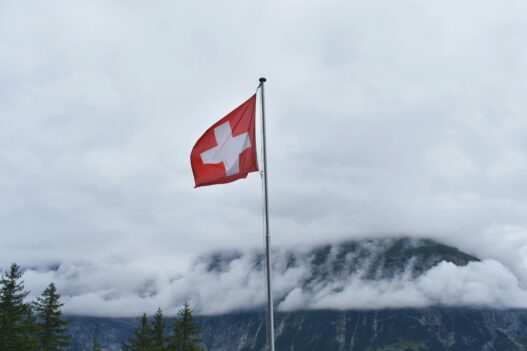

Switzerland occupies a paradoxical position in the modern global economy. Its banks, pharmaceuticals, precision machinery, and luxury exports project stability and power. The franc remains a refuge currency; Zurich and Geneva stand as symbols of trust. To much of the world, Switzerland appears insulated- a fortress in the Alps, immune to the turbulence surrounding it.
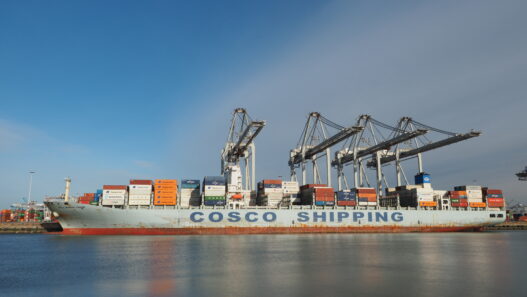
Yet beneath this perception lies a growing vulnerability. Swiss prosperity depends on global trade, foreign demand, and the restraint of great powers. The tariffs imposed by the United States in 2025 – targeting steel, aluminium, and selected technology sectors – demonstrated how swiftly economic might can be weaponized. Switzerland was among the most affected European economies, facing tariffs of up to 39% on key exports before a partial reduction was negotiated. The measures disrupted trade flows, increased costs for Swiss exporters, and triggered diplomatic engagement aimed at securing exemptions and mitigating long-term damage. Even allies, once reliable partners, now use trade as coercion. Neutrality, once the ultimate shield, has lost its protective power.
The age of rules-based trade has ended; what remains is an age of leverage. For Switzerland, the question is not whether to adopt elements of economic nationalism, but whether it can survive without them. A pragmatic, strategic, elite-driven form of economic nationalism is no longer an ideological choice. It is the only rational adaptation to a world defined by power.
The Swiss Economic Paradox
Switzerland’s economy is a study in contradictions. It is one of the most open on earth – exporting precision goods and services far beyond its borders – yet also one of the most strategically managed. Agricultural protections, energy management, and the safeguarding of critical industries reflect a quiet understanding that sovereignty must be underpinned by economic power. 
This balance has sustained Swiss success for decades. The nation combines openness with discretion, efficiency with control. Yet the very openness that created wealth now exposes fragility. Global dependence amplifies vulnerability: a tariff, a sanctions regime, or a disruption in supply chains could undermine Swiss resilience.
The paradox is clear. Switzerland’s strength – integration into global markets – is also its Achilles’ heel. The idea that neutrality alone can secure autonomy is no longer sustainable. In an era when economics has become a weapon, the illusion of invulnerability is itself a strategic liability.
Neutrality’s Limits
Neutrality has been the cornerstone of Swiss identity for centuries. It has provided diplomatic space and moral authority, allowing Switzerland to mediate where others fought. Yet neutrality without power is performance, not protection.
The 2025 U.S. tariffs underscored this truth. Despite decades of alignment with Western interests, Washington prioritized domestic politics and strategic advantage over historical goodwill. Switzerland, like others, learned that reputation offers no shield against coercion.
Neutrality succeeds only when coupled with strategic autonomy. In the twentieth century, Switzerland’s survival depended not only on diplomacy but on quiet strength – stockpiles, financial independence, and control over essential industries. Today, that foundation has eroded. Supply chains are globalized, technologies are foreign-controlled, and capital flows are borderless. The logic of neutrality no longer guarantees safety.
Strategic Economic Autonomy, Not Protectionism
Economic nationalism in Switzerland must not mimic populist models. It must be calculated and selective, shaped by institutional actors – including federal authorities, regulators, and leading industrial stakeholders – and guided by long-term strategic priorities. It should reflect a doctrine of strategic insulation, aimed at reducing critical vulnerabilities, rather than isolation, which would imply a broad disengagement from global markets.
Critical sectors – pharmaceuticals, finance, precision technology, defense, and energy – must remain under national control. This does not require autarky, but it does demand sovereignty. Strategic incentives for domestic production, barriers to hostile takeovers, and capital flow management can reinforce the nation’s independence without undermining efficiency.
National champions are essential. Switzerland’s strength lies in its network of family-owned and specialized SMEs, which form the backbone of its export economy and are deeply embedded in regional industrial ecosystems. Aligning these entities with a coherent industrial strategy would anchor resilience in the domestic economy. Sovereignty is not preserved by sentiment but by ownership and control.
This approach reframes economic nationalism as realism. In a system where trade is a function of power, sovereignty cannot be outsourced to global markets or treaties. A measured, technocratic nationalism is not regression; it is survival through precision.
Political and Cultural Dimensions
Economic sovereignty requires coordination at the elite level. Policymakers, industrialists, financiers, and scholars must converge on a shared premise: national autonomy in the 21st century is, above all, economic.
This consensus must be cultivated deliberately. The narrative should not invoke populism or nostalgia but security and continuity. Economic nationalism is not a rejection of liberal principles; it is their preservation under changing conditions.
Managing perception is as vital as policy design. Swiss stability has always rested on discretion and consensus. Framing protectionist measures as “strategic risk management” preserves credibility while ensuring public support. The task is psychological as much as technical: to redefine sovereignty as a pragmatic necessity rather than a departure from Switzerland’s long-standing commitment to economic openness and neutrality.
Switzerland’s ethos of precision can serve this transformation. Just as its watches and machinery embody discipline and exactitude, so too must its strategic posture. Power, like craftsmanship, demands patience and precision.
Constraints and Risks
Implementing this strategy entails navigating formidable constraints. Switzerland’s commitments to the WTO limit explicit protectionist measures. Federal fragmentation – between cantonal autonomy and federal policy – complicates unified strategic planning. Furthermore, protectionism carries intrinsic economic costs, including inefficiencies, retaliations, and market distortions.
Switzerland’s economic autonomy is further shaped by its dense network of bilateral agreements with the European Union, which underpin its access to the single market. These agreements facilitate trade, regulatory alignment, and participation in key sectors, but they also constrain the scope for unilateral economic intervention. In areas such as energy integration and industrial standards, Switzerland remains structurally interconnected with European systems, making full strategic decoupling both economically costly and politically complex.
Yet constraints are not prohibitions. They define the parameters of intelligent statecraft. Switzerland’s tradition of incremental adaptation – slow, negotiated, deliberate – is an asset. Within legal and diplomatic limits, space exists for strategic maneuver: incentives for domestic research, targeted export controls, or quiet equity intervention in key industries.
The risk is complacency. Economic nationalism, if pursued reactively or rhetorically, becomes self-defeating. Its success depends on discretion, continuity, and elite discipline – qualities that have long defined Swiss governance.
Strategic Recommendations
A compelling counterargument holds that Switzerland’s long-term prosperity is best secured through strict adherence to WTO-aligned multilateralism. From this perspective, openness, rule-based trade, and deep integration into global markets have historically underpinned Swiss stability and competitiveness. However, this view assumes a level of predictability and reciprocity in the international system that is increasingly eroding. As major powers adopt more interventionist and strategic economic policies, a purely multilateral posture risks leaving Switzerland structurally exposed rather than protected.
A modern Swiss strategy for economic sovereignty should rest on four pillars:
- Fortify critical sectors. Identify industries vital to national resilience – pharmaceuticals, energy, precision technology, finance – and ensure domestic control through ownership regulations, investment screening, and production incentives.
- Cultivate national champions. Strengthen strategic enterprises through tax incentives, long-term credit facilities, and coordination between private industry and the state.
- Manage capital and knowledge flows. Implement safeguards against foreign takeovers, espionage, and dependency in supply chains. Prioritize Swiss ownership of intellectual property and R&D.
- Clarify the narrative. Communicate economic sovereignty as an extension of neutrality – a new form of prudence suited to an age of coercion. Neutrality without autonomy is a mere illusion; autonomy without discipline results in chaos. Switzerland must practice both.
These measures need not disrupt openness. Switzerland can remain an advocate of global trade while quietly constructing a firewall against its risks. Strategic autonomy is compatible with integration, provided it is executed with precision.
Sovereignty in the Alpine Age
Switzerland has long thrived through neutrality, discipline, and restraint. But the world it mastered no longer exists. Trade has become a weapon; alliances are conditional; and reputation no longer ensures protection. The fortress in the Alps is now exposed to the tides of global coercion.
Economic nationalism – rational, selective, elite-driven – offers a path forward. It is not a retreat into isolation but a restoration of control. By reinforcing its strategic industries, safeguarding domestic ownership, and asserting quiet autonomy, Switzerland can preserve the essence of its success in a transformed global order.
The Alps may endure unchanged. But sovereignty, like stability, must be constantly re-engineered. In a world governed not by rules but by leverage, neutrality is no longer enough.